

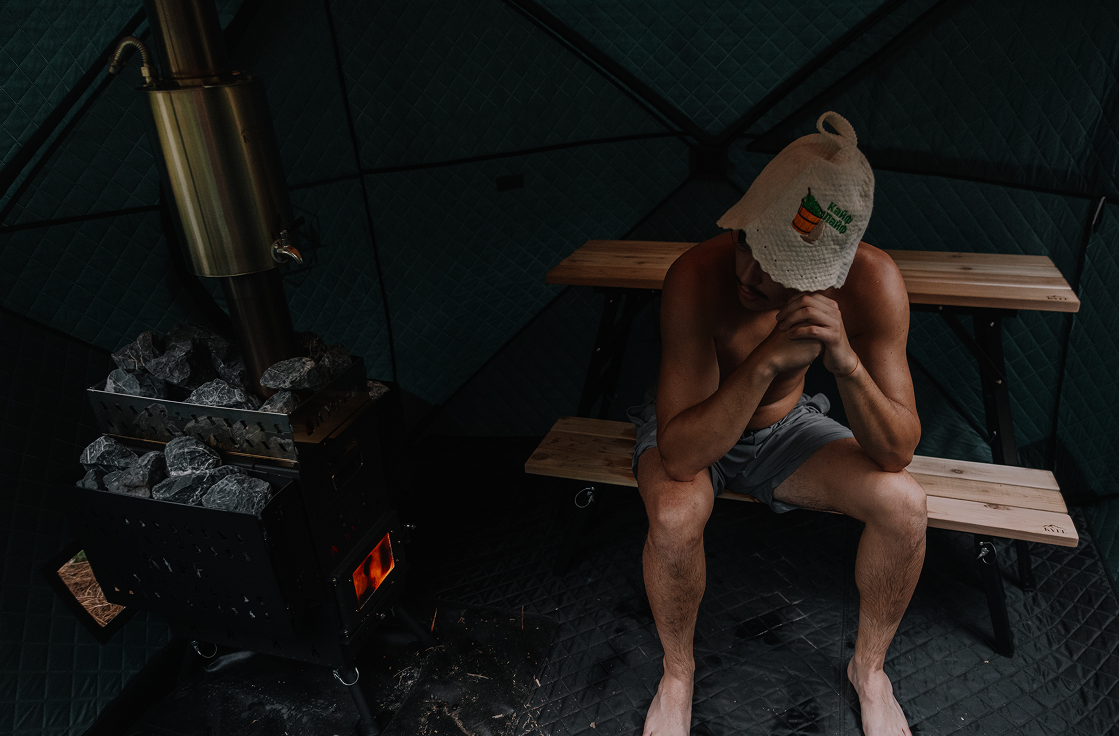
Choosing the right outdoor sauna comes down to three things: how hot it gets, how fast it heats, and whether it fits your life. This guide breaks down every major type of outdoor sauna, compares heat sources head to head, and explains why wood-fired setups outperform electric and infrared options for backyard and off-grid use. By the end, you will know which size, style, and heat source matches your outdoor space and wellness goals.
Quick Answer: Is an Outdoor Sauna Worth It in 2026?
A mid-range spa day in the U.S. now averages about $295 per visit. Go once a week and you are spending roughly $15,000 a year on relaxation and stress reduction. A fully equipped outdoor sauna kit, like a portable wood-fired tent from KYFE, costs around $1,500 and arrives with a stove, sauna rocks, thermometer, and travel bag. At three to five sessions per week, that purchase pays for itself within two to three months compared to regular spa visits.
The health case is just as concrete. A Finnish cohort study tracking over 2,000 men found that those who used a sauna four to seven times per week had roughly 70% lower cardiovascular mortality than those who went once a week. Frequent sauna use is associated with lower overall mortality rates, better sleep, and reduced risk of neurodegenerative conditions. Sauna bathing can provide relaxation and stress reduction benefits that compound with consistent use. Installing outdoor saunas also conserves indoor living space; you gain a dedicated wellness space in your backyard without converting a bathroom or spare room.
Outdoor saunas offer unique wellness experiences compared to indoor saunas. You step outside into fresh air between rounds, you have direct access to cold air for thermal contrast therapy, and you are surrounded by your own yard, forest, or lake rather than tile walls. A permanent barrel sauna or cabin sauna runs $8,000 to $30,000 installed, while a portable wood-fired sauna tent delivers the same 180 to 200°F heat for a fraction of that cost. The rest of this article will help you pick the best outdoor sauna type, heat source, and layout for your budget and space.
Types of Outdoor Saunas (Barrel, Cube, Cabin, Tents & More)
Every outdoor sauna falls into one of five categories. Here is what separates them:
-
Barrel sauna: The classic barrel design uses a cylindrical shape, typically built from western red cedar or nordic spruce, that distributes heat evenly due to its cylindrical design. A 4 to 6 person barrel sauna uses a smaller heater (6 to 9 kW electric or a compact wood stove) because the rounded walls reduce dead air volume. Panoramic glass barrel variants add a glass door or end panel for views, though double-pane glass is needed to prevent excessive heat loss.
-
Cube sauna and modern pod designs: Clean-lined, rectilinear structures with full-glass fronts and minimalist interiors. These are architectural statements as much as functional heat rooms. Most seat two to six people and come with electric heaters, built-in sauna benches, and sometimes a small changing room.
-
Cabin sauna: Rectangular garden cabins made from Thermowood, cedar, hemlock, or thermowood, typically housing a electric or wood burning stove. Cabin saunas offer spacious environments for group sessions, with room for two-tier benches, a vestibule, and insulated walls. Traditional saunas in cabin form can use wood-burning or electric heaters depending on the owner's preference.
-
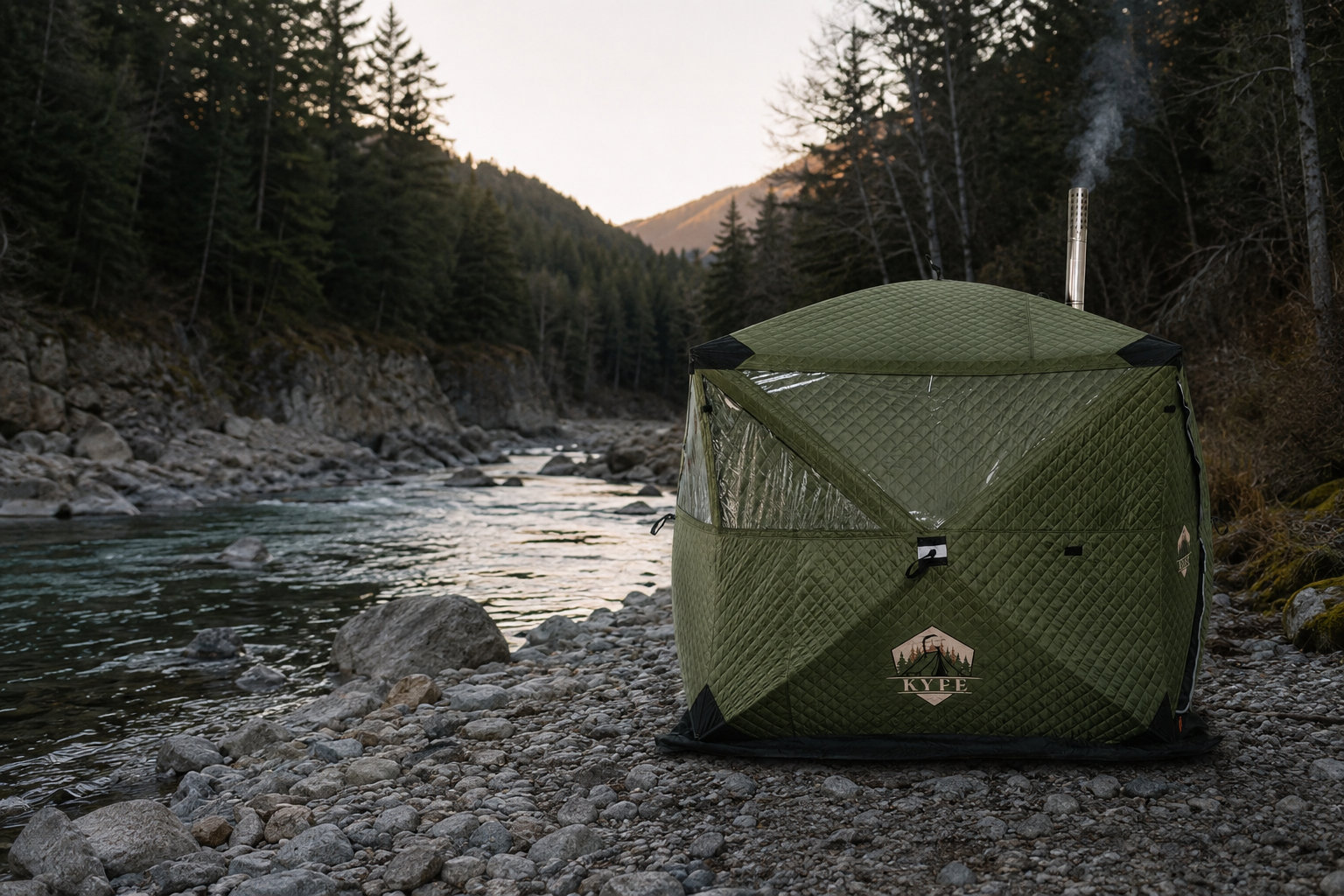
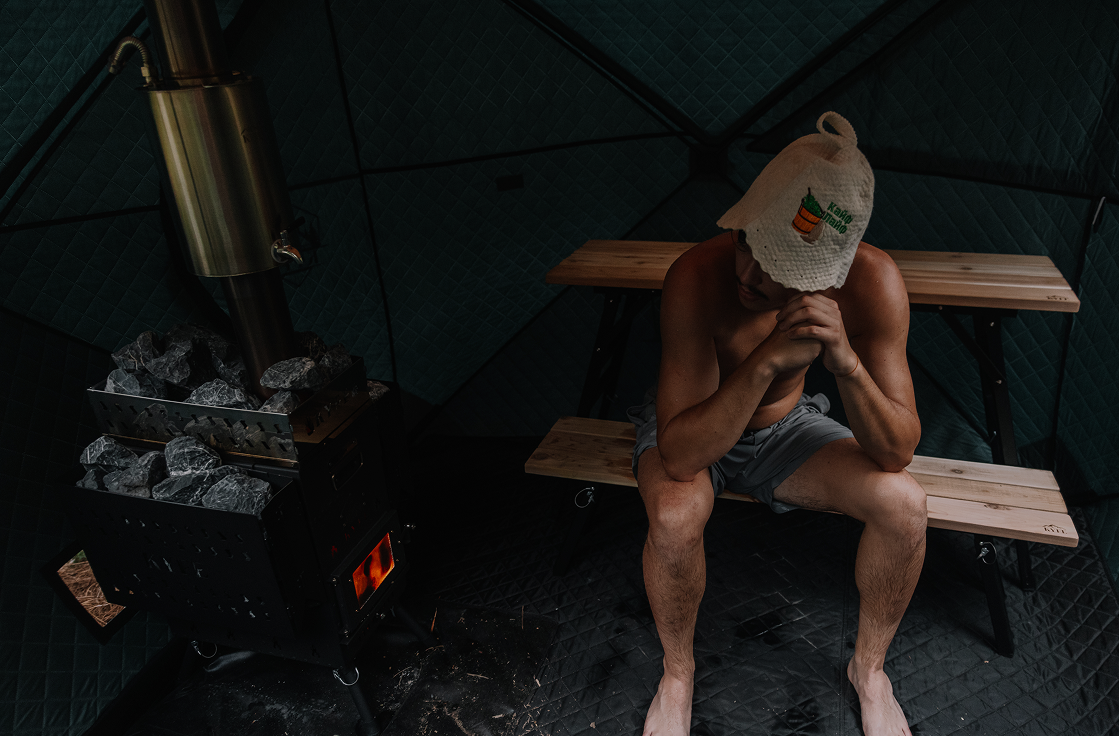
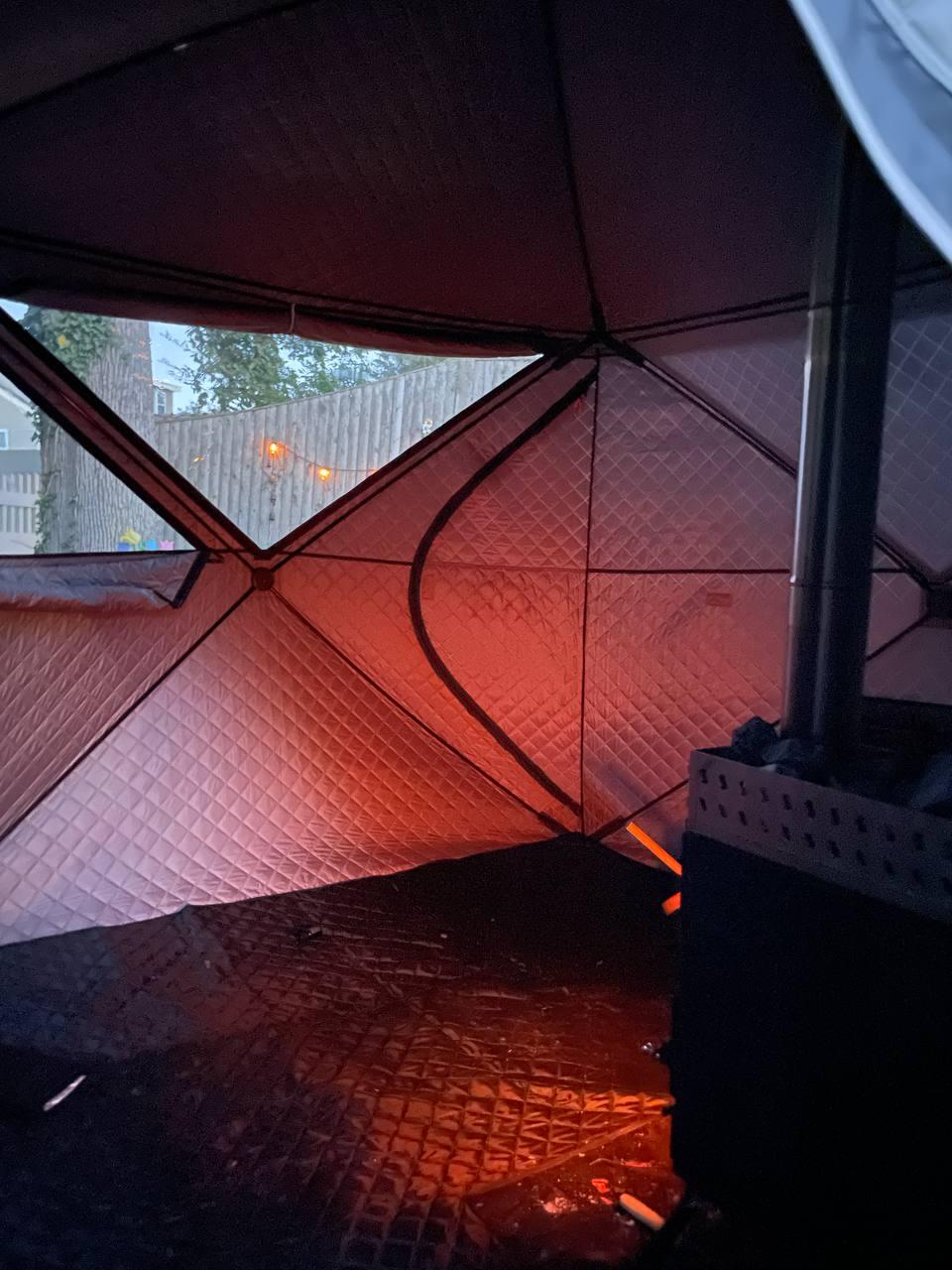
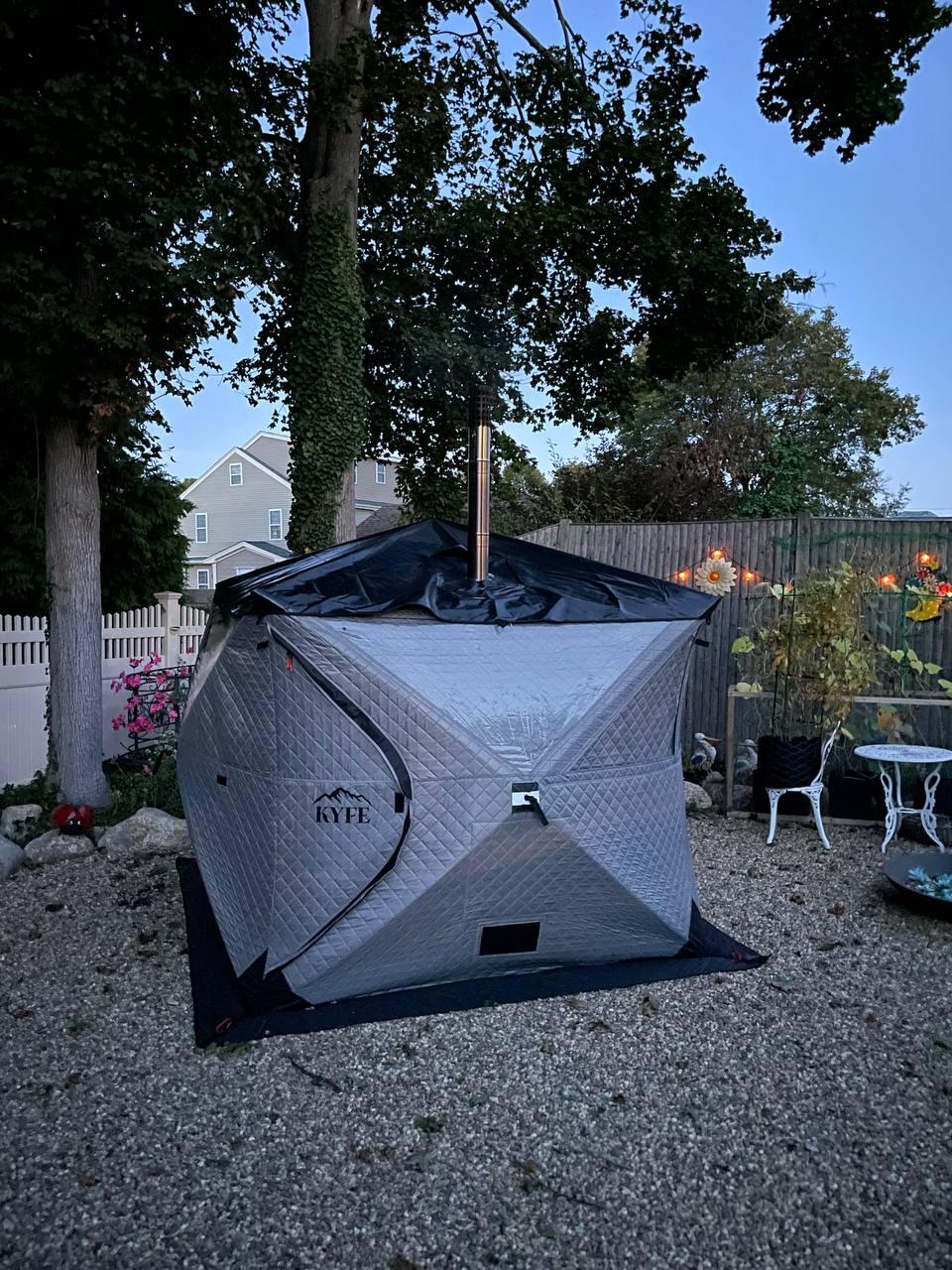
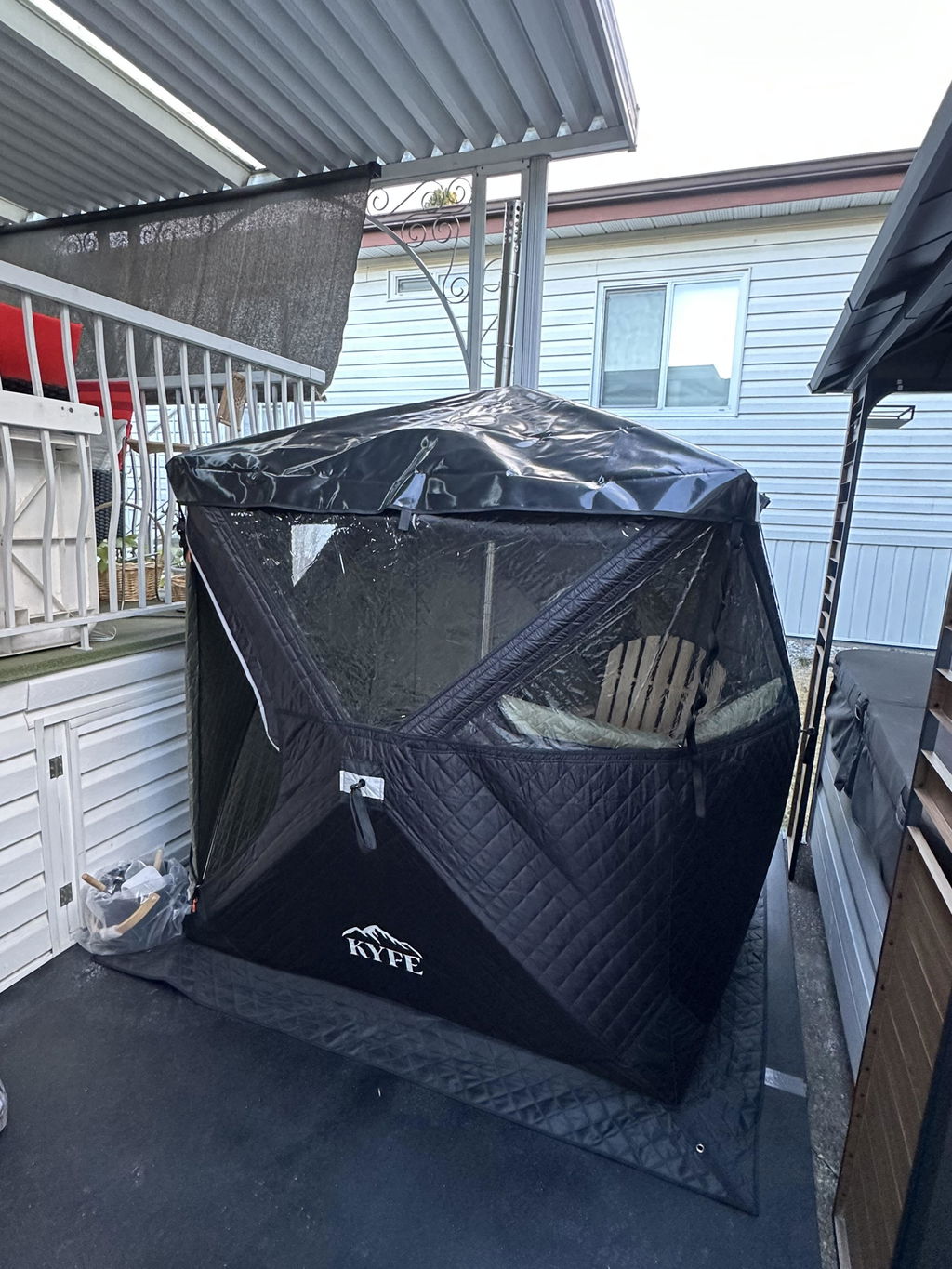
Portable wood-fired sauna tents: Sauna tents are portable and made with heat-specific materials; KYFE's models use triple-layer insulated walls (420D Oxford polyester, PU coating, cotton insulation) with TPU windows. Portable sauna tents can be set up in 5 to 15 minutes and reach temperatures up to 200°F in under 30 minutes. Portable saunas can accommodate 2 to 8 people depending on size and are designed for outdoor wellness experiences.
-
Outdoor infrared sauna and hybrid models: Box-style cabins with full-spectrum infrared heaters, often featuring a glass door, bluetooth speakers, and chromotherapy lighting. Infrared saunas use electromagnetic radiation to heat the body directly, operating at lower air temperatures (120 to 150°F). Some hybrid models include a small rock basket for occasional steam. These are often marketed as the best outdoor infrared sauna option for those who want gentle, dry heat and extra features like wifi control or red light therapy panels.
The sections below compare these not by aesthetic appeal alone, but by heat quality, cost, and how they handle outdoor weather across seasons.
Why Wood-Fired Beats Electric and Infrared Outdoors
This is where the choice becomes clear for anyone who wants real sauna heat outdoors.
Temperature ceiling. A wood-fired stove with a loaded rock basket hits 180 to 200°F in an insulated tent or cabin within 30 minutes. Traditional saunas can reach temperatures of 195°F in under an hour. Electric heaters are UL-rated to cap around 194°F and typically take 30 to 45 minutes to get there. An infrared sauna plateaus between 120 and 150°F because infrared heaters warm the body directly through light rather than superheating the air. In colder climates, that gap widens; thin-walled infrared cabins lose heat faster to ambient cold, while a wood stove's output scales with how much fuel you add.
Steam quality. Pouring water over 35 pounds of volcanic sauna rocks on a wood-fired stove produces thick, rolling Finnish steam, called löyly. This is the restorative heat experience that traditional finnish saunas are known for. Electric heaters with rock trays can produce some steam, but the volume and intensity rarely match a dedicated wood stove. Infrared units produce no steam at all; they deliver dry heat only. For anyone chasing the sauna experience of authentic steam saunas, wood-fired is the clear winner.
Sensory depth. The smell of burning hardwood, the crackle of fire, the ritual of feeding the stove; these are not extras. They are the reason Finnish culture built sauna tradition around wood in the first place. Electric and infrared heaters deliver consistent heat, but they lack rustic charm and the tactile engagement of tending a fire. Wood-burning saunas provide intense, dry heat when you want it, and humid steam when you pour water, giving you control over the session's character.
Off-grid resilience. A wood-fired system needs no electricity. It works during power outages, at remote cabins, and at campsites with no hookups. A typical 8 kW electric heater draws 33 amps on a 240V circuit; in areas with rising electricity costs, that adds up. A bundle of seasoned hardwood costs a few dollars and fuels multiple sessions. Electric saunas heat up quickly and are efficient year-round, but they depend on grid power and a licensed electrician for installation. Sauna construction requires specific heating and insulation methods, and wood-fired setups keep those methods simple and mechanical.
Honest trade-offs. Some municipalities enforce burn bans on high-risk fire days, and dense urban areas may restrict open-flame appliances. On those days, an electric heater is the compliant choice. But in most rural, lakeside, and suburban backyard settings, wood stoves remain legal and preferred. For people prioritizing deep heat, steam, and ritual, a wood-fired setup is the best outdoor sauna choice.
Best Outdoor Sauna Styles for Different Spaces and Lifestyles
The best outdoor sauna is the one that fits your available space, lifestyle, and willingness to commit to a permanent structure. Outdoor saunas can accommodate larger layouts compared to indoor versions, and they can enhance the aesthetic appeal of outdoor areas. Being surrounded by nature enhances the relaxation of sauna sessions in ways that a spare bedroom conversion cannot replicate.
-
Compact backyards and patios: A 2 to 3 person barrel sauna, a mini cube sauna, or KYFE's mini wood-fired sauna tent (interior roughly 5 ft × 5 ft × 5 ft 11 in) fits on most decks. Outdoor saunas should be positioned for privacy and accessibility, even in tight spaces.
-
Larger properties, lake cabins, retreat centers: A 4 to 6 person cabin sauna or a 6 to 8 person wood-fired tent handles group sessions and family use. These setups provide a spacious interior for lying down, rotating between benches, and hosting weekend gatherings.
-
Renters, vanlifers, RV travelers: Portable sauna tents require no permanent foundation. They pack into a travel bag (KYFE's large model collapses to about 5 ft × 16 in) and set up wherever flat ground and fire safety allow. This backyard sauna today becomes a lakeside sauna next month.
-
Forever homes and investment properties: Thermowood or cedar cabin and barrel saunas on concrete pads, wired for electric or fitted with wood stoves, add property value and serve as year-round premium outdoor saunas.
If you are undecided, start with a portable wood-fired sauna to test your daily routine and temperature preferences before committing to a $10,000+ permanent build.
How to Choose the Right Outdoor Sauna Size and Layout
Pick a model one size larger than your typical group. A "4-person" barrel sauna seats four adults without room to shift; three people use it comfortably. The same applies to tents and cabins.
-
Common capacities: 2-person cube or mini tent for solo and couples use. 4-person cabin or barrel for small families. 6 person barrel, pod, or large wood-fired tent for regular group sessions. Sauna kits can be assembled in 1 to 2 hours with basic tools for permanent structures, while portable tents set up in minutes.
-
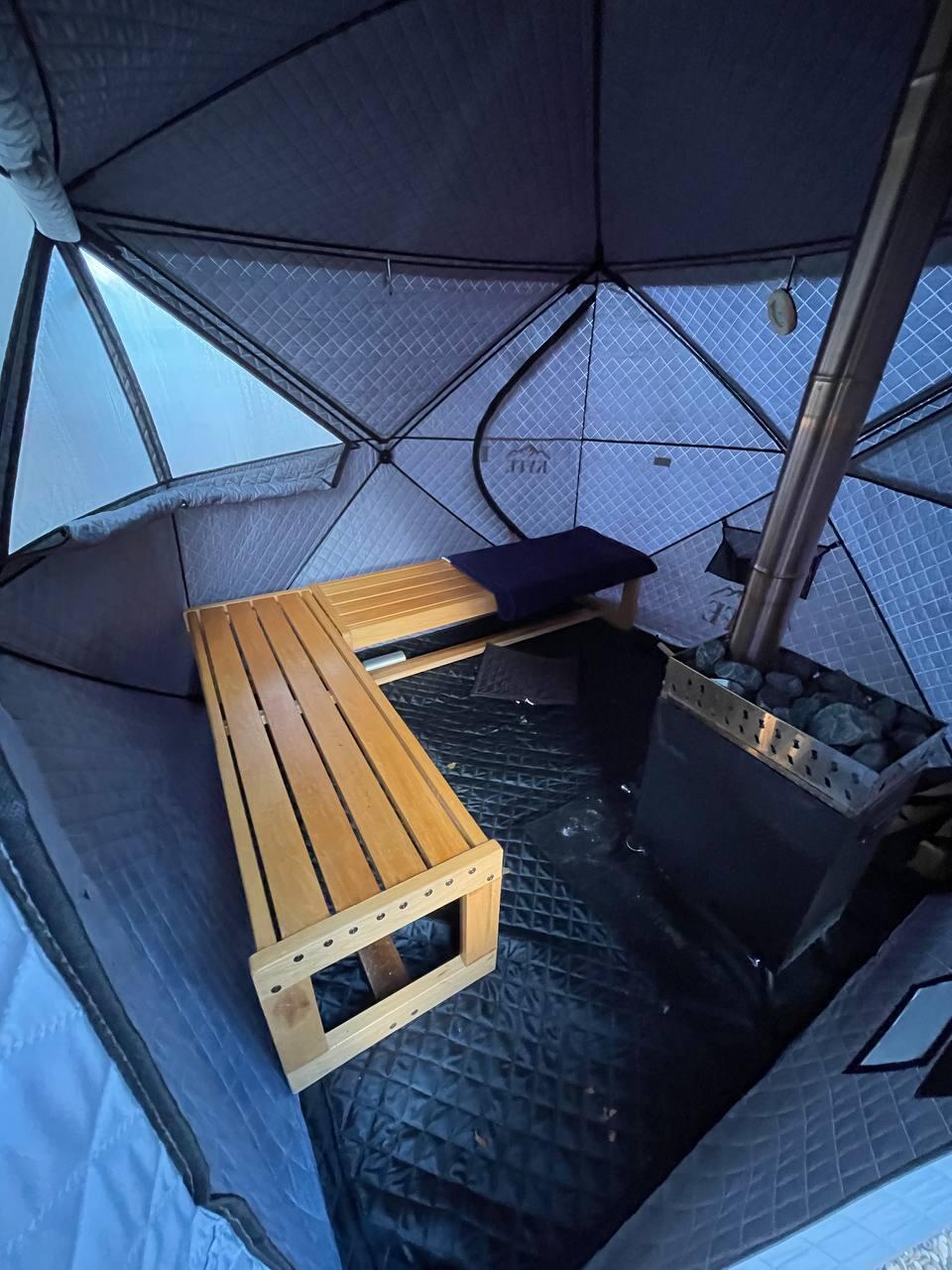
Bench layout: Two-tier sauna benches give a hotter upper level and a milder lower bench. KYFE's larger tent models allow L-shaped or straight bench configurations where users can lie down fully. Portable sauna bench sets add flexibility inside tent setups.
-
Changing room options: Pod and cabin saunas with vestibules help in winter; you change clothes without exposing the hot room to cold air. The vestibule also works as a gear-drying or cold plunge prep area.
-
Ventilation and airflow: Outdoor saunas have better ventilation due to fresh air circulation through vents and door openings. Portable saunas offer fresh air breaks between sessions; step outside, cool down, and return.
Map out your actual users: solo sessions Monday through Friday, couples on weekends, or a regular group of four to six. Then pick accordingly, avoiding feeling cramped.
Site Planning: Available Space, Foundations, and Weather Exposure
-
Measure first. Note length, width, and overhead clearance (chimney height plus spark arrestor must clear tree canopy and roof edges). Include door swing radius, safe stove clearances (at least 2 ft from combustible surfaces), and the pathway from your driveway or storage to the final spot.
-
Foundations for permanent structures. Outdoor saunas typically require a level foundation for installation. Options include a poured concrete pad, compacted gravel, pavers, or treated timber decking. Saunas need a stable foundation to prevent tipping or shifting over time, and the base must be flat enough to avoid racking the frame.
-
Portable tent foundations. KYFE's sauna tents do not require a permanent foundation but perform best on flat, dry surfaces. Deck boards, compacted soil, or insulated flooring panels all work. Rubber mats add comfort and insulation from frozen ground.
-
Drainage and snow. Avoid low spots that collect water. In snowy climates, position rooflines away from large snow-load zones and keep access paths clear. Outdoor saunas require weather resistant materials for durability; this applies to the structure, the stove housing, and any exterior trim.
-
Orientation. Face windows or a glass door toward your best view (lake, forest, garden). Protect the chimney side from prevailing winds to maintain draft and efficient heating.
Heat Sources Compared: Wood-Fired, Electric, and Infrared
This section summarizes the full heat source comparison in practical terms.
-
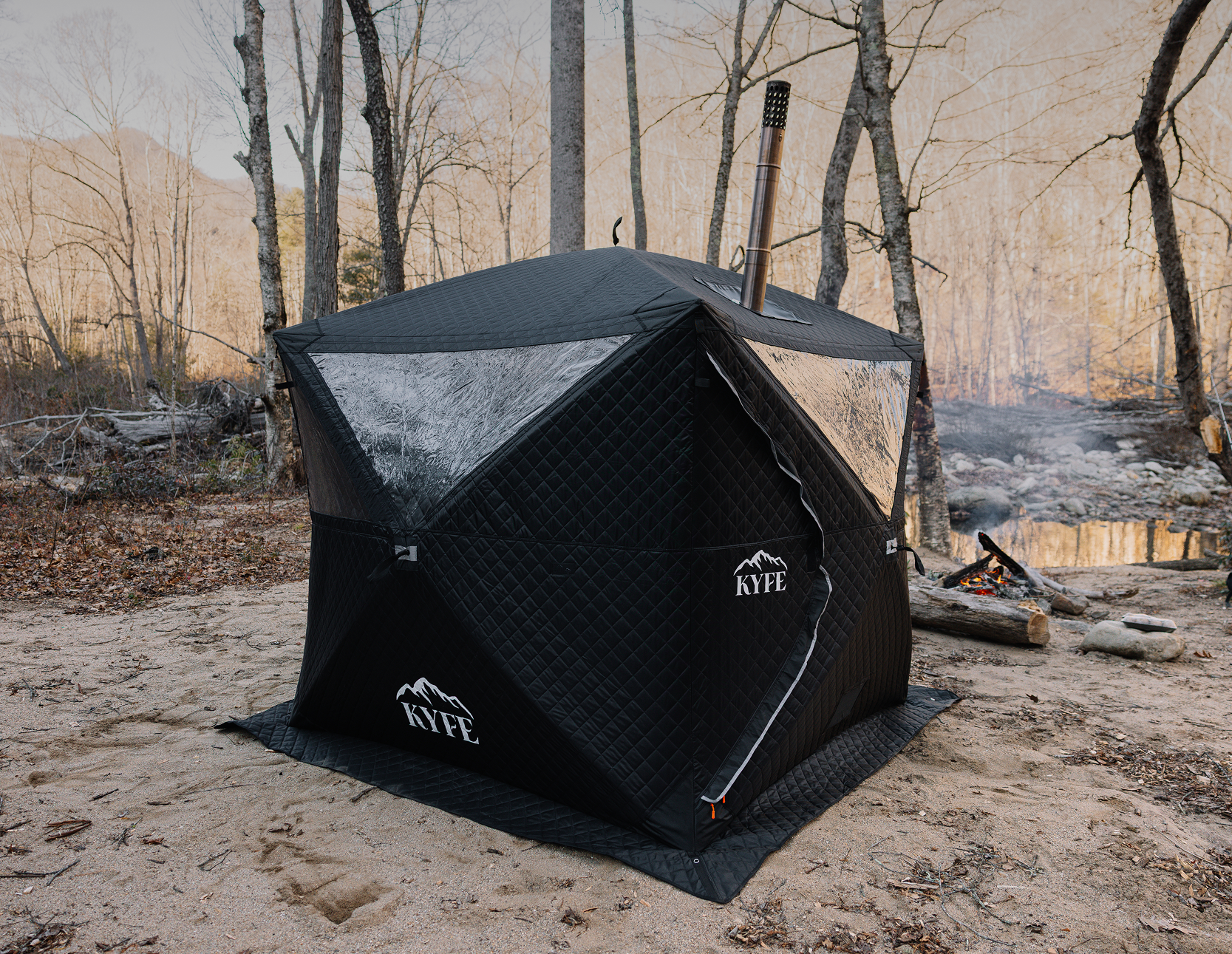
Wood-fired: Highest peak temperatures (180 to 200°F+). Thick steam when water hits rocks. Off-grid capable. Stove requires a flue pipe with spark arrestor, a rock basket filled with volcanic sauna rocks, and safe clearances to tent walls or cabin benches. Wood-burning saunas require proper installation of stoves and chimneys. Regular inspection of sauna stones is necessary for safety and performance; cracked stones block airflow and should be replaced. The heat source runs on seasoned hardwood, which costs a few dollars per session.
-
Electric heaters: Wall-mounted 6 to 8 kW units heat stones for steam and offer "set and forget" pre-heating via timers. They require a dedicated 240V circuit installed by a licensed electrician. Convenient for permanent structures. The heater type suits homeowners who want consistent heat without tending a fire, though running costs depend on local electricity rates.
-
Infrared heaters: Full-spectrum panels in outdoor-rated cabins. Lower temperatures (120 to 150°F). Faster power-on (15 to 20 minutes). Appeal to users who want gentle, longer sessions. No steam or löyly. Infrared saunas use light to heat the body directly, skipping the air-heating step entirely. Some sun home saunas and similar brands market these with chromotherapy and app controls.
KYFE focuses on wood-fired sauna tents because they deliver the highest heat, the best steam, and full off-grid function. Electric or infrared models fill a role where fire regulations or condo patios make open flames impractical.
Outdoor Sauna Accessories, Cold Plunge, and Tech Add-Ons
Accessories turn a hot room into a full wellness routine.
-
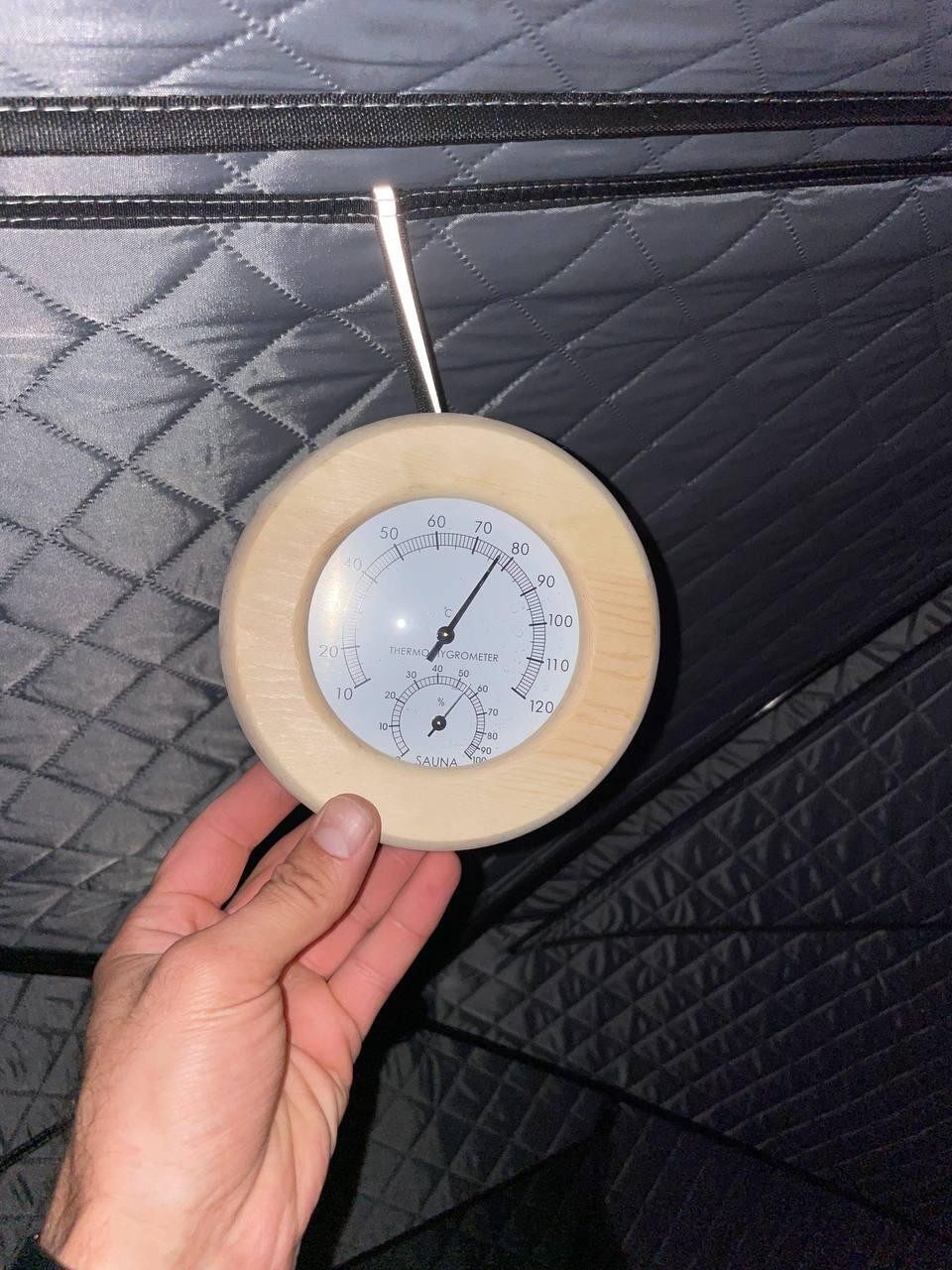
Classics: Wooden water bucket and ladle for pouring water over rocks. Thermometer and hygrometer to track temperature and humidity. Sauna hats (wool or felt) protect ears and hair from peak heat. Towels on benches catch sweat and protect wood. These sauna accessories support longer sessions and better comfort.
-
Contrast therapy with cold plunge: Natural cold plunge options are available with outdoor saunas; a lake, stream, stock tank, or purpose-built tub all work. Outdoor saunas facilitate easier integration of cold plunge therapy than indoor setups because you step directly outside. Cold plunge therapy enhances recovery after sauna sessions. Alternating heat and cold improves circulation and reduces muscle soreness. Cold plunges can lower inflammation and boost mood. Cold plunge therapy is often used in contrast therapy routines following a simple pattern: 10 to 15 minutes of heat, then 1 to 3 minutes of cold immersion. KYFE includes a free cold plunge pod with select sauna tent kits, creating a plunge sauna setup without extra purchases.
-
Tech extras: Bluetooth speakers mounted away from the stove's heat zone. Small waterproof LED lights. Sand timers for screen-free time tracking. Some permanent saunas offer wifi control for pre-heating electric units remotely.
-
Simple comforts: Hooks for robes, floor mats to insulate feet from frozen decking, small shelves for water bottles.
Wood-fired heat quality and proper ventilation matter more than LED mood lighting or touchscreens. Prioritize the heat source and sauna rocks first; add tech later.
Maintenance, Weather Protection, and Longevity
Outdoor saunas are low-maintenance when you follow a consistent schedule.
-
Wood structures (barrel, cabin, cube): Exterior wood of outdoor saunas needs staining every 1 to 2 years using UV- and water-resistant sealants. Cedar, spruce, and Thermowood all weather differently, but all benefit from protection against rain, snow, and direct sun.
-
Interior care: Wipe sauna benches with a mild water-and-vinegar solution after heavy use. Avoid harsh chemicals. Encourage users to sit on towels to reduce sweat staining. Sauna designs should include proper moisture and vapor management features; leaving vents open after sessions helps dry the interior.
-
Heater and stove maintenance: Clean ash from wood stoves after every few sessions. Annually inspect sauna stones for cracks and restack them for better airflow. Check chimney joints and spark arrestors for creosote buildup.
-
Portable tent care: Regular maintenance of outdoor saunas includes drying after each use. After your last round, leave the tent door slightly open with residual stove heat to drive out moisture. Pack only when the tent is fully dry. Check zippers, seams, and TPU windows periodically. Store in a dry location during extended off-season breaks. KYFE's 420D Oxford shell with 120gsm cotton insulation resists wear, but mildew forms on any fabric stored damp.
-
Winter care: Brush snow from roofs and tent peaks before sessions. Check flue pipes for ice blockage. Keep pathways shoveled and non-slippery.
Safety, Regulations, and Health Considerations
-
Installation safety: Maintain proper clearances around wood stoves. Use non-combustible heat shields where the stove sits near tent walls or cabin benches. Follow local building and fire codes for chimney height and foundation requirements. KYFE's tents include fire-retardant stove ports and spark arrestors; detailed setup instructions are available here.
-
Electrical safety: 240V electric heaters must be wired by a licensed electrician with GFCI protection and correctly sized breakers. Moisture in an outdoor environment demands extra care with wiring routes and junction boxes.
-
Ventilation: Proper ventilation in saunas aids moisture management and air quality. Fresh air intake near the floor and exhaust vents near the ceiling keep oxygen levels safe during wood-fired combustion and prevent stuffiness in electric setups.
-
Personal health: Sauna heat can raise heart rate and dilate blood vessels, mimicking moderate cardiovascular exercise. Sauna sessions improve cardiovascular health and circulation with regular use. Regular sauna use can reduce muscle tension and pain, and the therapeutic effects of sauna bathing include muscle comfort and pain relief. Saunas can enhance mood and promote relaxation. However, heat stress from saunas is not a detox treatment but can promote sweating; saunas produce significant sweating and heat adaptation over time. Sauna use may aid in body detoxification through sweating, though "detox" claims should be understood as sweat-based mineral and fluid loss, not a medical treatment. People with cardiovascular conditions, pregnancy, or medication sensitivities should consult a physician before starting regular high-temperature sessions.
-
Session guidance: A single sauna session can last 8 to 15 minutes for benefits; experienced users extend to 20 minutes per round. Hydrate before and after. Avoid alcohol. If you feel dizzy or develop a headache, step out. A beginner's guide to sauna routines covers pacing in more detail.
Permanent Saunas vs. Portable Sauna Tents: Which Fits You Best?
Many people picture a cedar cabin on a lake when they imagine their home sauna. That vision costs $8,000 to $30,000 and requires a foundation, permits, and often an electrician. A portable wood-fired sauna tent delivers the same temperature range and steam quality for about $1,500, with no concrete and no contractor.
-
Permanent barrel, cube, and cabin saunas: Architectural impact. Potential property value increase. Enclosed changing room options. Year-round backyard presence. Weather resistant materials and proper foundations give them multi-decade lifespans. These qualify as premium outdoor saunas for those ready to commit. A full cost breakdown is here.
-
Portable wood-fired sauna tents: Transportable to a cabin, lake, or retreat. 5 to 15 minute setup. 30-minute heat-up to 180 to 200°F with authentic steam. KYFE's kits ship with stove, rock basket, gloves, thermometer, and a complimentary cold plunge pod. No foundation, no electrician, and a 60-day return policy. Outdoor saunas provide an immersive and natural retreat experience, whether you set up in your backyard or at a remote campsite.
Many KYFE customers start with a portable tent to dial in their routine, frequency, and temperature preferences, then later build a permanent structure if they want. That approach eliminates the risk of a five-figure investment in something you might use twice a month.

Building Your Outdoor Sauna Routine (With Wood-Fired at the Center)
A sauna only delivers results if you use it. Here is a sample routine that takes about 50 minutes from lighting the stove to cool-down.
-
Light the stove with kindling and seasoned hardwood. Load the firebox, open the draft. While the tent or cabin heats (about 30 minutes to reach 180 to 190°F), lay out towels, fill a water bucket, and prep your cold plunge.
-
First round: 10 to 15 minutes inside. Pour water over rocks for steam. Ease muscle tension by sitting on the upper bench where heat concentrates. Sauna heat raises blood flow and heart rate, creating conditions where the body adapts to heat stress.
-
Cool down: Step outside for 2 to 3 minutes of cold air, or immerse in a cold plunge for 1 to 3 minutes. This contrast cycle is what drives the recovery and mood benefits.
-
Second round: Another 8 to 12 minutes. Adjust humidity with more or less water on the rocks. End on a cool-down.
Seasonal variations keep it interesting. Summer sessions work well with lower humidity and a shorter final round. Winter sessions hit harder because of the thermal contrast between 190°F air and 20°F outside; lean into hot-cold cycling on those nights. For social use, a 4 to 6 person setup turns the sauna into a weekly ritual for family or friends; phone-free, conversation-rich, with the perfect fusion of heat therapy and relaxation.
KYFE's wood-fired sauna tents and included cold plunge make this routine possible without pouring concrete or hiring a contractor. You get the same heat, steam, and health benefits of a $20,000 cabin at a regular price under $1,500. Set it up this weekend, build the habit, and decide later whether you want to go permanent.
How to Choose a Sauna Tent: What Actually Matters
Tips to Get a Sauna Tent Hotter (Without Wrecking Your Stove or Tent)