

Do Portable Saunas Work?
The honest answer is: it depends on the format. Some portable saunas work exceptionally well. Others barely qualify as heat therapy. The difference comes down to one thing — temperature.
Traditional sauna research, including the Finnish longitudinal studies most often cited for cardiovascular and longevity benefits, is based on consistent heat exposure above 170°F. At that temperature, your core body temperature rises meaningfully, heat shock proteins are activated, and your cardiovascular system responds in ways that produce measurable long-term health outcomes.
Whether a portable sauna delivers that depends entirely on what's generating the heat and how well the enclosure holds it. Here's what each format actually produces.
The Three Types of Portable Saunas
Sauna Blankets
Sauna blankets use far-infrared panels to warm the body directly rather than heating the surrounding air. They wrap around the body like a sleeping bag, require no setup beyond unrolling, and store in a compact space. For what they are, they work — but what they are is not a sauna in the traditional sense.
The ceiling temperature on most sauna blankets is 120–140°F. At that range, you'll sweat and feel warm, but you won't produce the core temperature elevation or cardiovascular response associated with the Finnish sauna research. Sauna blankets are a legitimate personal heat therapy tool, but the experience is fundamentally different from sitting in a room-temperature sauna at 185°F.
Electric and Steam Portable Tents
These are nylon or fabric enclosures paired with a plug-in steam generator or electric heater. They seat one or two people and can be set up in a living room or on a patio. Compared to a sauna blanket, they are more immersive — you're surrounded by heat rather than wrapped in it.
The limitation is temperature. Most electric and steam portable tents peak at 110–130°F. The steam feels intense at low temperatures and the enclosed environment amplifies the sensation, but the physiological exposure is not equivalent to a traditional sauna session at 180°F+. For someone new to heat therapy, these are a reasonable starting point. For anyone who has used a real sauna, they rarely satisfy.
Wood-Fired Sauna Tents
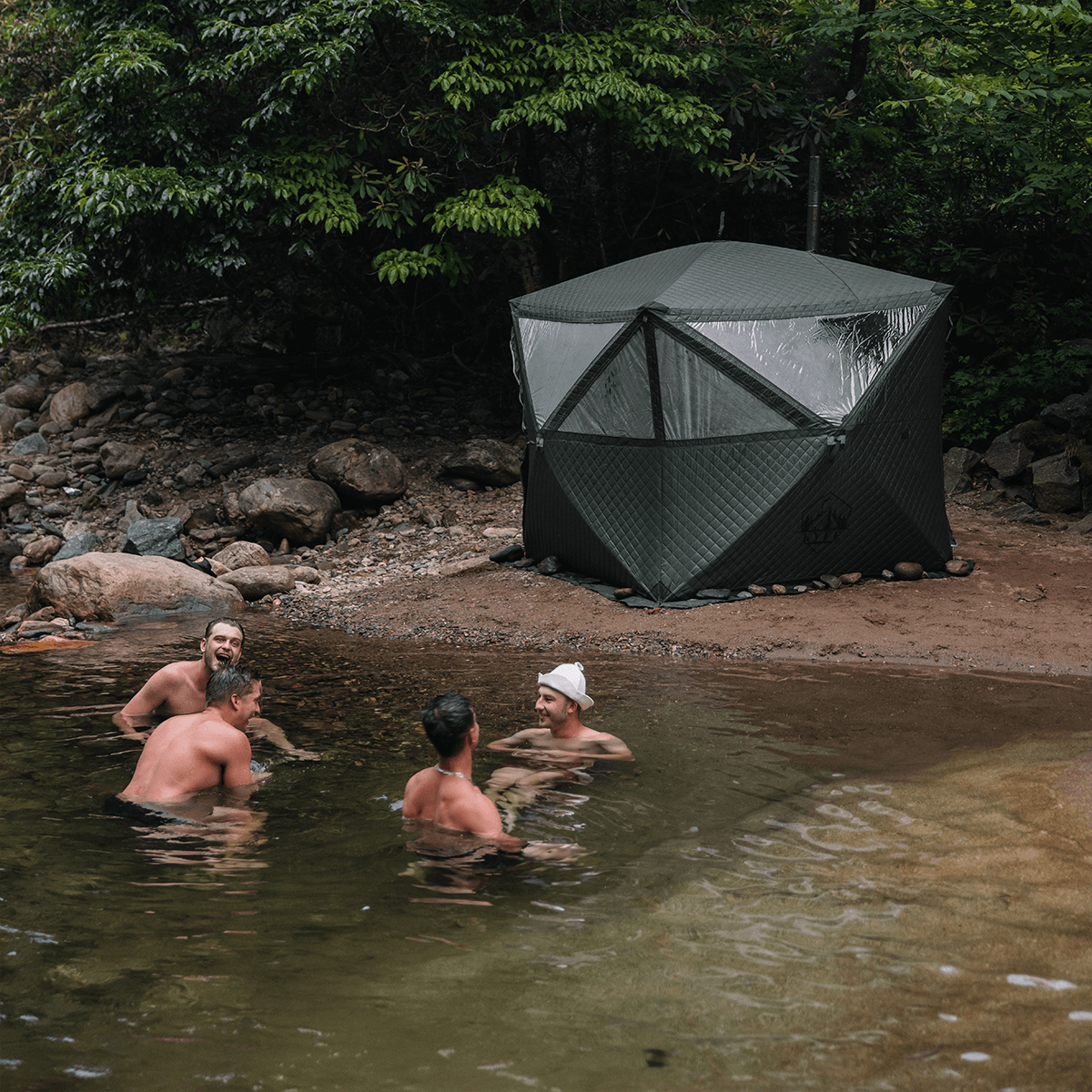
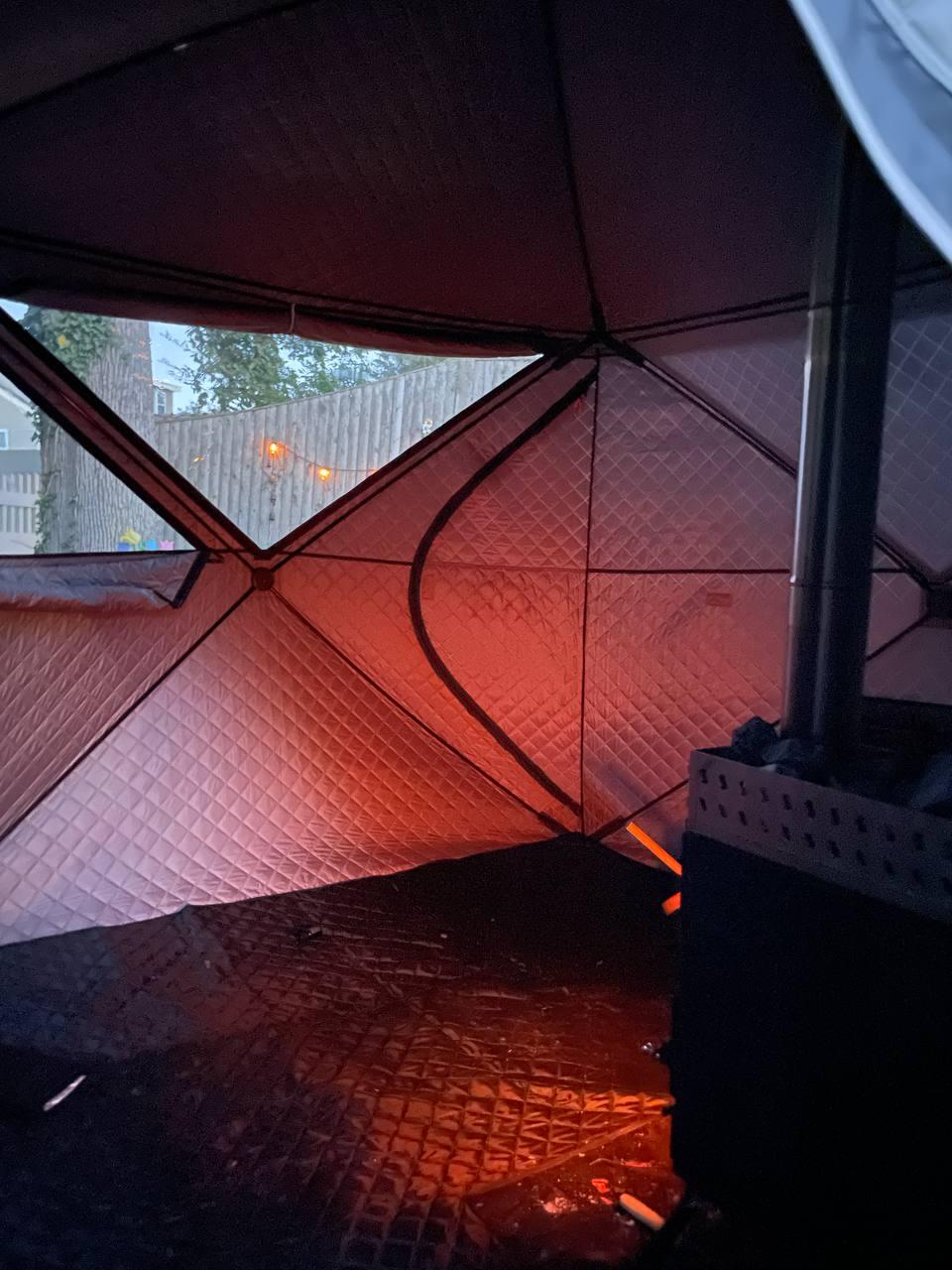
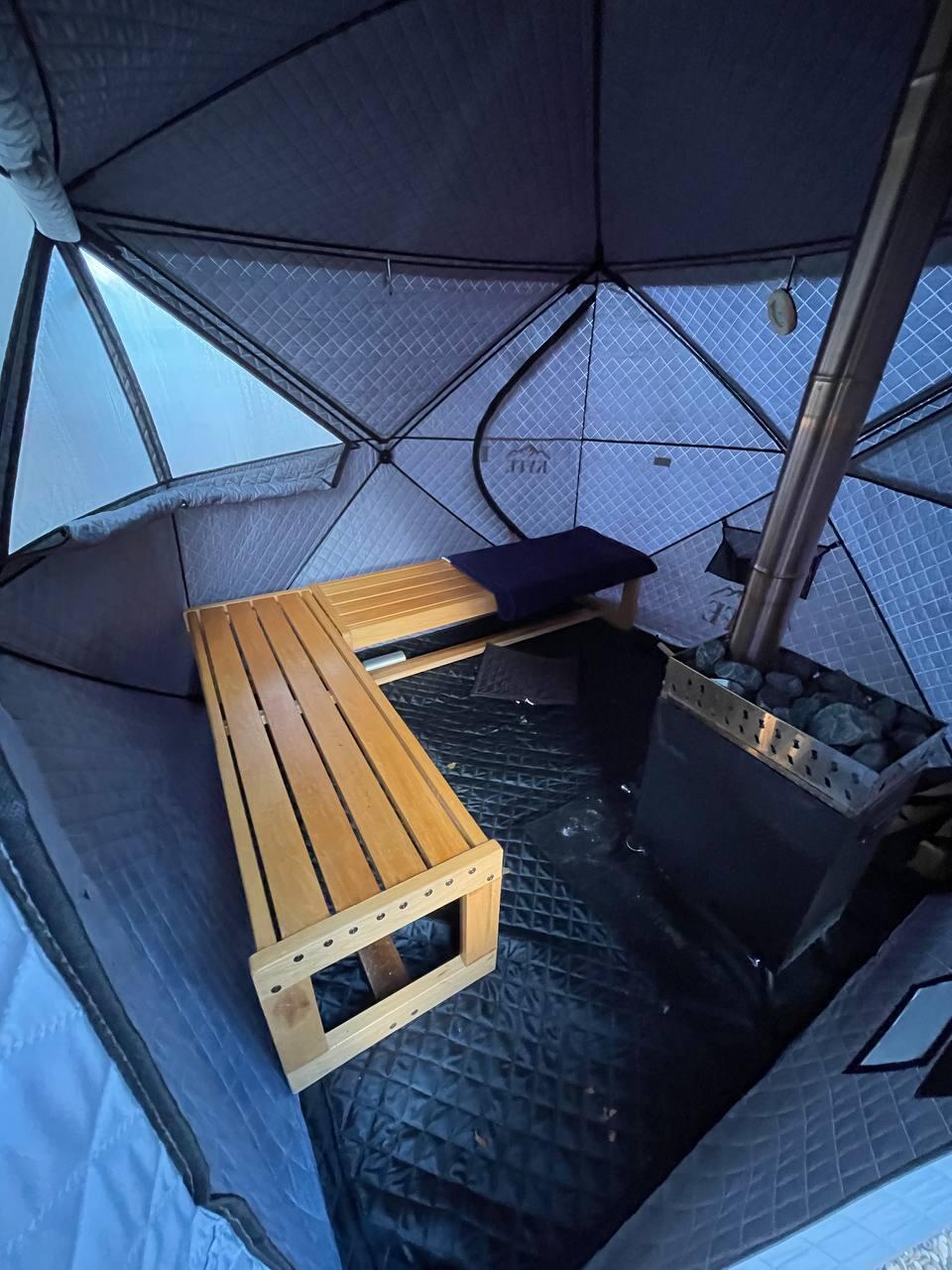
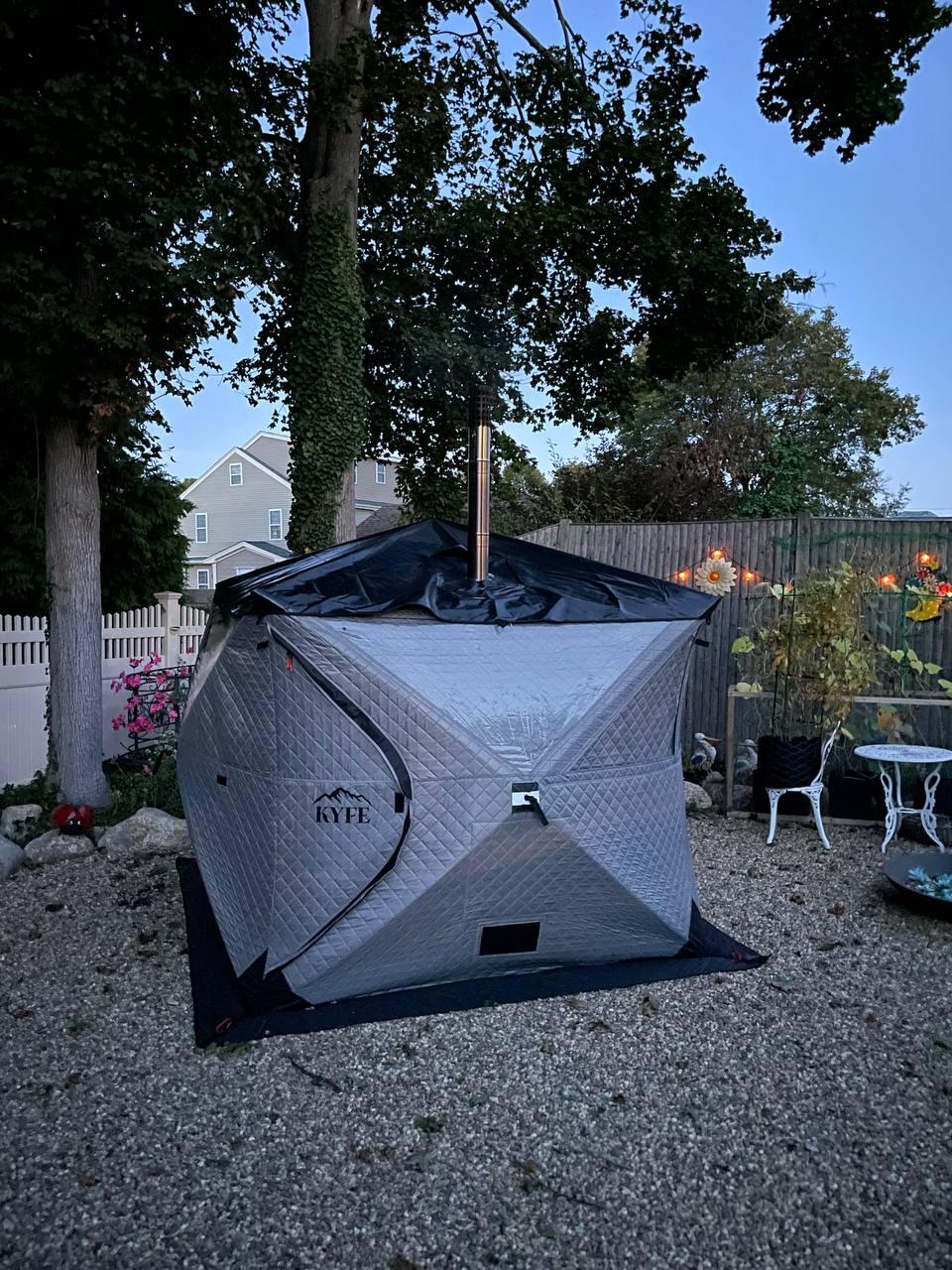
A wood-fired sauna tent is a different product category entirely. A stainless steel furnace burns hardwood inside a multi-layer insulated enclosure, heats a cage of volcanic sauna rocks, and when water is poured over those rocks, the space fills with löyly — the dense, humid steam that defines the Finnish sauna tradition. Interior temperatures reach 180–200°F+, which is the same range as a traditional permanent sauna.
This is the only portable format that produces the temperature and steam environment associated with the physiological benefits in the research literature. It functions off-grid, requires no electricity, and sets up in 15 minutes. The experience — fire, stone, real steam — is not a simulation of a traditional sauna. It is one.
For a full breakdown of how these formats compare head to head, see our wood-fired vs. infrared vs. electric sauna comparison.
What Makes a Portable Sauna Actually Work
Three variables determine whether a portable sauna delivers a real result.
Temperature ceiling. The research on sauna health benefits consistently points to exposure above 170°F as the threshold where meaningful physiological changes occur. Products that plateau below that range — regardless of how they're marketed — are not producing the same stimulus. A wood-fired sauna tent reaches 200°F. A sauna blanket reaches 140°F. These are not equivalent.
Heat distribution. In a wood-fired tent, the furnace heats the air throughout the entire enclosed space. The rocks act as a thermal mass that radiates steady heat even between loads of wood. In an electric steam tent, heat is less evenly distributed and more dependent on continuous power input. In a sauna blanket, heat is entirely localized to body contact points — there is no ambient heat environment.
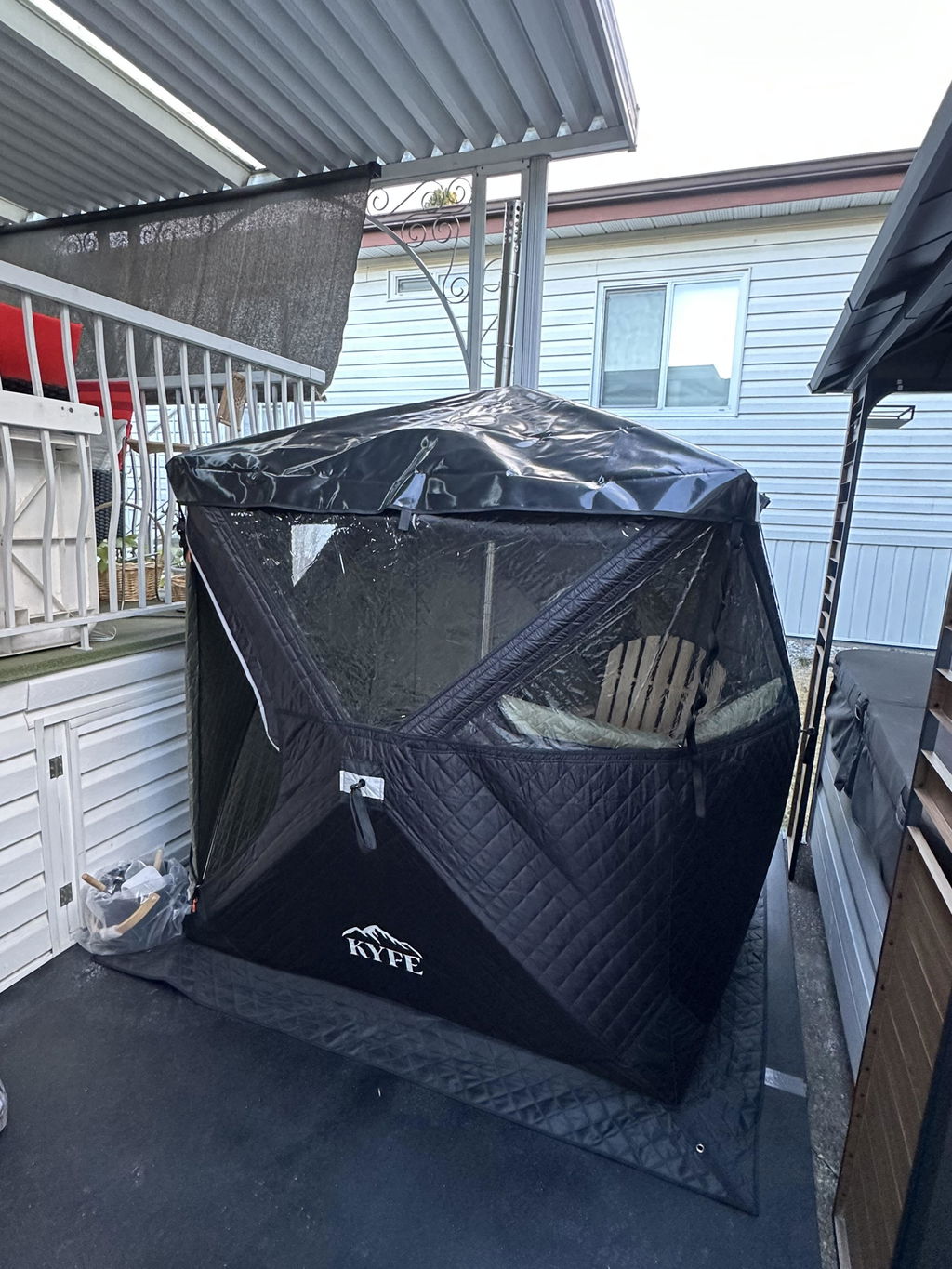
Enclosure quality. The ability of the structure to hold heat matters as much as the heat source. Thin single-layer fabric loses heat rapidly, especially outdoors in any wind or cold. Multi-layer quilted insulation with an integrated floor skirt holds heat efficiently and allows the interior to climb and maintain temperature regardless of conditions outside.
What the Research Says About Sauna Health Benefits
The strongest evidence for sauna health benefits comes from Finnish research, particularly a study tracking over 2,000 middle-aged men for more than 20 years. Regular sauna use — defined as four to seven sessions per week — was associated with significantly reduced risk of cardiovascular disease and all-cause mortality. The sessions in that research were conducted at 176°F (80°C) for an average of 14 minutes.
Several mechanisms explain these outcomes. Repeated heat exposure elevates core body temperature and produces a cardiovascular response — increased heart rate and cardiac output — similar in some respects to moderate aerobic exercise. It also triggers heat shock protein production, which plays a role in cellular repair and stress adaptation. Regular heat exposure has also been associated with improved circulation, reduced arterial stiffness, and better endothelial function.
None of these outcomes have been studied at the temperature ranges produced by sauna blankets or low-temperature steam tents. The research was conducted in traditional Finnish saunas. A wood-fired sauna tent operating at 180–200°F is the only portable format that replicates those conditions.
For a full breakdown of what consistent sauna use does to the body, see what are saunas used for.
The KYFE Portable Sauna Tent
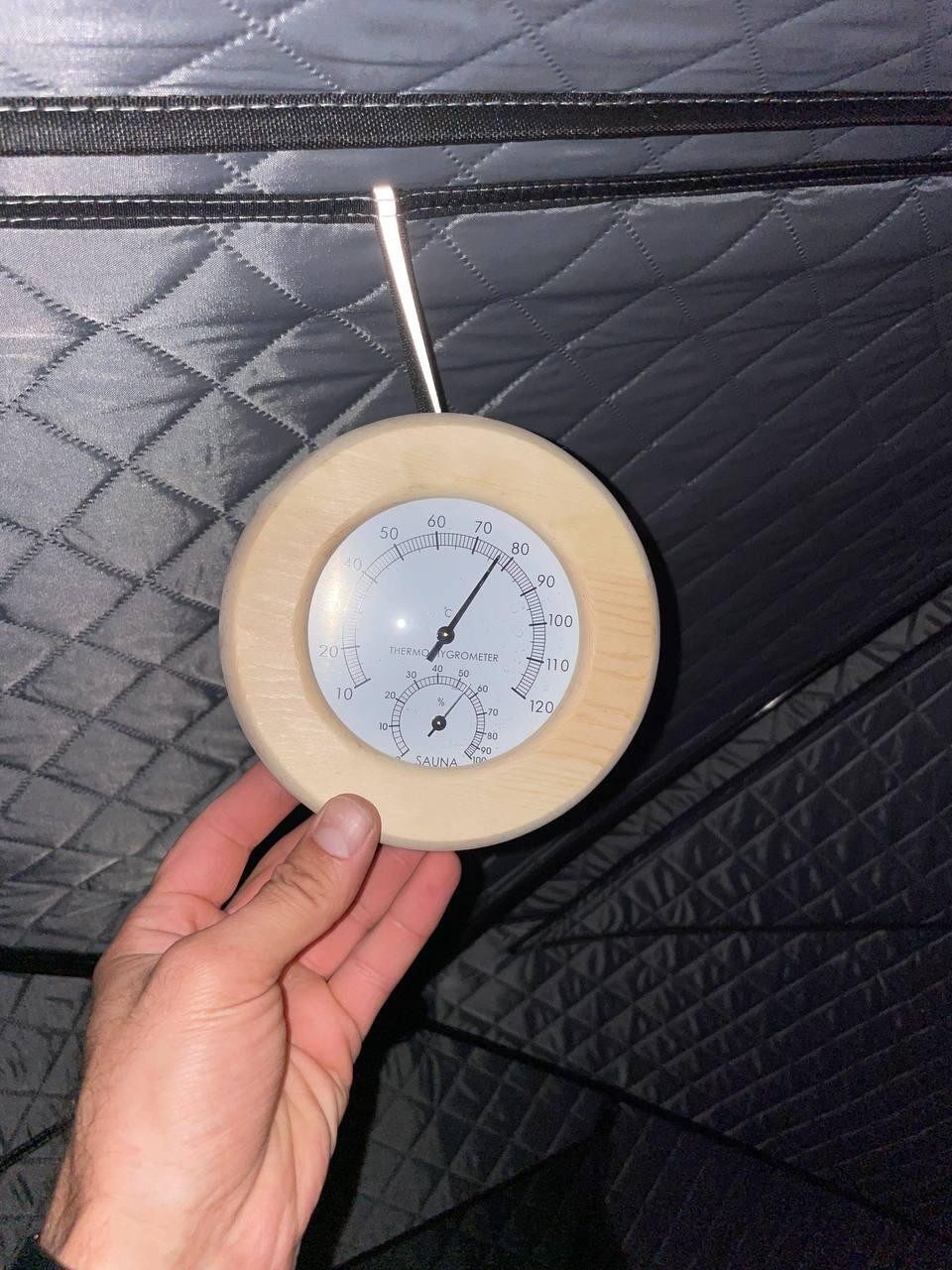
The KYFE reaches 200°F in under 30 minutes using a wood-burning furnace and volcanic rock cage. It seats six to eight people, sets up on any flat outdoor surface in 15 minutes, and runs entirely on firewood — no electricity, no installation, no permits. It ships complete with furnace, rock cage, stones, gloves, thermometer, fire poker, and a free cold plunge.
Available in Black Limited Edition, Forest Green, and Arctic Gray.
HSA/FSA eligible through Truemed. Free shipping. 60-day returns.
Who Gets the Most Out of a Wood-Fired Portable Sauna
Athletes and people in active recovery. The combination of heat exposure and cold plunge — contrast therapy — is one of the most effective tools for reducing muscle soreness and accelerating recovery between training sessions. See the full sauna and cold plunge protocol.
People building a consistent wellness routine. A sauna in your backyard with 15-minute setup has a fundamentally different usage rate than a gym sauna you have to drive to. Ownership removes the friction. Most KYFE owners report using it several times per week because it's simply there.
Families and groups. A six-to-eight person tent supports the social dimension of sauna that a blanket or two-person steam tent cannot. The experience of sitting together in real heat — talking, resting, pouring water on rocks — is qualitatively different from a solo session.
Anyone who has used a traditional sauna and wants that at home. If you've spent time in a Finnish sauna, a Russian banya, or any high-heat wood-fired setup, you know what the experience is and what a pale imitation feels like. A wood-fired sauna tent with the right furnace and rock mass doesn't feel like a compromise — it feels like the real thing, because mechanically it is.
Sauna Safety Basics
- Stay hydrated before and during sessions — bring water in with you
- Start with shorter sessions (10–15 minutes) and build duration over time
- Exit the sauna if you feel lightheaded, dizzy, or nauseous
- Avoid sauna use if pregnant, or if you have a heart condition — consult your doctor first
- Allow the furnace to burn down fully before packing the tent — never extinguish the fire with water
For guidance on how often to use a sauna and how to structure sessions, see can you sauna every day.
Frequently Asked Questions
Do portable saunas actually work?
Wood-fired portable saunas that reach 180–200°F work as well as permanent saunas — they produce the same temperature environment and the same löyly steam experience. Low-temperature formats like sauna blankets and electric steam tents produce a different, less intense result.
How hot does a portable sauna need to be to be effective?
The Finnish research on sauna health benefits was conducted at sessions around 176°F (80°C). A wood-fired sauna tent reaches that range and above. Most sauna blankets and electric steam tents do not.
Can a portable sauna replace a permanent one?
For most buyers, yes. The KYFE delivers equivalent heat performance to a barrel or cabin sauna at a fraction of the all-in cost. The main trade-off is that you need to build a fire rather than turning a dial. See our full comparison of portable sauna tent vs. traditional sauna.
How long should a sauna session be?
The Finnish research sessions averaged 14 minutes at 176°F. Most experienced sauna users run 15–20 minute sessions, exit to cool down, and repeat two to three rounds. First-time users should start shorter and build up.
Are portable saunas safe?
Yes, when used correctly. See our full guide on portable sauna safety for a complete breakdown of precautions, contraindications, and session guidelines.
What's the difference between a dry sauna and a steam sauna?
A dry sauna heats the air to high temperature with low humidity. A steam sauna — or wet sauna — introduces moisture via a steam generator or by pouring water over hot rocks. A wood-fired sauna tent does both: it heats the air to traditional sauna temperatures and produces real steam on demand through löyly. For a deeper comparison, see wet vs. dry sauna.
How Hot Do Portable Saunas Get? A Complete Guide to Heat, Performance & Experience
Are Portable Saunas Safe? Everything You Need to Know Before You Step Inside