

If you've been researching saunas lately, you've probably hit the same wall: every brand claims their type is best, the comparison articles are written by people trying to sell you something, and the actual differences get buried under marketing language.
So let's cut through it. Dry sauna and infrared sauna are genuinely different products — different heat sources, different temperature ranges, different physiological effects, and different use cases. Neither is universally "better." But one of them is probably better for you. This guide will help you figure out which.
How Each One Actually Works
Before comparing benefits, you need to understand the mechanism. This is where most comparison articles get lazy — and where the real differences start.
Dry sauna heats the air around you using a heat source — traditionally a wood-burning stove with sauna rocks, or in some modern versions, an electric heater. The air temperature climbs to between 150°F and 200°F. Your body absorbs that ambient heat, your core temperature rises rapidly, your cardiovascular system kicks into high gear, and you sweat heavily. When you pour water over the heated rocks, you create löyly — a burst of steam that intensifies the session. This is how saunas have worked for thousands of years.
Infrared sauna skips the air entirely. Instead of heating the environment around you, infrared heaters emit light waves that penetrate the skin and heat the body directly from the inside out. The ambient air temperature stays much lower — typically between 120°F and 150°F — but your body still sweats because it's being heated at a tissue level. The experience feels milder, but you're still getting heat exposure.
That difference in mechanism — ambient heat vs. radiant heat — is what drives every other difference on this list.
Temperature: Why It Matters More Than Most People Think
This is the most important practical difference and the one most buyers underestimate.
Dry sauna: 150°F – 200°F Infrared sauna: 120°F – 150°F
That's not a small gap. The research most frequently cited on sauna health benefits — the Finnish studies on cardiovascular health, the work on heat shock proteins, the longevity data — is based on traditional high-heat sauna use at temperatures above 170°F. Those studies weren't done in infrared cabins.
Heat shock proteins, for example, are molecular chaperones that support muscle repair, reduce inflammation, and play a role in cellular resilience. They're activated most effectively at high core body temperatures. Getting your core to that level requires high ambient heat. Infrared sessions, while beneficial, operate at a lower intensity that may not trigger the same magnitude of physiological response.
This doesn't make infrared useless — it makes it a different tool. But if you're buying a sauna specifically for the health benefits you've read about in research, temperature is the variable that connects your sauna to that research.
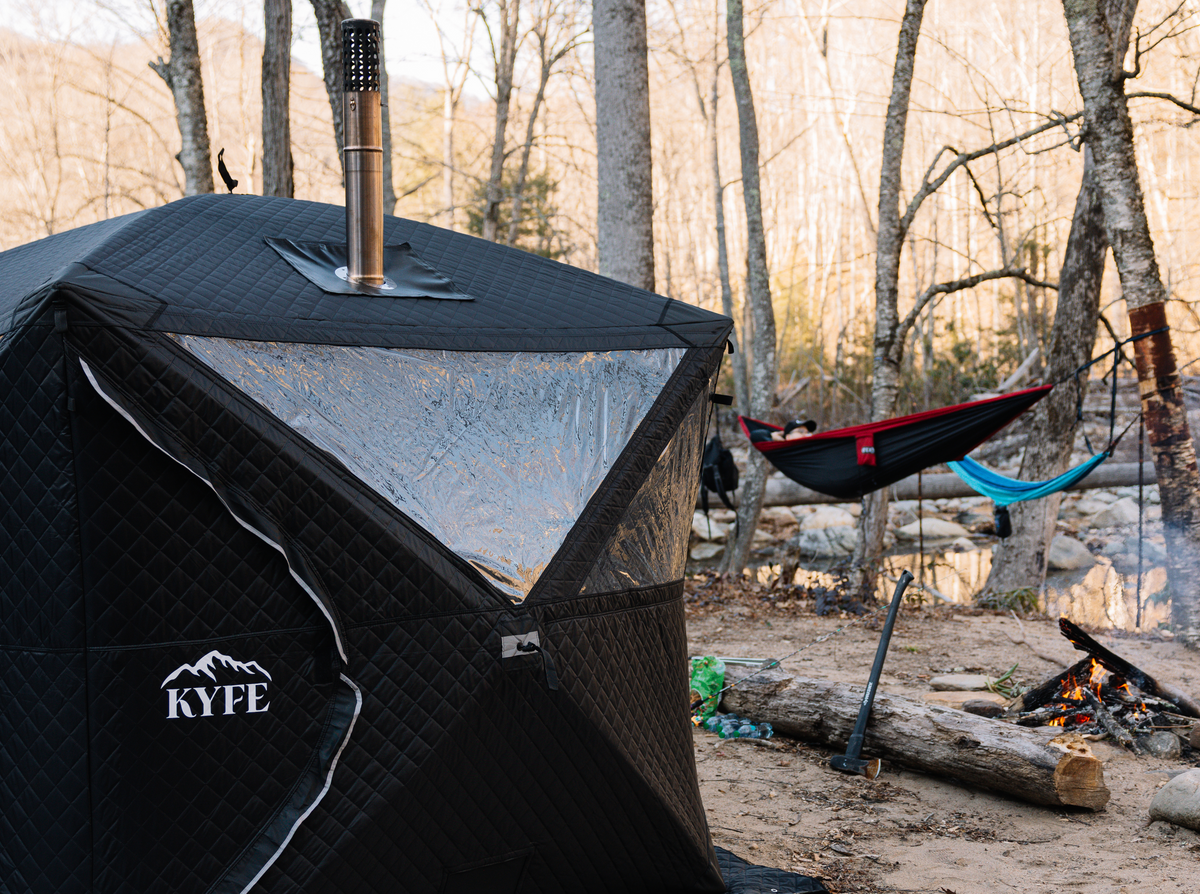
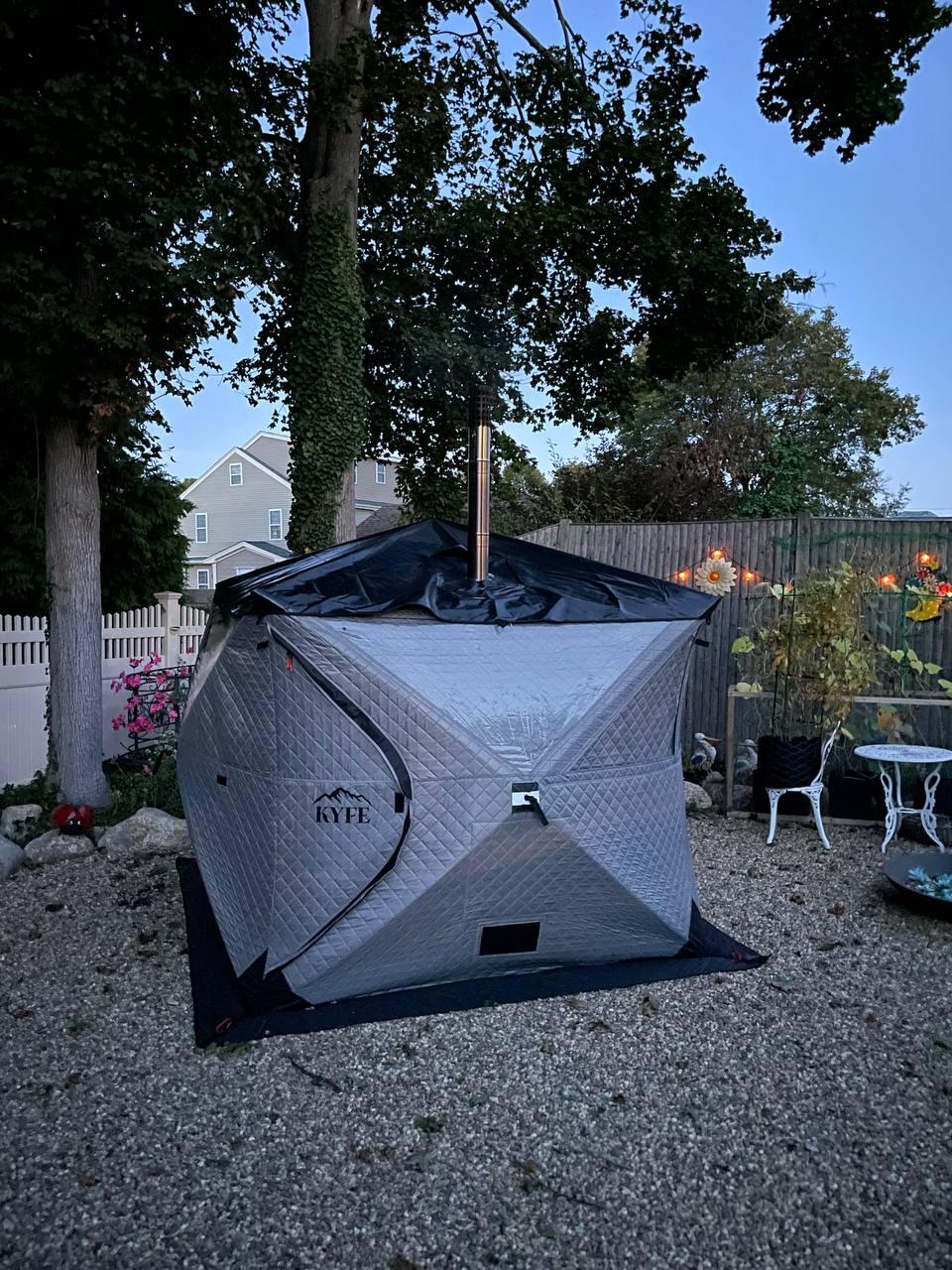
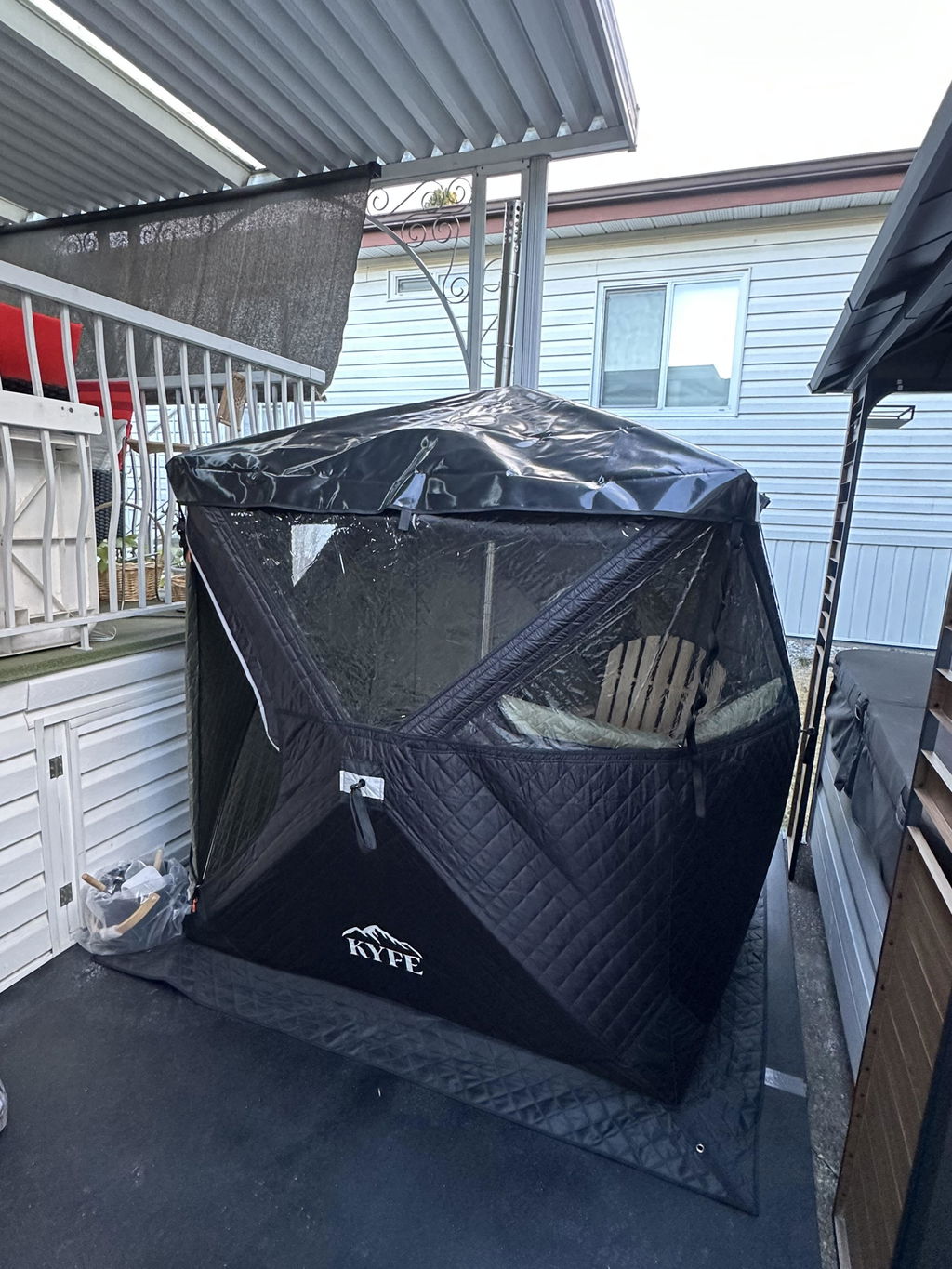
If you want to experience what those studies are based on, the Kyfe Portable Sauna reaches 200°F — the high end of authentic dry sauna performance — in a portable, wood-fired format.
Health Benefits: Where They Overlap and Where They Diverge
Both sauna types share a meaningful core of benefits. Where they differ is in intensity and the specific mechanisms involved.
Benefits both types support:
- Improved circulation and cardiovascular conditioning
- Muscle relaxation and reduced soreness
- Stress reduction and improved mood
- Better sleep quality
- General detoxification through sweating
Where dry sauna has a stronger evidence base:
Cardiovascular health is the standout. The most cited research in this space — including long-term Finnish studies tracking sauna users over decades — consistently used traditional high-heat saunas. Regular dry sauna use has been associated with reduced risk of cardiovascular disease, lower blood pressure over time, and improved heart rate variability. The high-temperature cardiovascular demand of a proper dry session essentially mimics moderate aerobic exercise — your heart rate rises, your blood vessels dilate, your cardiac output increases.
Heat shock protein activation, as mentioned above, is more strongly associated with the higher temperatures achieved in dry sauna. These proteins support muscle recovery and are one of the reasons athletes increasingly treat sauna as a serious post-training tool.
Respiratory benefits are also more pronounced in dry sauna — particularly when löyly is used. The steam from hot rocks has been shown to support lung function and reduce the incidence of respiratory infections with regular use.
Where infrared has its own strengths:
Infrared excels for users who find high heat uncomfortable or who have health conditions that make intense heat sessions inadvisable. The lower ambient temperature makes sessions more accessible for beginners, older users, or anyone easing back into wellness routines.
Deep tissue penetration is a genuine advantage of infrared. Because the heat comes from light waves absorbed at a tissue level, infrared can reach deeper into muscles and joints at lower surface temperatures. For chronic joint pain or muscle recovery where extended, lower-intensity heat is the goal, infrared offers a more comfortable path.
Skin health benefits are also frequently cited with infrared use — improved circulation to skin tissue, support for collagen production, and reduced appearance of fine lines with consistent sessions.
EMF: The Conversation Infrared Brands Would Rather Skip
This deserves a straightforward mention because it comes up constantly and the answers from infrared brands are often evasive.
Infrared saunas work by emitting electromagnetic radiation — that's the mechanism. Most quality infrared units are designed to keep EMF levels low, and reputable brands provide third-party testing data to prove it. If you're considering an infrared sauna, ask for that data before you buy. Don't accept a brand claim without independent verification.
Wood-fired dry saunas — like the Kyfe Sauna Tent — produce no electromagnetic emissions. The heat source is wood and stone. There's nothing to measure. For users concerned about long-term EMF exposure from daily sauna use, wood-fired dry sauna eliminates the question entirely.
The Experience: What It Actually Feels Like
The numbers matter, but so does the lived experience — especially if you're making a daily habit out of this.
Dry sauna is intense by design. You feel the heat the moment you step in. Your body responds quickly — sweating starts within minutes, breathing deepens, your heart rate climbs. The addition of löyly — steam from pouring water over hot rocks — creates waves of heat that hit differently from ambient warmth alone. Many users describe dry sauna as invigorating, almost euphoric. The 15–20 minutes you spend inside feel earned. The clarity and relaxation afterward are distinct from most other wellness practices.
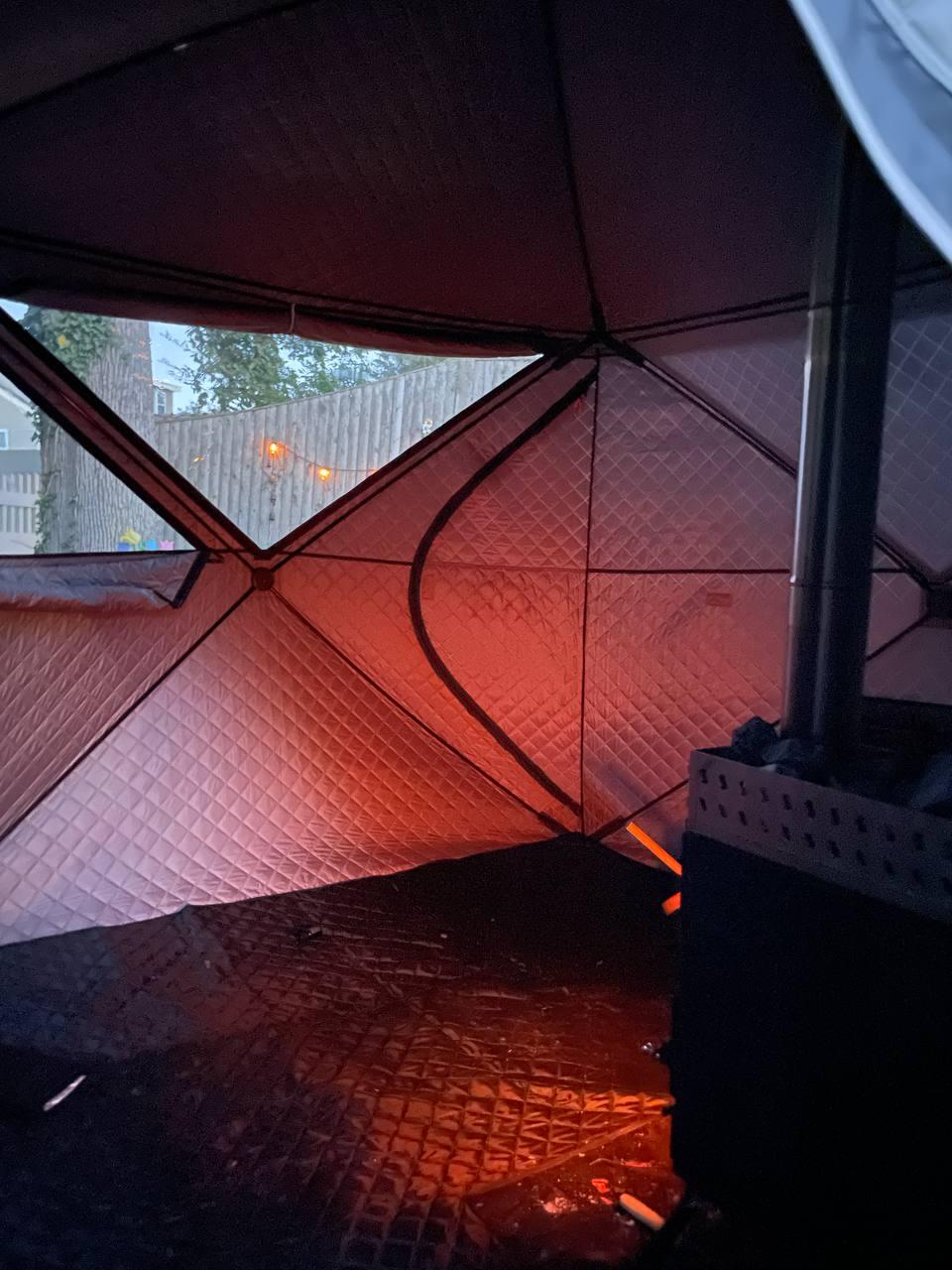
The Kyfe experience adds another layer: the 360-degree panoramic view from inside the tent, wood fire crackling, fresh air — there's nothing else like it. You can read more about what makes that experience different on the Kyfe homepage.
Infrared sauna feels gentler. The lower air temperature means you acclimate more easily. Sessions are typically longer — 30–45 minutes — because the heat isn't forcing you out. Some users love this; they find it more meditative, easier to relax into. Others find it lacks the intensity that makes a sauna session feel meaningful.
Neither experience is wrong. It depends entirely on what you're after.
Portability and Setup
This is increasingly relevant as more people move sauna use into their home routine rather than gym or spa visits.
Infrared saunas range from small tent-style units to full wood-panel cabins. The tent-style options and blankets are genuinely portable. The cabin-style infrared saunas are not — they require dedicated space, an appropriate electrical circuit, and significant setup.
Dry saunas follow a similar pattern. Permanent wood-fired structures are not portable. But the Kyfe Portable Sauna Tent is a genuine exception — a wood-fired sauna that assembles in 15 minutes, works anywhere outdoors, and packs away just as fast. No electricity needed. No dedicated space required. It's the only format that delivers authentic dry sauna performance with true portability.
Cost Comparison
Infrared sauna blankets: $200–$700 Infrared tent-style portable saunas: $300–$1,500 Infrared cabin saunas: $1,500–$6,000+ Portable dry sauna tents (wood-fired): $500–$2,000 Permanent dry sauna installations: $3,000–$15,000+
For the experience relative to cost, portable wood-fired dry sauna sits in a compelling position — genuine high-heat performance at a fraction of the cost of a permanent installation, with no electricity costs and no dedicated space required.
Side-by-Side Summary
| Dry Sauna | Infrared Sauna | |
|---|---|---|
| Temperature | 150–200°F | 120–150°F |
| Heat source | Wood or electric heater | Infrared light waves |
| EMF exposure | None (wood-fired) | Low–moderate |
| Cardiovascular impact | High | Moderate |
| Session length | 15–25 minutes | 30–45 minutes |
| Portability | High (Kyfe tent) | High (blankets/tents) |
| Best for | Authentic experience, high-heat protocols, athletes | Comfort-focused use, joint recovery, beginners |
| Research base | Extensive (decades of Finnish studies) | Growing but more limited |
Which One Should You Choose?
Choose dry sauna if:
- You want the authentic Finnish sauna experience
- You're using sauna for serious recovery or cardiovascular benefits
- High heat is your goal
- You want zero EMF exposure
- You have outdoor space or want a portable outdoor option
- You care about what the research is actually based on
Choose infrared if:
- You need an indoor-only solution
- You find high heat uncomfortable or have conditions that limit heat tolerance
- Longer, lower-intensity sessions appeal to you
- Joint or deep tissue recovery is the priority
- You're new to sauna and want a gentler introduction
Still not sure? Read more about what saunas are actually used for and how sauna affects metabolism on the Kyfe blog — both go deeper on the science of heat therapy.
The Bottom Line
Dry sauna and infrared sauna are both legitimate wellness tools — but they're not interchangeable. If you want the real thing: the high heat, the intense sweat, the cardiovascular demand, the löyly, and the post-session clarity that sauna has been famous for across thousands of years — dry sauna is the answer.
If you're ready to experience authentic dry sauna without the cost or commitment of a permanent installation, the Kyfe Portable Sauna Tent is the only portable wood-fired option that delivers 200°F performance anywhere you take it.
FAQs
Which is better — infrared sauna or dry sauna? For serious heat therapy and the cardiovascular benefits documented in Finnish longevity research, dry sauna is the stronger option. It operates at 150–200°F, drives a higher physiological response, and is the format the available research is based on. Infrared is a legitimate wellness tool — but it's a different product operating at lower temperatures (120–150°F). If high-heat performance is your goal, dry sauna wins.
Is dry sauna hotter than infrared sauna? Yes, significantly. Dry sauna reaches 150–200°F. Infrared operates at 120–150°F. That's not a comfort preference — it's a fundamentally different heat stimulus. The Finnish studies on heart health, heat shock protein activation, and longevity used traditional high-heat sauna, not infrared at lower temperatures.
Does infrared sauna detox better than dry sauna? Both types produce heavy sweating, which is the mechanism behind sauna detoxification. Infrared proponents often claim deeper tissue penetration improves detox — and infrared does heat at a tissue level. However, dry sauna's higher ambient temperature drives a larger sweat volume and a more intense cardiovascular response. The detox research is not settled either way, but dry sauna has the longer evidence base.
Can I use infrared sauna every day? Yes — the lower temperatures make daily infrared sessions accessible for most people. The same applies to dry sauna, though the higher heat demands more recovery attention. Read our full guide on how often you should use a sauna for specific recommendations by goal.
Which sauna is better for muscle recovery? Both have merit. Dry sauna's high heat activates heat shock proteins more effectively — these support muscle repair and are one reason athletes increasingly treat sauna as a training tool. Infrared's deeper tissue penetration can be useful for joint-specific or chronic pain recovery at lower intensity. For post-training performance recovery, dry sauna has the stronger evidence base. See our post on sauna for muscle recovery for the full breakdown.
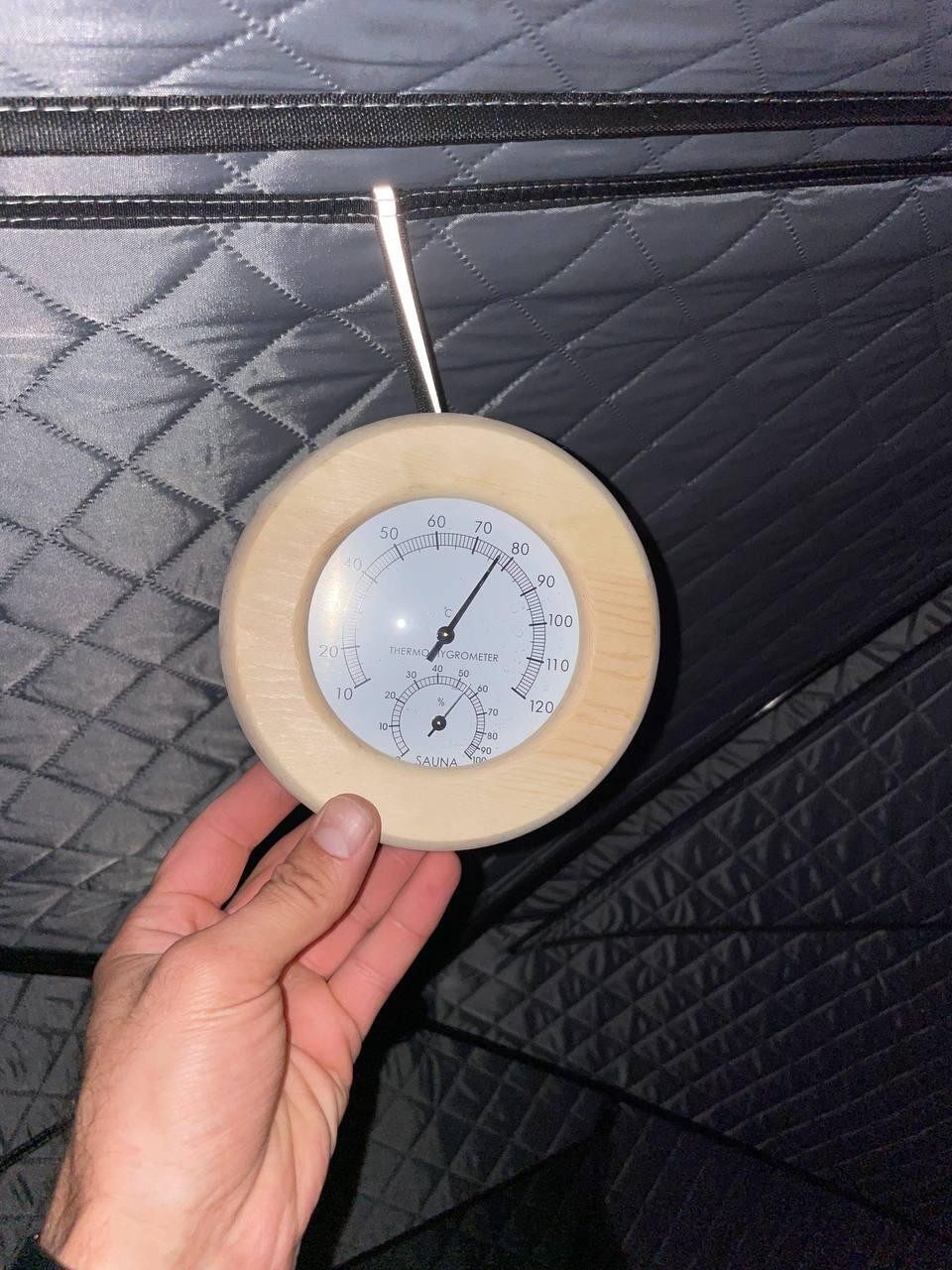
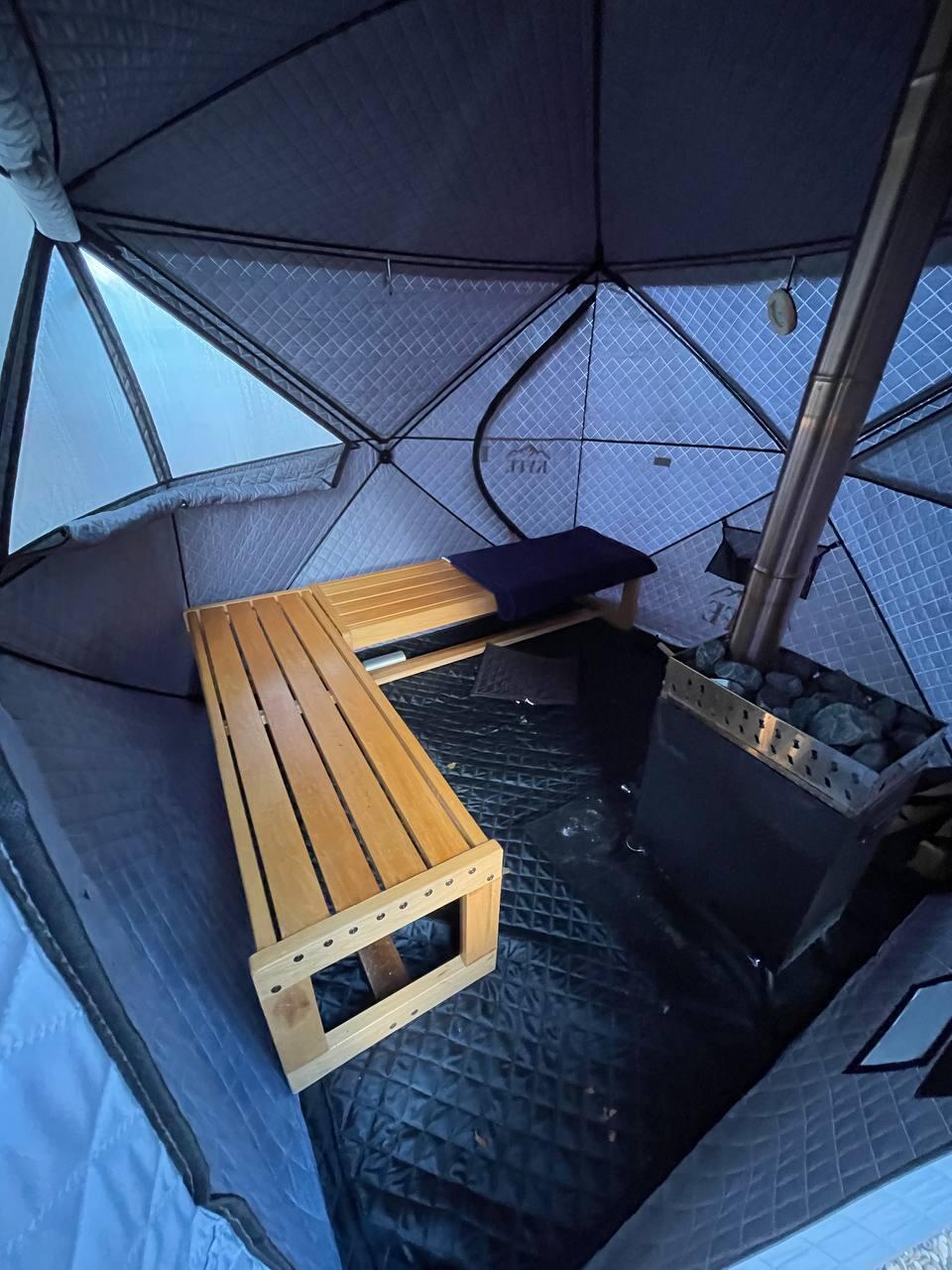
What's the cheapest way to get a dry sauna at home? A portable wood-fired sauna tent. The Kyfe Portable Sauna Tent is $1,499 complete — stove, rocks, gloves, thermometer, travel bag, and a free cold plunge. It reaches 200°F in about 30 minutes, requires no electricity and no installation, and sets up in 15 minutes. Permanent dry sauna installations start around $3,000–$5,000 before installation costs.
What Are Saunas Used For?
Why the Kyfe Portable Sauna Tent Is the Best Wood-Fired Sauna Kit of 2026