

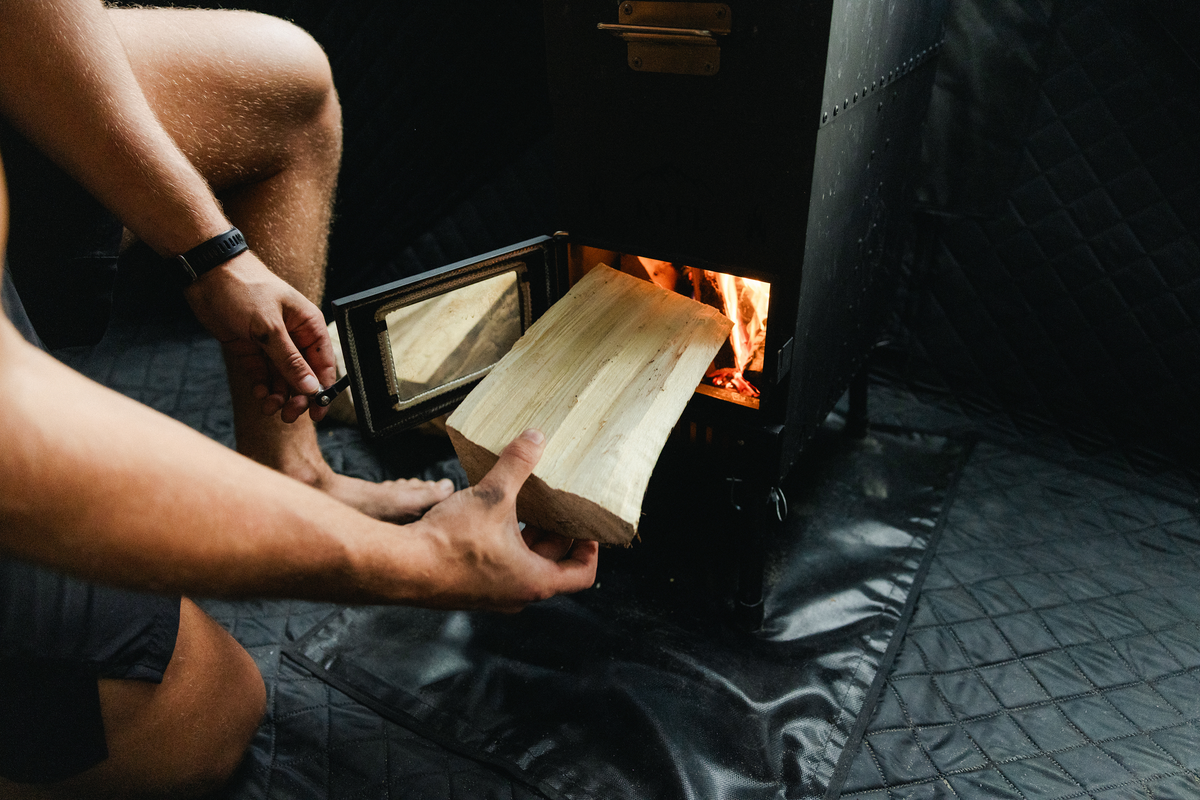
A wood burning sauna stove is the simplest way to get real heat, real steam, and a real sauna anywhere you want one. This guide covers how the stove works, how to pick the right size, what to burn, and how to run it safely, whether you're setting up a tent in the backyard or hauling one to a lakeside campsite.
What Is a Wood Burning Sauna Stove & How Does It Work?
Before you shop for stoves or tents, it helps to know what you're actually looking at. Here's how a wood burning sauna stove creates heat and steam in a portable tent or small cabin.
-
A wood burning sauna stove is a compact steel firebox designed to burn split hardwood logs. On top of the firebox sits a rock basket or stone tray loaded with dense volcanic stones that absorb and store heat.
-
The process works in steps: you load firewood and kindling into the firebox, light the fire, and the steel body heats up first. As the fire burns, hot gases rise past the stones, heating them by direct contact. The stones absorb that energy and radiate it steadily into the sauna, even as the flames die back between loads.
-
Pouring a ladle of water over the hot stones creates soft, moist steam called löyly. This is the defining feature of a traditional Finnish sauna, part of a broader sauna culture shared with Estonia and Finland, and feels noticeably different from the dry heat of an electric unit or the radiant warmth of infrared panels. Stone capacity in sauna stoves directly affects the quality of that steam.
-
In a portable or backyard setup, the stove connects to a chimney pipe that exits through a roof jack in the tent or structure. Smoke and combustion gases go up and out; the air inside stays breathable.
-
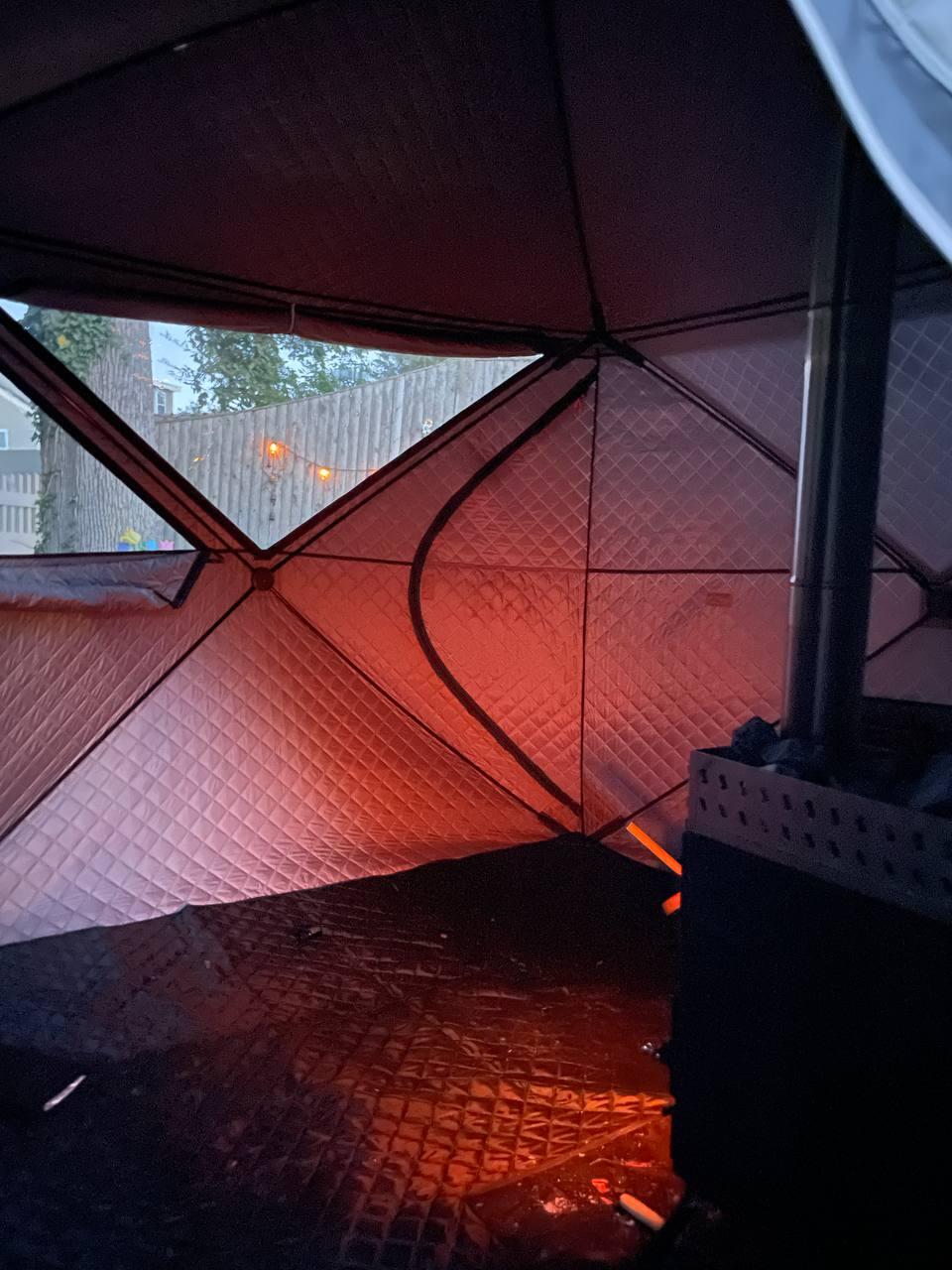
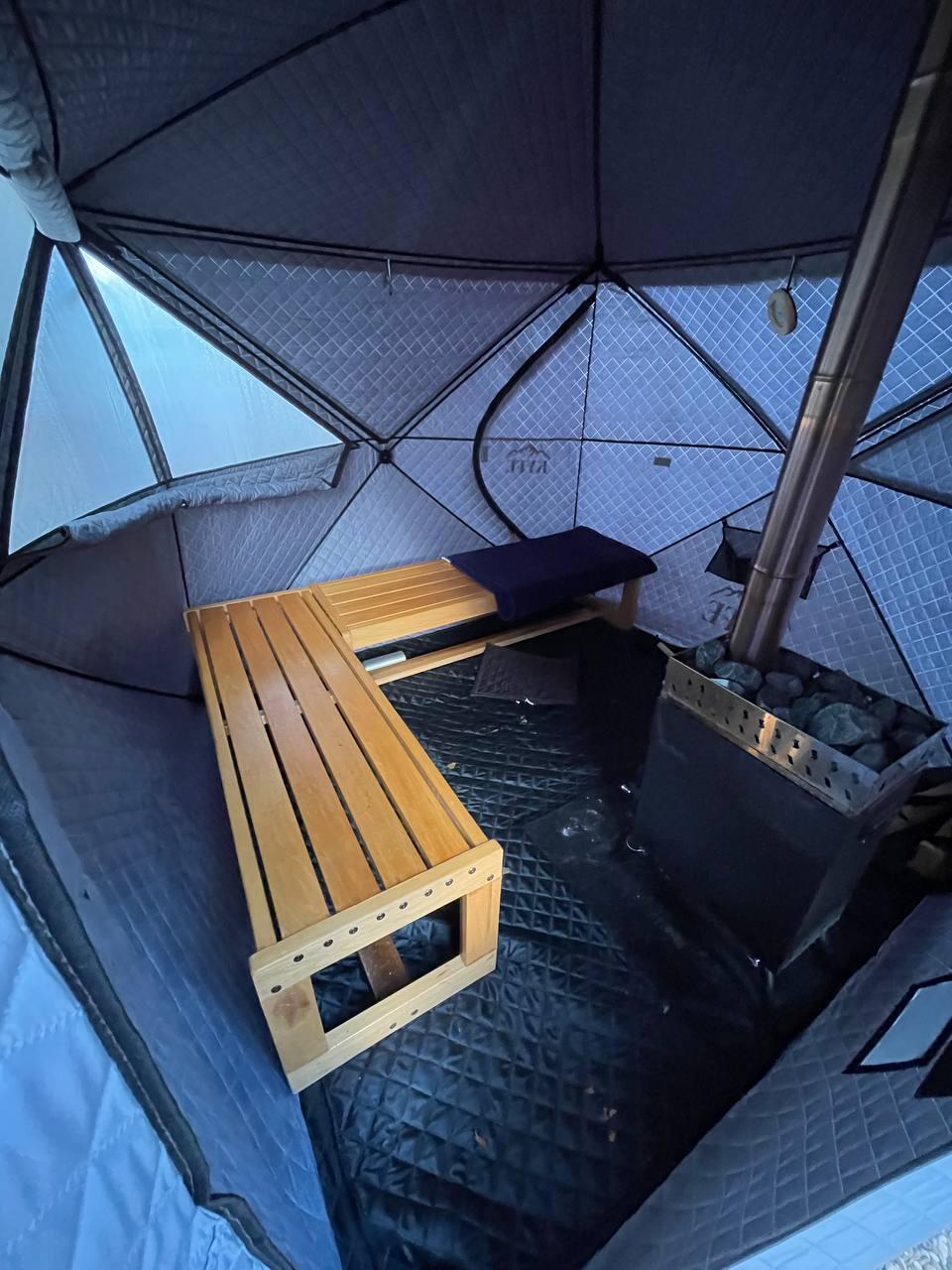
Picture a typical layout: the stove sits near one wall with a fireproof panel behind it, the chimney rises straight up through a sealed roof jack, and benches wrap around the remaining two or three sides. Doors open on the wall opposite the stove for airflow and easy exit.
-
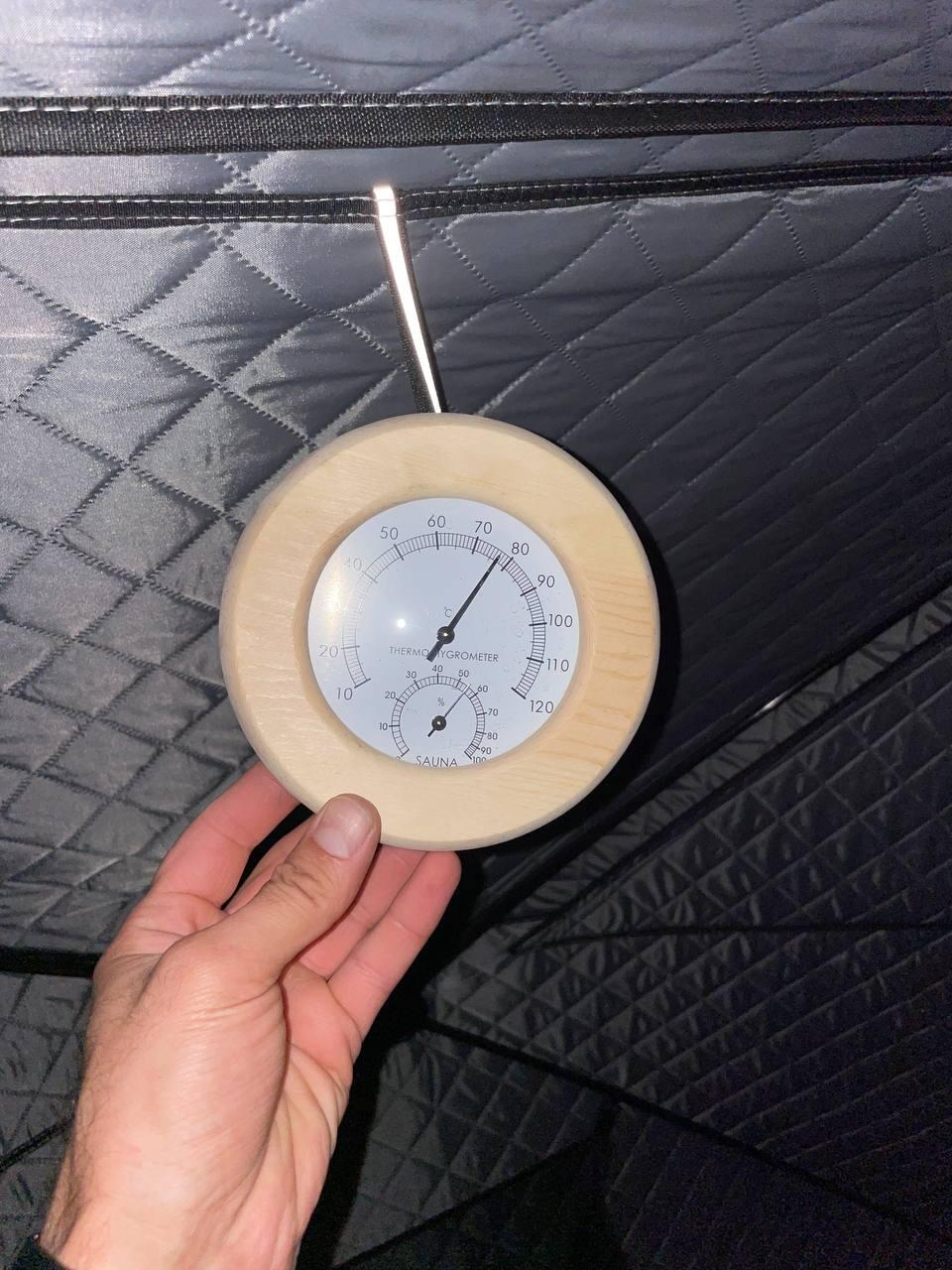
Operating temperatures in a well-designed wood burning sauna typically reach 170 to 200°F. A properly sized stove paired with good insulation heats a 2 to 8 person enclosure evenly, with enough thermal mass in the stones to sustain that heat through a full session.
Why Choose a Wood Burning Sauna Over Electric or Infrared?
For sauna enthusiasts who want a pure sauna experience, the stove itself is where the whole thing starts. Here's why wood-fired heat keeps drawing people in.
-
The sensory side is hard to replicate. You hear the crackle of the fire, catch the subtle smell of burning birch or oak, and if your stove has a glass door, you see the flames flicker while you sit. That ritual of tending a fire is part of what makes the session feel like more than sitting in a hot room.
-
Wood burning heaters produce softer steam compared to electric heaters. A large stone mass heated by a live fire holds energy longer, so when you pour water, the löyly comes out dense and gentle rather than sharp. For a deeper look at how this works, read How to Get the Perfect Löyly.
-
Off-grid freedom is practical, not just romantic. Wood stoves can be set up anywhere without electric power: a campsite, a friend's cabin, a remote lakeshore, or your own backyard. Electric sauna heaters require a 240V circuit, wiring, and often a permit. Wood requires a bag of split logs.
-
Electric heaters typically heat saunas to about 165°F in 30 to 40 minutes and offer more convenience than wood burning stoves, with thermostat control and push-button operation. But wood stoves require more effort to warm up, and that effort is part of the appeal for people who value the process. For a full comparison of wood-fired vs. electric saunas, we break it down in detail.
-
Infrared panels warm your body directly with radiant energy but don't use stones or produce steam. The experience is different from traditional Finnish steam because there's no löyly, no deep ambient heat stored in rocks, and no humidity control. This comparison of wood-fired, infrared, and electric saunas explains the difference in detail.
-
Using locally sourced, seasoned firewood keeps things clean. A properly run stove with dry hardwood achieves near-complete combustion, producing minimal visible smoke and far less creosote than a stove fed with wet or green wood.
How a Wood Burning Sauna Stove Heats a Tent or Backyard Sauna
Understanding how heat actually moves inside a burning sauna tent helps you get better sessions and avoid common mistakes.
-
Air enters the firebox through an adjustable vent at the base. Fuel burns on a grate inside, and hot gases travel upward toward the chimney. The more air you feed in, the hotter and faster the burn. Restricting the vent slows things down and stretches your firewood.
-
The stove body itself, the steel walls and top plate, absorbs high temperatures from the fire and radiates that heat into the surrounding air. This is convective and radiant heating working together: the air near the stove warms and rises, pulling cooler air from floor level in a continuous loop.
-
The rock basket or stone chamber on top of the stove stores heat deep in the stones, smoothing out temperature swings. When you pour water, the stored energy flash-converts it to steam. Higher stone capacity results in softer and longer-lasting löyly because more thermal mass means slower cooling between pours.
-
Space matters. A compact stove suited for 80 to 120 square feet works for a 2 to 3 person tent or micro cabin. A medium stove covers 120 to 200 square feet for 4 to 6 people. Larger setups pushing 200 to 300 square feet need a stove with a bigger firebox and more stone mass to match. Uninsulated surfaces increase heat loss, so wall and roof insulation is just as important as stove output.
-
In a well-designed sauna heater, the path of hot flue gases is routed to contact as much stone surface as possible before exiting the chimney. This extracts more energy from each piece of wood rather than sending it straight up and out.
-
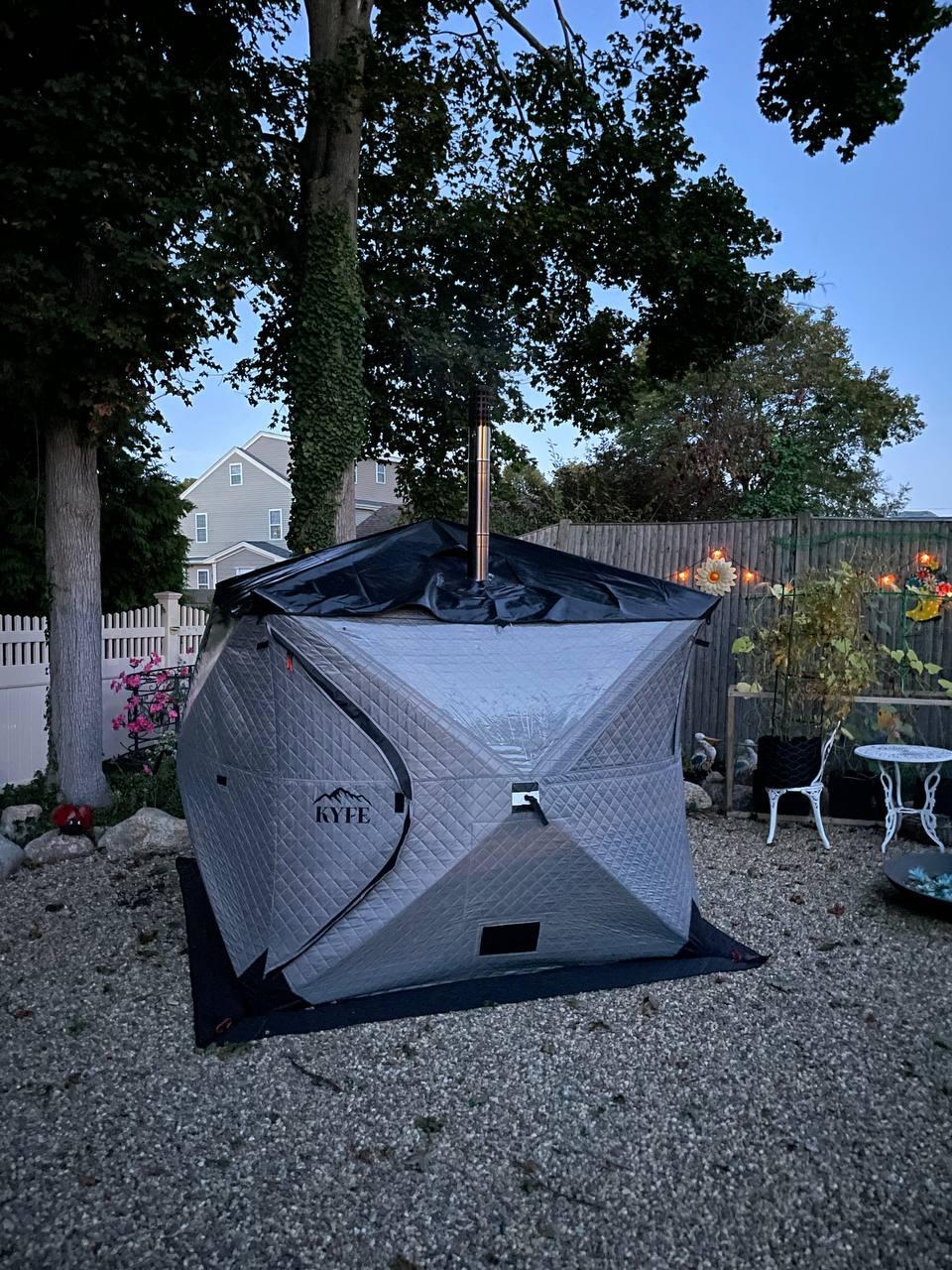
In portable setups like KYFE's wood-fired sauna tents, the combination of triple-layer insulated fabric and a matched stove brings the interior from ambient temperature to 180 to 200°F in roughly 25 to 40 minutes, depending on outside conditions.
Choosing the Right Size Wood Burning Sauna Stove
Getting the right size stove prevents two common problems: a stove too small struggles to hold temperature in cold or windy weather, and a stove too large overfires easily, wastes wood, and can damage tent fabric with excess heat.
-
Sizing starts with your sauna's interior volume in cubic feet (length times width times height). But insulation quality, window area, door sealing, and ground contact all affect how much heat you lose, so volume alone isn't the whole picture. The stove's cubic feet rating should match your sauna room for proper heating.
-
Simple guidance: small stoves serve roughly 80 to 120 square feet (2 to 3 people), medium stoves cover 120 to 200 square feet (4 to 6 people), and larger stoves handle 200 to 300 square feet (6 to 8 or more).
-
In cold climates, January in Minnesota or Ontario for example, plan for a stove with 10 to 20 percent more capacity than a mild-weather calculation would suggest. Wind and sub-zero ambient temperatures eat into your heat budget fast.
-
Stone capacity varies widely. Portable tent stoves typically hold 40 to 80 pounds of stones. The Iki Mini stove holds 264 pounds of rocks, putting it in a different class for steam quality. Its compact size does not require a compromise in steam quality for small to medium saunas. Kuuma stoves weigh 375 pounds and are made from American steel, with longevity that appeals to permanent installations. Finnleo Karhu 20 is designed for regular sized saunas. The SSC 201 costs $800 and delivers roughly 80% of the performance of premium brands at a lower price point, while some top of the line models cost more. More stones means more stable, gentle steam, but also more weight and a sturdier support requirement.
-
KYFE sizes each stove to its matching tent. The stove and stone load (about 35 pounds of volcanic rock) are paired to reach 180 to 200°F without overfiring, so you don't need to do the math yourself.
-
Think about how many users will share the sauna and how often you'll fire it up each week. Frequent sessions with groups of four to six people call for a stove that can sustain multiple rounds without long re-heat gaps. That's how you find your perfect heater.
Types of Wood Burning Sauna Stoves (Portable vs. Permanent)
Not all wood burning sauna stoves share the same design. The stove suited to a tent at a campsite looks and performs differently from one bolted into a permanent backyard cabin.
Portable wood-fired stoves use lighter gauge stainless steel (often 430 or 441 grade), a compact footprint, folding legs, and detachable chimney sections. They're built to break down, fit in a vehicle, and reassemble in minutes. Stove loading configuration in these models is typically internal: you feed wood from inside the sauna.
Permanent stoves for backyard cabins or barrel saunas use thicker steel or cast iron walls, hold more stone mass (often 150 pounds or more), and heat up slower but retain temperature longer. Thicker steel construction prevents warping and increases durability over years of regular use. Some permanent stoves offer external (feed-through) loading so you add wood from outside the sauna room. Harvia stoves are known for their affordability and availability in this space, and the Harvia M3 specifically is known for its reliability and easy parts availability, making it a solid entry point for anyone building a permanent setup.
Glass-door stoves let you watch the fire, which adds to the atmosphere. Solid-door units tend to be more rugged and retain heat slightly better because glass, even tempered ceramic glass, conducts heat faster than steel.
KYFE's stoves are crafted for tent use, with rock baskets, spark arrestor chimney caps, and heat shields that protect fabric walls from the stove's radiant output. For anyone starting their wellness journey with a first sauna, a straightforward inside-load portable stove is the simplest path in, no masonry, no external feed-through, no building permits. Some buyers later upgrade from a standard heater choice to a wood-burning heater when they want a more traditional setup.
Firewood Basics: What to Burn (and What to Avoid)
Good firewood is the single biggest factor in clean, efficient heat from any wood burning stove.
-
Best choices: dry, seasoned hardwoods like oak, maple, birch, beech, or ash. Season them for 6 to 12 months until moisture content drops to around 15 to 20%. At that range, you get a hotter, cleaner burn with less smoke and less creosote lining the chimney. For a complete guide to sauna firewood, we cover species selection, seasoning methods, and storage tips.
-
Recognize seasoned wood by its lighter weight, visible cracks or checks at the cut ends, peeling bark, and a hollow "ping" when you knock two pieces together. Fresh-cut wood sounds dull and feels heavy with moisture.
-
Never burn green (freshly cut) wood, pressure-treated lumber, painted wood, plywood, or construction scrap. Treated lumber and composites release toxic fumes. Green wood loses so much energy evaporating its moisture that wood consumption jumps while heat output drops. Wet wood with moisture content above 20% reduces combustion efficiency by 30 to 40% and increases creosote formation by a factor of 3 to 5.
-
Softwoods like spruce or pine work for kindling to get the fire started but shouldn't be your main fuel. They burn fast, produce more smoke, and leave more resinous deposits inside the chimney.
-
Quality firewood gives you a more predictable sauna experience: steadier temperatures, less time fussing with the fire, and cleaner air inside the tent. If you're planning regular use, stock a small firewood supply sized to your weekly routine and local climate. A typical session burns 10 to 15 pounds of hardwood.
How to Start, Maintain, and Control a Sauna Fire
Running a wood burning sauna is a simple skill. Most people get comfortable with it after two or three sessions.
-
Start by opening the air intake vent fully and making sure the chimney damper is open. Place fire starters or crumpled newspaper at the bottom of the firebox, then stack kindling and small splits in a crisscross pattern above it. Light from the bottom so the draft draws flames upward through the wood.
-
During the early burn, keep the stove door slightly cracked until the chimney warms up and establishes a steady draft. You'll know the draft is working when smoke stops leaking from the door edges and pulls cleanly up the flue. Proper airflow at this stage directly affects wood consumption and heat output for the rest of the session.
-
Once a bed of glowing coals forms (usually 10 to 15 minutes in), start adding larger splits. Avoid loading the firebox full; two or three pieces at a time keeps the fire burning clean. Overloading causes smoldering, smoke, and incomplete combustion.
-
To manage heat, adjust the intake vent and wood quantity. Wide-open vent with fresh splits brings the temperature from a 140 to 160°F warm-up phase up to a 180 to 200°F peak. Partially closing the vent after the fire is established holds temperature without burning through wood too quickly. Aim for complete combustion: a hot, clean-burning fire with minimal visible smoke from the chimney.
-
In KYFE-style wood burning sauna tents, expect about 30 minutes from lighting to sauna-ready temperatures in moderate weather. Cold or windy days push that closer to 45 minutes.
-
During the session, add one small log every 10 to 20 minutes rather than large infrequent loads. This keeps the heat steady without temperature spikes or drops. Add water to the stones only when they reach at least 160°F (71°C); pouring water on cooler stones just makes a puddle instead of steam.
-
At the end, let the fire burn down to coals naturally. Open the door or vent to let the stove cool gradually. If needed, a very light sprinkle of water on the last embers finishes things off once the session is done.
Ventilation, Chimney Setup, and Safety Features
Proper chimney and airflow are what make a wood burning sauna stove both safe and effective. Wood burning sauna stoves balance rapid heating with safety clearances, and getting the chimney right is half the equation.
-
The chimney should run as straight and vertical as possible, with locking pipe sections and a spark arrestor cap at the top. For tents, the pipe exits through a dedicated roof jack with insulated flashing. For Iki stoves, install a 4 to 6 inch chimney adapter to match the flue outlet.
-
Minimum chimney height is 2 feet above anything within 10 feet of the pipe exit. Total chimney height of 6 to 8 feet (including the sections inside the tent) provides enough draft for clean combustion. Too short a chimney means weak draft, smoke spillage, and wasted fuel.
-
Fresh air enters the sauna through tent vents, a small floor or wall opening, or natural fabric permeability. Some intake air is necessary: the fire needs oxygen, and the people inside need breathable air.
-
Heat shields around the stove and insulated flashing at the chimney exit point protect nearby walls, tent fabric, or wood surfaces from high temperatures. Clearances and safety distances are critical in sauna stove installation, and they vary based on the materials and design of the stove. Safety certifications for stoves ensure compliance with local building codes, which matters especially for permanent backyard setups.
-
KYFE stoves and tents are designed as a matched system: compatible stove jack, tested clearances, and chimney components that seal correctly. For more on portable sauna safety, we cover the details.
-
For permanent backyard installations, add a battery-powered carbon monoxide detector nearby as an extra layer of protection.
Breaking In a New Wood Burning Sauna Stove (First Burn)
A proper break-in burn cures the stove's paint or powder coating, burns off manufacturing oils, and protects the steel for the long run. Skipping this step can bubble the finish, warp panels, and shorten the life of your sauna heater.
-
Do the first burn outdoors or in a fully ventilated tent with all doors and vents wide open. Nobody should be sitting inside during this process.
-
Run three progressively hotter burns. First: a small kindling fire for 30 to 45 minutes at modest temperature, then let it cool completely. Second: a slightly hotter fire with small splits, same duration, cool again. Third: bring the stove up to near-normal operating temperatures (180 to 200°F) and hold it there. Cure your stove by avoiding full blast on the first fire.
-
You'll notice light odors from curing paint or burning off residual oils during these initial fires. That's normal, and it's the reason you don't occupy the sauna until the break-in is complete.
-
KYFE ships stoves with first-burn directions in the manual. Following them keeps your warranty in good standing.
-
While you're at it, check stones annually for degradation or settling. Stones that have cracked or compressed reduce airflow through the rock basket and weaken steam quality over time. Replace any that are visibly crumbling.
Essential Safety Tips for Wood Burning Sauna Use
Wood burning heaters are safe when you treat them with the same respect you'd give any wood stove in your home. A few straightforward habits keep things worry-free.
-
Place the stove on stable, level ground. Wood stoves require a non-combustible hearth pad underneath; a metal or firebrick pad protects the floor and any surface below. Maintain clearances from benches, walls, and tent fabric per the manufacturer's specifications.
-
Never leave the stove burning unattended, especially in portable tents or when children and pets are nearby.
-
Keep a small fire extinguisher or bucket of water and sand within reach for any backyard or campsite setup.
-
The stove body, door, and chimney get hot enough to cause burns on contact. Move carefully around the stove, don't lean anything flammable against it, and use heat-resistant gloves when loading wood, adjusting vents, or handling chimney sections.
-
Burn only clean, dry firewood. No trash, no accelerants, no liquid fuels, no treated lumber or painted scrap.
-
After a session, allow plenty of cool-down time before packing up a portable stove. Storing a hot stove risks fabric damage and creates a fire hazard. Let everything cool until it's comfortable to touch with bare hands. For more on sauna do's and don'ts, we have a full rundown.
The KYFE Wood-Fired Sauna Tent Experience
KYFE builds portable wood-fired sauna tent kits around one idea: give people an authentic sauna experience they can set up anywhere and take with them when they leave.
-
Each kit packs into a vehicle and assembles in 5 to 15 minutes on any flat outdoor surface. The stove, chimney, 35 pounds of volcanic sauna stones, fireproof floor mat, thermometer, and gloves all come in the box. The tent heats to 180 to 200°F in about 30 minutes with seasoned hardwood.
-
Tent sizes range from a mini for 2 to 3 people to larger models for 6 to 8 people. Every tent ships with a matched wood burning sauna stove sized to its interior square feet and volume, so the stove and space work together without guesswork. No electricity required.
-
The tents use triple-layer construction: 420D Oxford Polyester outer shell, cotton insulation in the middle, and heat-resistant TPU windows. The stove includes a rock basket for real löyly, not just dry heat. This is a pure sauna setup, not an infrared hot box.
-
Many KYFE customers pair the hot session with the included cold plunge tub for a complete contrast therapy routine. Going from deep heat to cold water and back is a classic Finnish practice and one of the simplest ways to extend a session into a full wellness ritual.
-
KYFE offers free shipping in North America, a 60-day return window, warranty support, and a responsive customer service team for setup questions. Discover more about the kits, what's currently in stock, and whether any accessories or bundles are on sale on the KYFE sauna tent page.
A wood burning sauna stove is straightforward once you know the basics: good firewood, proper airflow, and a stove matched to your space. The rest is just showing up, lighting the fire, and pouring water on hot stones. Explore KYFE's wood-fired sauna tent kits if you want to bring that experience to your backyard, your cabin, or wherever the weekend takes you.
Camping Sauna: How to Take a Real Sauna Experience Into the Wild