

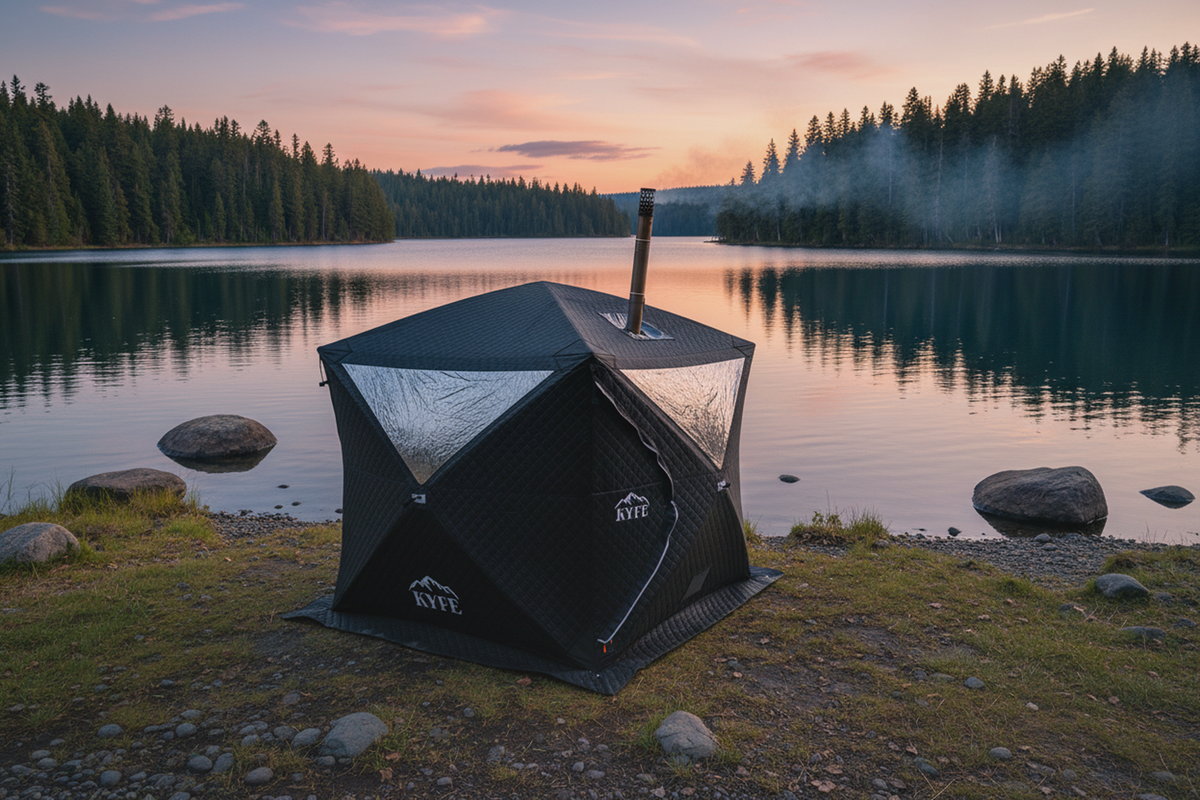
What Is a Sauna Tent?
A sauna tent is a portable, enclosed structure designed to produce the high-heat environment of a traditional sauna — without a permanent building, electrical hookup, or installation cost. The best versions are wood-fired: a compact stove burns inside the tent, heats a basket of volcanic rocks to temperature, and when water is poured over those rocks, the space fills with dense, authentic steam. That steam — known in Finnish as löyly — is what separates a real sauna experience from the lower-temperature alternatives on the market today.
The structure itself packs into a travel bag. It sets up in roughly 15 minutes on any flat outdoor surface — a backyard, a campsite, a riverbank, a snow-covered clearing. When the session is done, it breaks down just as quickly. No permits, no contractors, no permanent footprint.
Sauna tents have grown significantly in popularity as buyers look for authentic heat performance without the $10,000–$30,000 cost of a permanent installation. The wood-fired format specifically appeals to people who want the real experience — fire, stone, steam — not a scaled-down electric substitute.
How a Wood-Fired Sauna Tent Works
The heat source is everything. In a wood-fired sauna tent, a stainless steel stove burns hardwood inside the enclosed structure. The stove connects to a chimney that vents smoke safely out through the roof. A rock basket sits on top of the firebox and holds volcanic sauna stones — dense, heat-retentive rocks that absorb and radiate thermal energy far more effectively than metal surfaces alone.
Once the rocks reach temperature — typically around 30 minutes from lighting the fire — the interior of the tent climbs to 160°F, 180°F, and well beyond. When you ladle water over the hot stones, the rocks convert that water into a burst of steam that raises the perceived heat instantly and saturates the air with the humid intensity that defines the Finnish sauna tradition.
This is the mechanism behind löyly. It is not a feature you can replicate with an infrared panel or a steam generator. It requires real combustion, real stone, and real fire — all of which a quality wood-fired sauna tent delivers.
The chimney design matters as much as the stove. A well-drafted chimney pulls air through the firebox efficiently, sustains a clean burn, and routes combustion gases safely outside the tent. Poorly designed chimneys smoke, draft inconsistently, and prevent the stove from reaching full temperature. When evaluating a sauna tent kit, the chimney system is not a detail to overlook.
What's Included in a Sauna Tent Kit
A complete sauna tent kit should arrive ready to use with no additional sourcing required. At minimum, that means:
- The insulated tent structure with integrated floor, sealed door, and chimney port
- A wood-burning stove with glass fire door and folding legs
- A rock cage or basket loaded with volcanic sauna stones
- A stainless steel chimney system
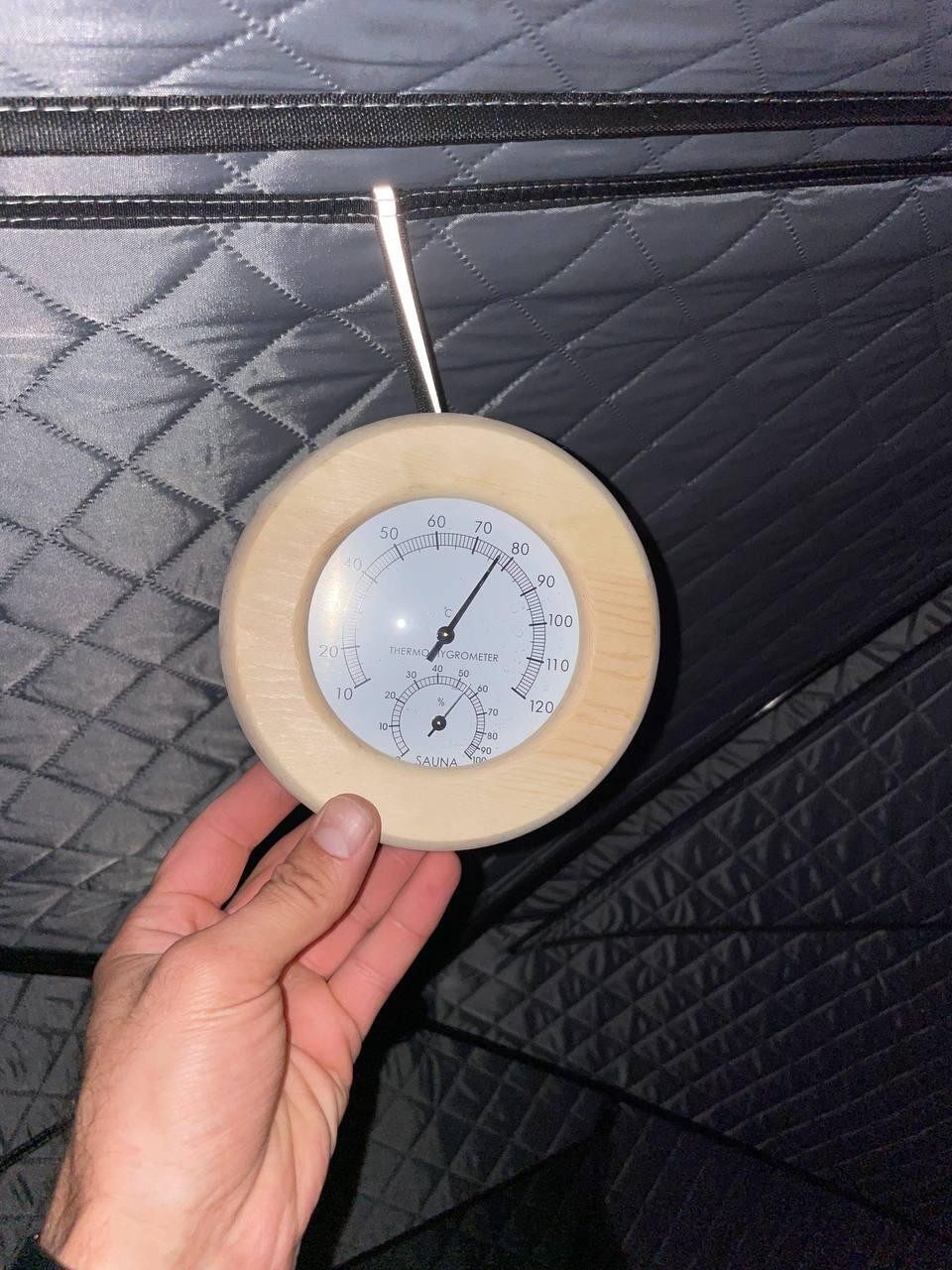
- Heat-resistant gloves and a thermometer
- A carry bag for transport and storage
Some kits ship the stove separately from the rocks or exclude accessories entirely, which adds cost and friction before your first session. The KYFE Portable Sauna Tent ships with everything included — stove, rock cage, rocks, gloves, thermometer, and travel bag — plus a free cold plunge. Nothing to source separately.
Sauna Tent vs. Other Portable Sauna Formats
The portable sauna category is broader than most buyers realize, and the differences between formats are significant. Understanding them before purchasing prevents a common and expensive mistake: buying a lower-temperature product expecting a traditional sauna result.
Sauna blankets wrap around the body and use far-infrared heat to warm tissue directly. They operate at 120–140°F and are primarily a recovery convenience tool. There are no rocks, no steam, no shared space, and no meaningful cardiovascular response at that temperature range. A sauna blanket is not a sauna in any traditional sense — it is a different product serving a different purpose.
Electric steam tents use a plug-in steam generator to fill a small nylon enclosure with humid air. They are typically under $500, top out around 110–130°F, and lack the heat distribution, rock mass, or temperature ceiling associated with real sauna bathing. The steam feels intense at low temperatures but does not produce the core temperature elevation or cardiovascular stress that makes traditional sauna use physiologically meaningful.
Electric sauna cabins are permanent or semi-permanent structures with an electric heater. They can reach traditional sauna temperatures (160–185°F) but require installation, electrical wiring, and a dedicated space. They are not portable.
Wood-fired sauna tents operate at 160–200°F+, produce authentic löyly, and deliver the thermal exposure that decades of Finnish health research has been built around. They are the only portable format that genuinely replicates the traditional sauna environment — and the only one that functions entirely off-grid.
The research most often cited in support of sauna health benefits — particularly the Finnish cardiovascular studies — is based on traditional high-heat exposure above 170°F. A product that plateaus at 140°F is not delivering the same physiological stimulus, regardless of what its marketing claims. For a full breakdown of how heat source and format affect the experience, see our comparison of wood-fired vs. infrared vs. electric saunas.
What to Look for When Choosing a Sauna Tent
Insulation and fabric quality.
The tent walls need to hold heat at 190°F+ in outdoor conditions, including wind, rain, and cold. Look for quilted, multi-layer construction with reinforced seams and an integrated floor skirt that prevents heat from escaping at ground level. Thin single-layer materials struggle to maintain temperature in anything but ideal weather and will consistently underperform in real-world conditions.
Stove performance and sizing.
The stove determines how fast the tent heats and how high it climbs. A quality firebox with a proper chimney draft reaches 200°F in under 30 minutes. Undersized or poorly vented stoves plateau early, require constant tending, and rarely reach traditional sauna temperatures. Look for a stove with a glass fire door — it allows you to monitor combustion without opening the door and releasing heat — and folding legs that make setup on uneven ground manageable.
Rock mass.
More rock in the basket means more heat retention and more steam capacity per pour. A sauna that runs out of thermal energy after two ladles is a frustrating experience. Look for a rock cage that holds at least 30–35 lbs of volcanic stone. The stone type matters too — volcanic basalt and olivine diabase hold heat effectively and survive repeated thermal cycling without cracking. Avoid decorative or sedimentary stones, which can fracture under heat and pose a safety risk.
Capacity.
Sauna tents range from compact one-to-two person setups to tents that comfortably seat six to eight. A larger tent supports the social dimension of sauna — which is historically one of its most important functions — and gives everyone room to sit comfortably without crowding the stove. If you plan to use the sauna with family or friends regularly, size up rather than down.
Portability and packed size.
The tent, stove, rocks, and accessories should compress into a bag or bags that fit in a truck bed or SUV cargo area. If the total packed configuration requires a trailer, it is not genuinely portable for most buyers. Confirm packed dimensions and total weight before purchasing.
Kit completeness.
The most important practical question: does the kit include everything needed to run a session on day one? Stove, rocks, chimney, gloves, and thermometer should all be in the box. Brands that sell the stove separately from the tent, or exclude rocks, are either cutting costs or engineering upsells — both of which add friction to your ownership experience.
How Much Does a Sauna Tent Cost?
Sauna tent pricing varies significantly by format, size, and kit completeness.
Entry-level electric steam tents run $200–$500 but deliver low temperatures and a limited experience. Wood-fired sauna tents — the format that produces authentic heat and löyly — start around $800 for basic configurations and reach $1,500–$2,000 for complete, full-size kits with quality stoves and accessories included.
The KYFE Portable Sauna Tent is priced at $1,499 and ships with everything included plus a free cold plunge. Compared to a permanent sauna installation — which typically runs $8,000–$30,000 including labor, permits, and electrical work — the all-in cost of a complete wood-fired sauna tent represents a significant value for buyers who want authentic performance without a construction project.
HSA/FSA funds can be applied to the KYFE through Truemed, which reduces the effective out-of-pocket cost for eligible buyers.
The KYFE Portable Sauna Tent
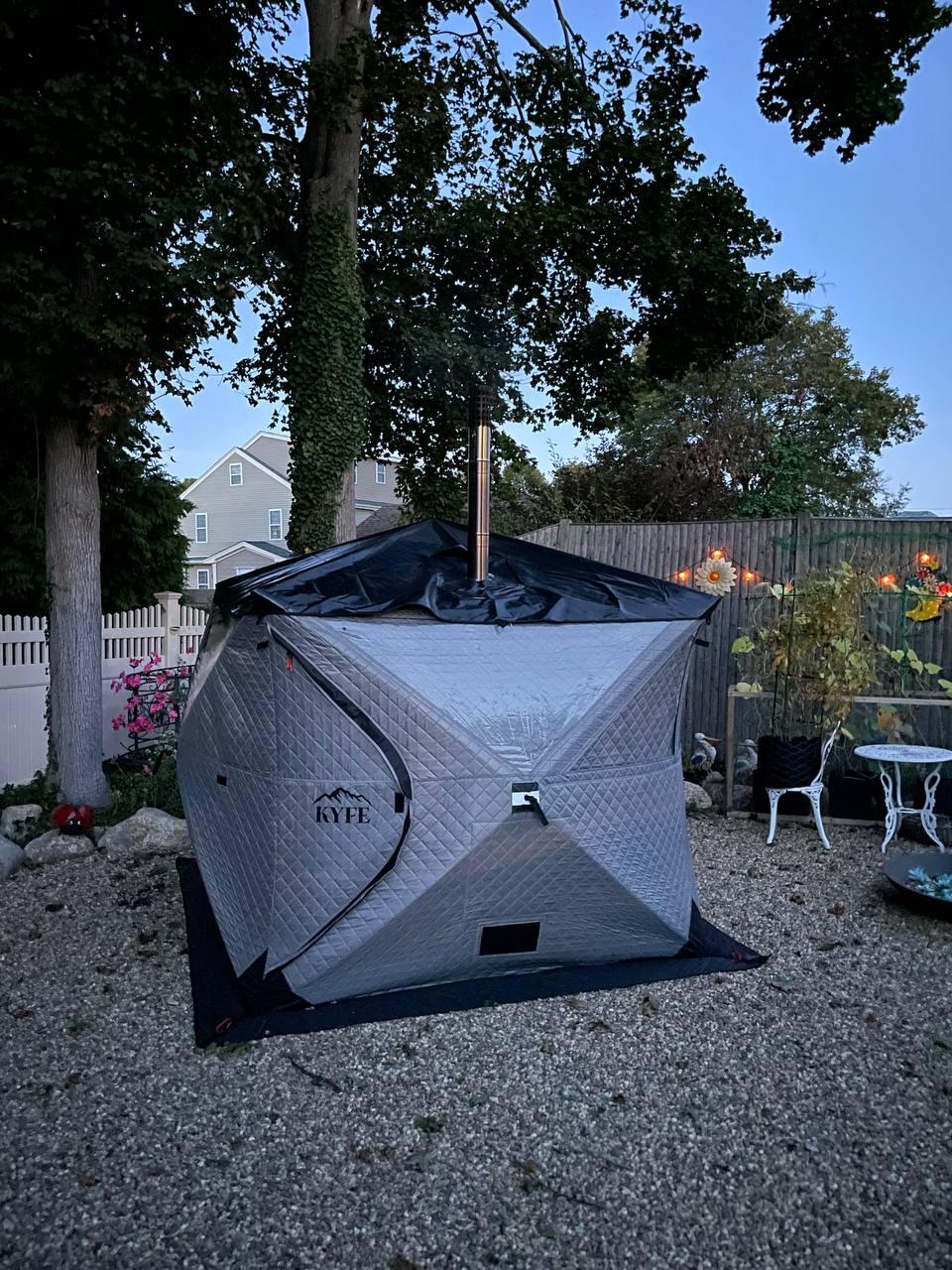
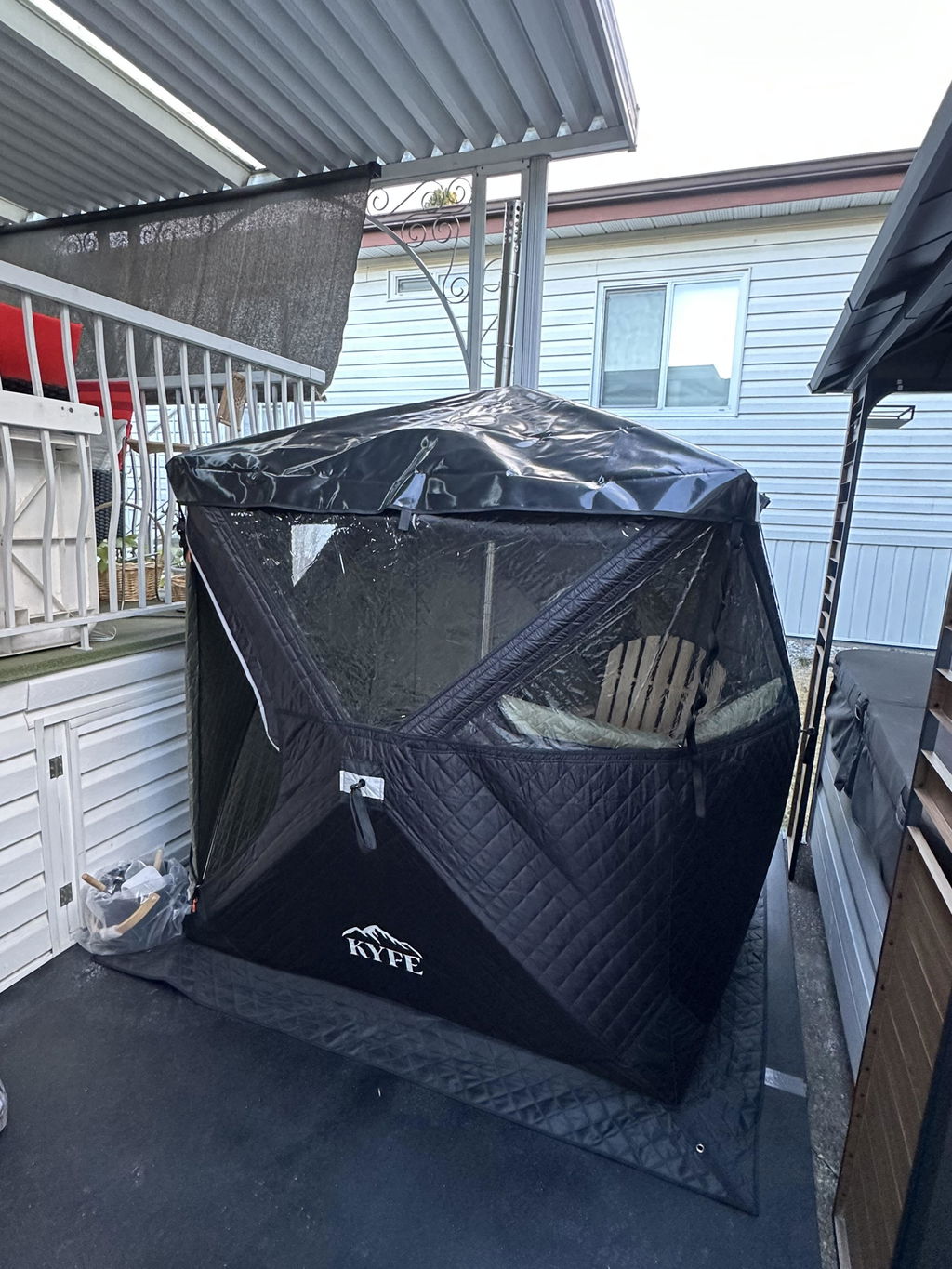
The KYFE Portable Sauna Tent is a wood-fired, six-to-eight person outdoor sauna that reaches 200°F in under 30 minutes. It ships complete — stove, rock cage, rocks, gloves, thermometer, and travel bag — with a free cold plunge included. Setup takes 15 minutes on any flat outdoor surface. It requires no electricity, no installation, and no permits.
It is available in three colorways: Black Limited Edition, Forest Green, and Arctic Gray.
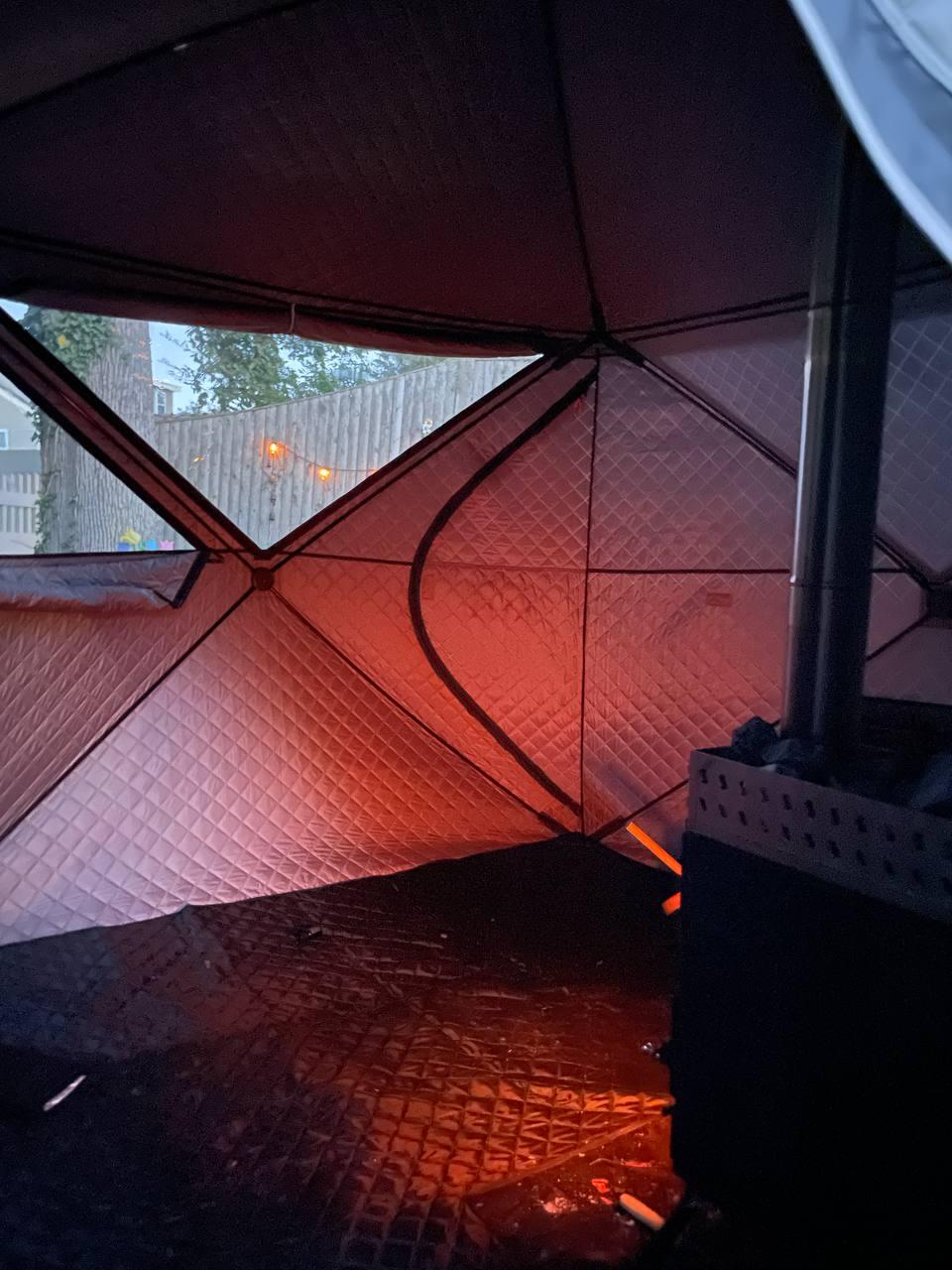
The KYFE's design includes 360° panoramic windows, which give a full view of the surrounding environment from inside the tent — a feature that customers consistently cite when using the tent at lakesides, in forests, and in winter backyards. The integrated floor skirt and quilted insulation walls hold heat effectively in cold weather, and the entire kit packs into a single travel bag.
The KYFE is HSA/FSA eligible through Truemed, ships free, and is backed by a 60-day return policy.
Where to Use a Sauna Tent
The defining characteristic of a portable sauna tent is location flexibility. Common setups include:
Backyard use. The most consistent option — a flat lawn or patio surface, proximity to firewood storage, and easy access to a cold plunge or hose. The KYFE's panoramic windows make any backyard setting immersive rather than enclosed.
Camping and overlanding. A sauna tent that packs into a travel bag fits easily in a truck bed or cargo area. Lakeside, forest, or mountain setups are all viable — the wood-fired format requires no hookup of any kind, which makes it genuinely usable anywhere.
Winter use. Snow and cold weather do not impair performance. The insulated walls handle sub-freezing ambient temperatures effectively, and the contrast between 200°F interior heat and cold air or snow outside is an experience that warmer climates cannot replicate. Many Kyfe owners report that winter sessions are their favorite use case.
The Benefits of Regular Sauna Tent Use
The physiological case for regular sauna use is well supported by research, particularly from Finnish longitudinal studies tracking thousands of participants over decades. The consistent finding is that frequent sauna use — defined as four or more sessions per week at traditional temperatures above 170°F — is associated with meaningfully reduced cardiovascular risk, improved circulation, and better long-term health outcomes.
The key variable is temperature. These benefits are tied to the thermal stress produced by high-heat exposure, which elevates core body temperature, triggers heat shock protein production, and drives a cardiovascular response similar in some respects to moderate aerobic exercise. Lower-temperature alternatives do not produce the same stimulus, which is why format matters when evaluating portable sauna options.
Beyond the physiological, sauna is one of the few wellness practices that is inherently communal. A six-to-eight person tent turns a personal recovery routine into a shared ritual — something to do with family, training partners, or friends that has a different quality than a solo session. Finnish culture has sustained this tradition for thousands of years, and the social dimension is considered as important as the physical one.
For a detailed look at what consistent sauna use does to the body, see what are saunas used for. For the athlete-specific recovery protocol, see sauna and cold plunge for muscle recovery.
How to Set Up a Sauna Tent
Setup follows a consistent sequence regardless of location.
Choose a flat surface with at least two feet of clearance around the stove and chimney on all sides. Unpack the tent, extend the frame, and secure the structure. Install the stove through the designated floor opening. Attach chimney sections and route them through the roof vent, securing with clamps. Load the rock cage with sauna stones and place it on top of the firebox. Once the tent is sealed, light the fire with dry hardwood and kindling.
Within 20–30 minutes, depending on fire intensity and ambient temperature, the interior will reach sauna temperature. When the rocks are fully heated, begin your session and pour water over the stones to generate steam. Use a ladle rather than pouring directly from a bucket — controlled pours produce better steam and prevent thermal shock to the rocks.
For wood selection, dry hardwoods — oak, ash, maple, and hickory — produce sustained, consistent heat with minimal smoke. For a full breakdown, see what wood to burn in a sauna.
Frequently Asked Questions
How hot does a sauna tent get?
A wood-fired sauna tent with a quality stove reaches 180–200°F under normal conditions. The KYFE consistently reaches 200°F in under 30 minutes, as reported by customers across a range of outdoor environments.
Does a sauna tent work in winter?
Yes. Wood-fired sauna tents perform well in cold weather. The insulation holds heat effectively, and ambient temperature has minimal impact on interior performance once the fire is established. Many owners consider winter the best season for tent sauna use.
How many people fit in a sauna tent?
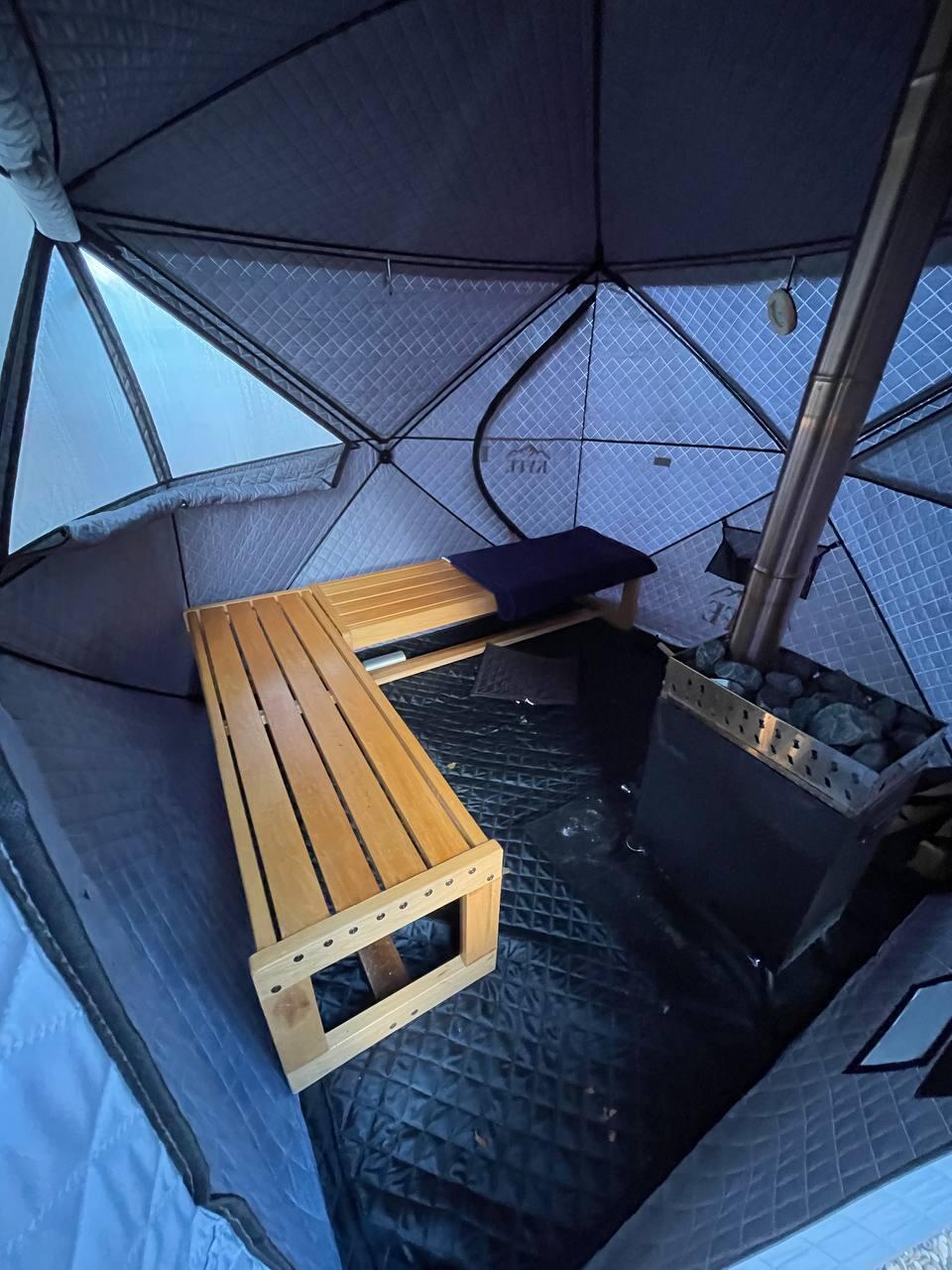
It depends on the configuration. The KYFE Portable Sauna Tent seats six to eight people comfortably with benches installed.
Does a sauna tent require electricity?
No. Wood-fired sauna tents run entirely on firewood. There is no electrical component, which makes them fully off-grid compatible.
What wood should I burn?
Dry hardwoods produce sustained heat with minimal creosote buildup. Softwoods like pine burn faster and less cleanly. See our full guide on what wood to burn in a sauna.
How long does it take to heat up?
With a properly built fire using dry hardwood, a wood-fired sauna tent reaches usable temperature in 20–30 minutes. The KYFE reaches 200°F in under 30 minutes.
Is a sauna tent worth it compared to a permanent sauna?
For most buyers, yes — particularly those who want authentic heat performance without construction cost, permits, or a fixed location. The KYFE delivers equivalent heat performance to a barrel or cabin sauna at a fraction of the all-in cost, with the added benefit of portability. See our full comparison of portable sauna tent vs. sauna barrel.
Can I use a sauna tent every day?
Most healthy adults can use a sauna daily. See can you sauna every day for the full guidance on frequency, session length, and how to build a consistent routine.
Sauna Routine for Beginners: How to Start Safely and Get the Most Out of Every Session
How to Set Up a Sauna Tent: Step-by-Step Guide