


A sauna does not treat a sore throat or a cold. If your symptoms are mild and you have no fever, a short, gentle session with a little steam may feel soothing for a while. If you have a fever, feel faint or are not drinking enough, skip it and rest. This guide is general information, not medical advice.
This guide is for anyone with a sauna at home, at the gym or at a spa who has a scratchy throat. It covers what the research found, dry versus humid heat, when to stay out, when to see a doctor, and how to keep a session gentle.
Is sauna good for sore throat relief? The short answer
A sauna can give you temporary relief. It cannot cure a sore throat or make the common cold behind it go away faster.
In a hot sauna your body temperature rises, your heart rate goes up, blood circulation to your skin increases and you sweat, so you lose fluids. When you are sick, that is extra work for a body whose immune system is already busy fighting an illness.
Dry heat can make a sore throat feel scratchier, especially if you breathe through your mouth. Pouring water on the hot rocks raises the humidity, and humid heat usually feels kinder on a sore throat. The warmth can also help you relax.

What the research shows about sauna and the common cold
There is not much research on using a sauna while sick, and most of it is small.
Breathing hot sauna air did not ease cold symptoms
The most direct test is a 2010 randomized controlled trial in the Medical Journal of Australia. It took place at a sauna in Berlin, Germany, with 157 patients who had symptoms of the common cold. Everyone sat in a hot sauna wearing a winter coat. One group breathed the hot, dry air. The other group breathed dry air at room temperature. Treatment lasted 3 days, with a follow-up period of 4 days.
Overall symptom severity was not significantly different between the two groups. The groups did differ on a few single measures: cold medicine use on day 1, symptom scores on day 2, and how effective people rated the treatment on day 7. Still, the authors concluded that inhaling hot air in a sauna has no significant impact on overall common cold symptoms.
Steam and common cold symptoms
The idea is that breathing heated, humidified air may ease congestion, and that heat may destroy the cold virus, as it does in the lab. A 2017 Cochrane review looked at six trials of this, with 387 participants. The reviewers found it uncertain whether it relieves common cold symptoms and rated the evidence as low quality. No trial showed it making symptoms worse, though some people reported minor discomfort or nasal irritation. These trials tested breathing steam, not sitting in a sauna.
White blood cells after a sauna
You will often read that saunas boost white blood cells and the immune system. A small 2013 study in the Journal of Human Kinetics measured this in 9 trained runners and 9 men who did not train. After one Finnish sauna session, their white blood cell counts were higher, and the authors wrote that the sauna stimulated the immune system, more so in the runners. The study did not look at colds or any other illness, so it does not show that a sauna helps you fight one off.
What the research does not show
No study we found shows that a sauna can cure a sore throat or shorten a cold, and none shows that you can sweat out a virus.
Can regular sauna use help you get fewer colds?
Maybe, but the evidence is thin. A 1990 study in the Annals of Medicine tested whether regular sauna bathing reduces the incidence of common colds, meaning how often people catch them. Twenty-five volunteers took saunas and 25 did not, and the researchers tracked colds in both groups for six months. The sauna group had significantly fewer colds, mostly in the last three months, when the rate was roughly half that of the other group. The duration and severity of colds did not differ significantly between the groups. The authors wrote that regular sauna bathing probably reduces colds, and that more studies are needed. With 25 people in each group, it is a small study.
A 2018 review in Mayo Clinic Proceedings says sauna bathing "may be linked to" several health benefits, including easing conditions such as arthritis, headache and flu. It says these benefits have been linked to the sauna's effect on circulation, the heart and the immune system, but how it might work is still only proposed.
So if regular sauna use is part of your week, keep it up through cold and flu season. Just don't count on it to keep you from getting sick. For the wider research on sauna health, read what are the benefits of a sauna.
Dry heat or steam: what feels better on a sore throat?
A traditional sauna gives you dry heat until you pour water on the rocks. Each ladle sends up a burst of steam, called löyly, and the humidity rises for a while. With a sore throat, that humidity is the main thing you can adjust.
- Pour small amounts of water often instead of one big splash, so each burst stays gentle.
- Breathe through your nose. Mouth breathing in dry heat dries your throat faster.
- Sit on a lower bench, where it is cooler.
- If the heat makes you cough or makes things worse, get out.
A steam room stays humid the whole time, so some people prefer it for a dry throat. A hot shower gives you warm air and moisture with far less heat, a good choice on a day when the sauna feels like too much. Infrared saunas have no hot rocks to pour water on. For more on humidity, see wet vs dry sauna and our beginner's guide to löyly.

When to avoid sauna use
Stay out of the sauna if any of these apply:
- You have a fever or chills. A sauna adds more heat to a body that is already running hot, and your heart has to work harder.
- You feel dizzy, faint, weak or very tired.
- You are dehydrated or can't keep fluids down, for example with vomiting or diarrhea. Sweating in a sauna costs you more fluids, and a dry throat feels worse when you are low on them.
- You have flu symptoms, such as aching all over and feeling very ill, or a chest infection or bronchitis.
- You have trouble breathing, a deep chest cough, or asthma that is flaring up.
- You have taken medications that make you drowsy, or you are not sure your cold medicine mixes well with heat. Ask your doctor or pharmacist.
- You are pregnant or have heart conditions or other health conditions, and you have not asked your doctor about sauna use.
Think about others, too. A common cold spreads, and a public sauna is a small room with shared air, benches and door handles, so going in sick puts everyone there at risk. If you are sick, stay home from the gym or spa sauna until you are better. Our guide to using a sauna while sick covers more illnesses.
When to see a doctor about a sore throat
Strep throat is a bacterial infection and needs a doctor. A 2024 evidence review in American Family Physician says only 10% of adults who see a doctor for a sore throat have strep. Fever, swollen glands in the neck, and white patches or pus on the tonsils make strep more likely. A cough points more toward a virus. When the diagnosis is unclear, guidelines recommend a rapid test before antibiotics are prescribed.
Visit a doctor if:
- you have trouble breathing or swallowing (get help right away)
- you have a high fever
- you have fever, swollen glands or white patches on your tonsils
- your symptoms are severe, keep getting worse, or are not getting better
A sauna is not a substitute for a diagnosis or treatment. This guide is general information, not medical advice.
Using a sauna with a mild sore throat
If you have no fever, you feel well enough to be up and about, and the sauna is your own, keep it gentle:
- Drink plenty of water before you go in, and more afterward.
- Keep the sauna session shorter and cooler than usual. This is not the day to chase high temperatures.
- Pour a little water on the rocks so the heat is less dry.
- Get out as soon as you feel dizzy or light-headed, or your throat feels worse.
- Let your body cool down slowly. Sit somewhere comfortable and wrap up in a towel. We would skip the cold plunge until you are well.
- Rest afterward with a warm drink and give your body time to recover. If your symptoms get worse, stop using a sauna until you are better.
When your symptoms are gone and you feel healthy again, ease back into your normal routine. For general safety tips, read are portable saunas safe.

A home sauna for cold and flu season
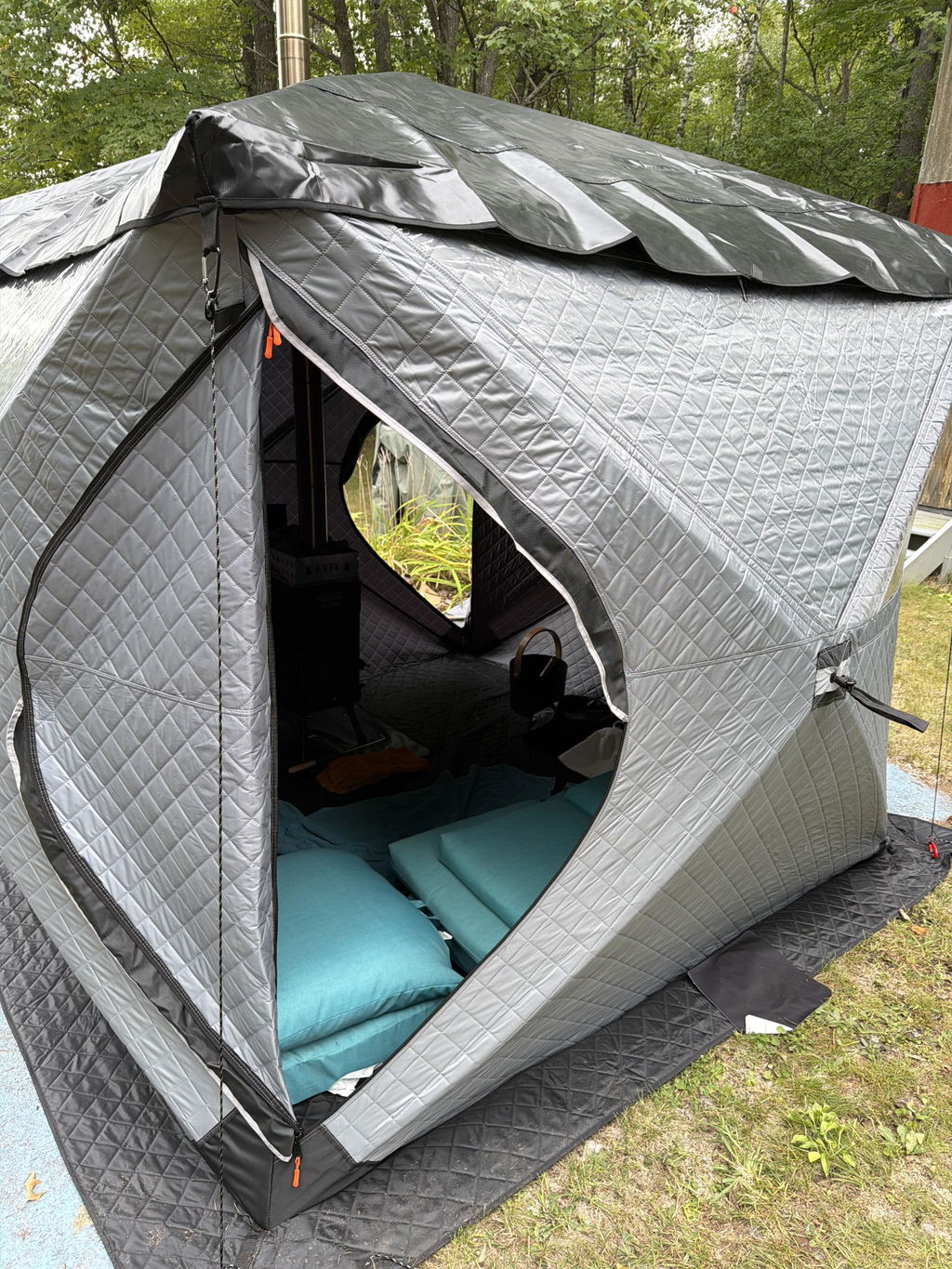
With your own sauna, you don't put anyone else at risk, and you decide how hot and how humid it gets. The KYFE Portable Sauna Tent is a wood-fired sauna tent with a stainless steel stove and a rock cage that holds 35 lb of volcanic sauna rocks, so you can pour water for steam whenever you want it. It sets up in 5 minutes, needs no electricity, and reaches 200°F in under 30 minutes. On a day you have a sore throat, keep the session short and the löyly gentle. The Mini fits 2 to 3 people and the Large fits 6 to 8.
It is for outdoor use only. Set it up at least 3 feet from structures, with no branches over the chimney, and check your local fire department's guidance. Our sauna tent setup guide walks you through it. Shipping is free in the continental US (not to Alaska or Hawaii), and you can return an unused sauna within 60 days of delivery.
Frequently asked questions
Does a sauna help with a sore throat?
A sauna helps some people feel better for a while, mostly from the humidity when you pour water on the rocks. It does not treat the cause. Warm drinks and moist air soothe many people, while dry heat can make a raw throat feel worse. So keep the sauna humid and drink plenty of fluids.
Is it safe to go to a sauna when you have a cold?
With a mild cold and no fever, a short, gentle session in your own sauna is a reasonable choice for most healthy adults. Drink water, keep the heat lower than usual, and get out if you feel dizzy. Skip it and rest if you have a fever, chills or body aches. Either way, keep away from a public sauna so you don't pass the cold on.
Can you sweat out a cold in a sauna?
No. There is no evidence that sweating clears a cold virus. In a 2010 trial, people with new colds who breathed hot sauna air had no significant difference in overall common cold symptoms compared with people who breathed room temperature air. Sweating also uses up fluids, so if you do go in, drink plenty of water before and after.
Can a sauna give you a sore throat?
The hot, dry air in a sauna can leave your throat feeling dry and scratchy, especially if you breathe through your mouth or haven't had enough to drink. Breathing through your nose, pouring a little water on the rocks and drinking water all help. If a sore throat lasts, gets worse or comes with a fever, treat it like any other sore throat and visit a doctor.
Is sauna good for mucus?
Breathing steam is often said to ease congestion and help mucus drain, and a stuffy nose may feel clearer in a humid sauna for a while. But a 2017 Cochrane review found it uncertain whether breathing heated, humidified air relieves common cold symptoms at all. If a sauna helps you breathe a little easier, enjoy it, but don't expect it to clear up a cold or make it end sooner.
Can I use a sauna with strep throat?
Strep throat is a bacterial infection, so visit a doctor first. A rapid test can confirm it, and it is treated with antibiotics. Strep often comes with a fever, and a fever on its own is reason enough to stay out of the sauna. Wait until you have been treated, the fever is gone and you feel well, and ask your doctor if you are unsure.

Will a Sauna Help Acne? A Complete Guide to Clearer, Healthier Skin
Does Sauna Help with Inflammation? Science, Health Benefits, and the Kyfe Approach