

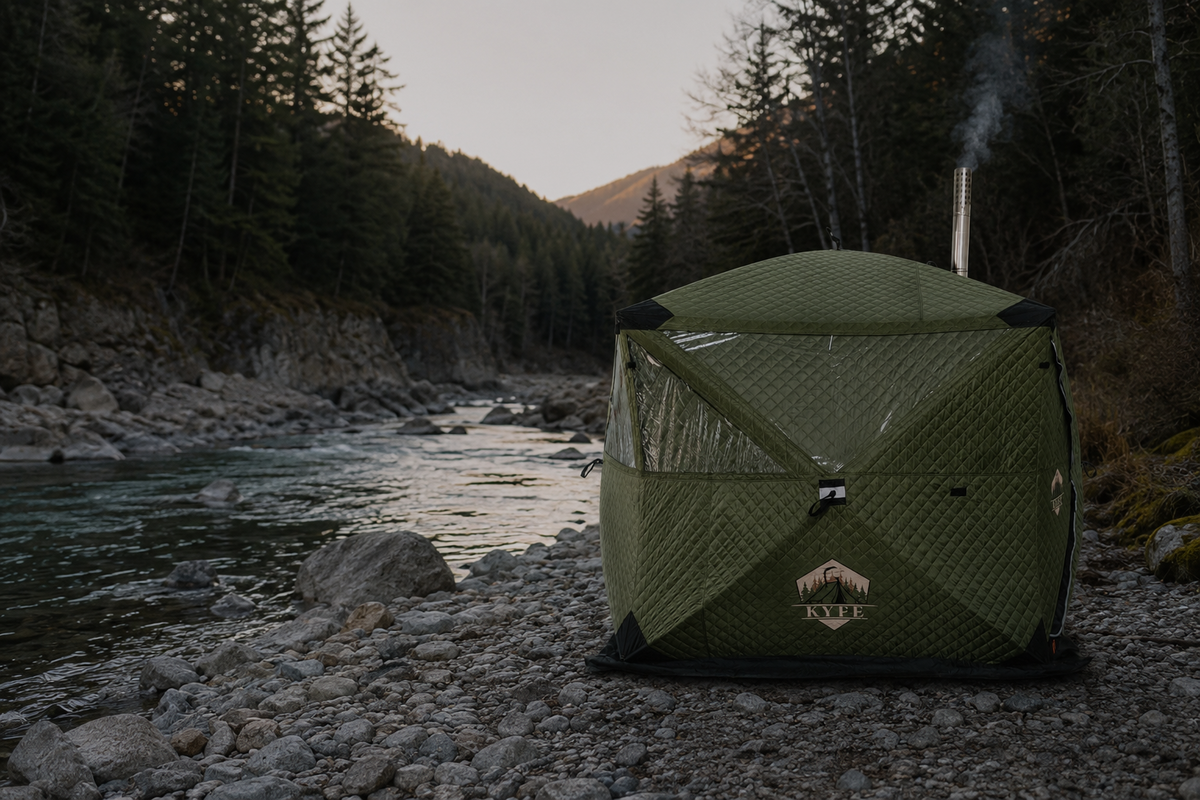
How to Choose a Sauna Tent
The sauna tent market has expanded fast, and most of what's in it looks similar from the outside. Same tent silhouette, same spec sheet language, same stock photography. The differences that actually matter — the ones that determine whether you're sitting in 200°F heat with real steam or a 130°F enclosure that smells like plastic — are not obvious from a product listing.
This guide breaks down every variable worth evaluating before buying, in order of importance.
1. Heat Source First — Everything Else Is Secondary
The most important decision in choosing a sauna tent is the heat source. It determines the temperature ceiling, the type of heat, and whether the experience resembles a traditional sauna at all.
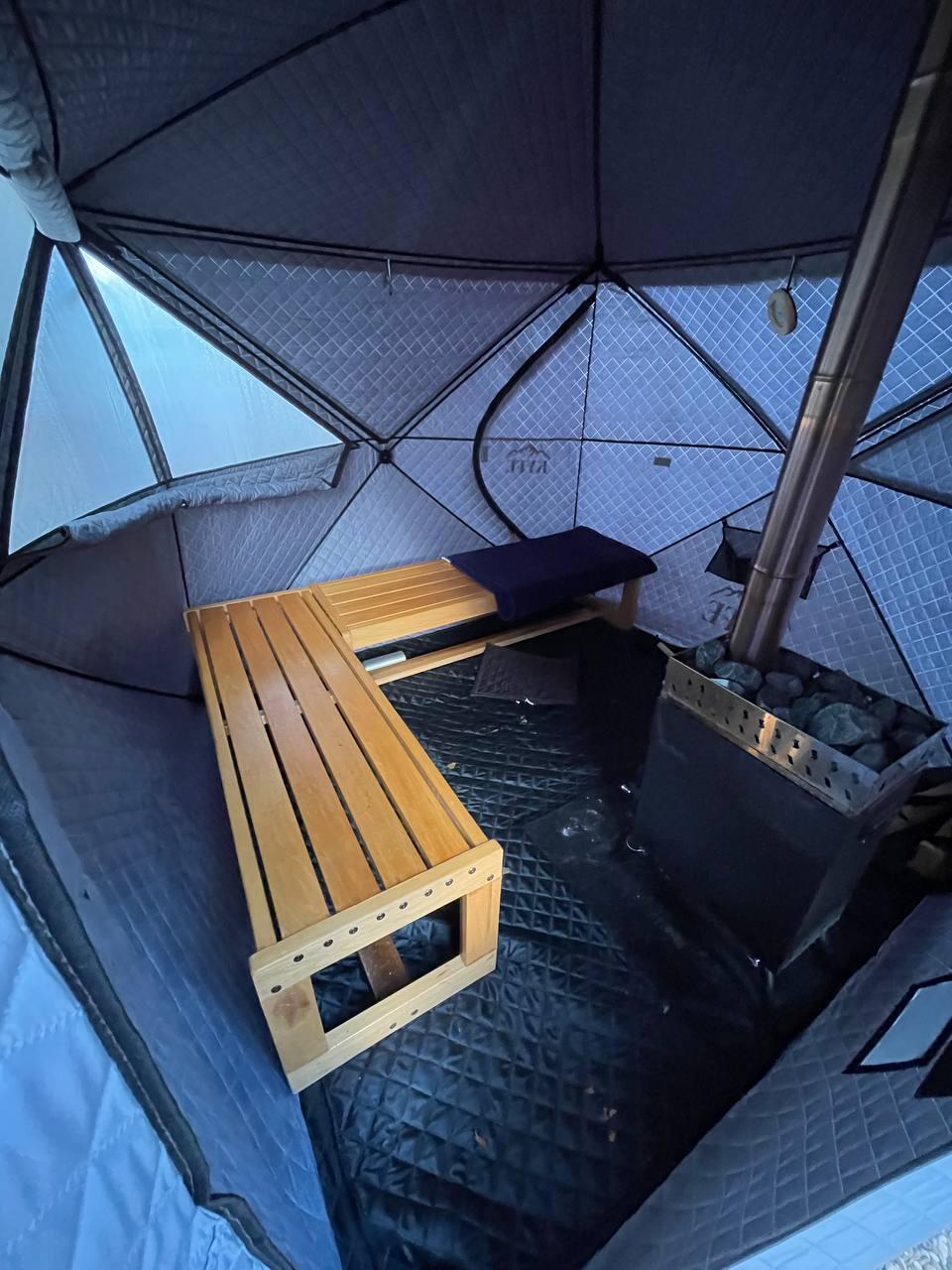
Wood-fired stove. A stainless steel wood-burning stove heats the air and the rocks simultaneously. The rocks absorb thermal energy and hold it — when you pour water over them, you get löyly , the dense Finnish steam that defines the traditional sauna experience. Interior temperatures reach 180–200°F+. No electricity required. Fully off-grid.
Electric heater. An electric heating element warms the air inside the tent. Some electric tent saunas include a small rock basket, which produces modest steam. Temperature range is typically 150–180°F depending on the unit, insulation quality, and ambient conditions. Requires a power source.
Steam generator. A plug-in steam generator pumps humid air into a nylon enclosure. No rocks, no fire, no ambient air heating. Temperatures top out at 110–130°F. The steam feels intense at low temperatures but the physiological exposure is not equivalent to a traditional sauna.
Infrared panels. Infrared heats body tissue directly rather than warming the surrounding air. Operates at 120–150°F. No steam capability. A different type of heat therapy — not interchangeable with traditional sauna bathing.
If your goal is authentic sauna heat — the kind the Finnish cardiovascular and longevity research is based on — wood-fired is the only portable format that reaches and holds the required temperature range. For a detailed comparison of all four formats, see our wood-fired vs. infrared vs. electric sauna guide .
2. Stove Quality
Within the wood-fired category, stove quality varies significantly and is the single biggest determinant of how well a sauna tent performs.
Steel grade. 430 stainless steel is the standard for quality sauna stoves. It handles repeated high-temperature cycling without warping, rusting, or degrading. Thinner gauge steel or non-stainless materials wear out faster and lose structural integrity over time.
Glass fire door. A glass door lets you monitor combustion without opening the stove and releasing heat. This sounds minor until your first session — managing fire through an opaque door means guessing when to add wood, which leads to temperature drops and over-firing.
Chimney system. The chimney creates the draft that pulls air through the firebox and sustains clean combustion. A well-designed chimney with properly fitting sections and secure clamps at every joint produces a clean, consistent burn. Loose sections or poor fit means smoke inside the tent.
Leg stability. The stove sits on folding legs inside the tent. Legs that don't lock securely or that wobble on slightly uneven ground are a genuine safety issue — a tipping stove inside an enclosed space is the most serious risk in wood-fired sauna tent use.
Spark arrestor. A spark arrestor on the chimney cap prevents burning embers from exiting the chimney. Essential for use near dry vegetation or in areas with fire restrictions.
3. Insulation and Fabric
The fabric determines how well the tent holds heat — and a stove that can reach 200°F is useless if the enclosure leaks heat as fast as it's produced.
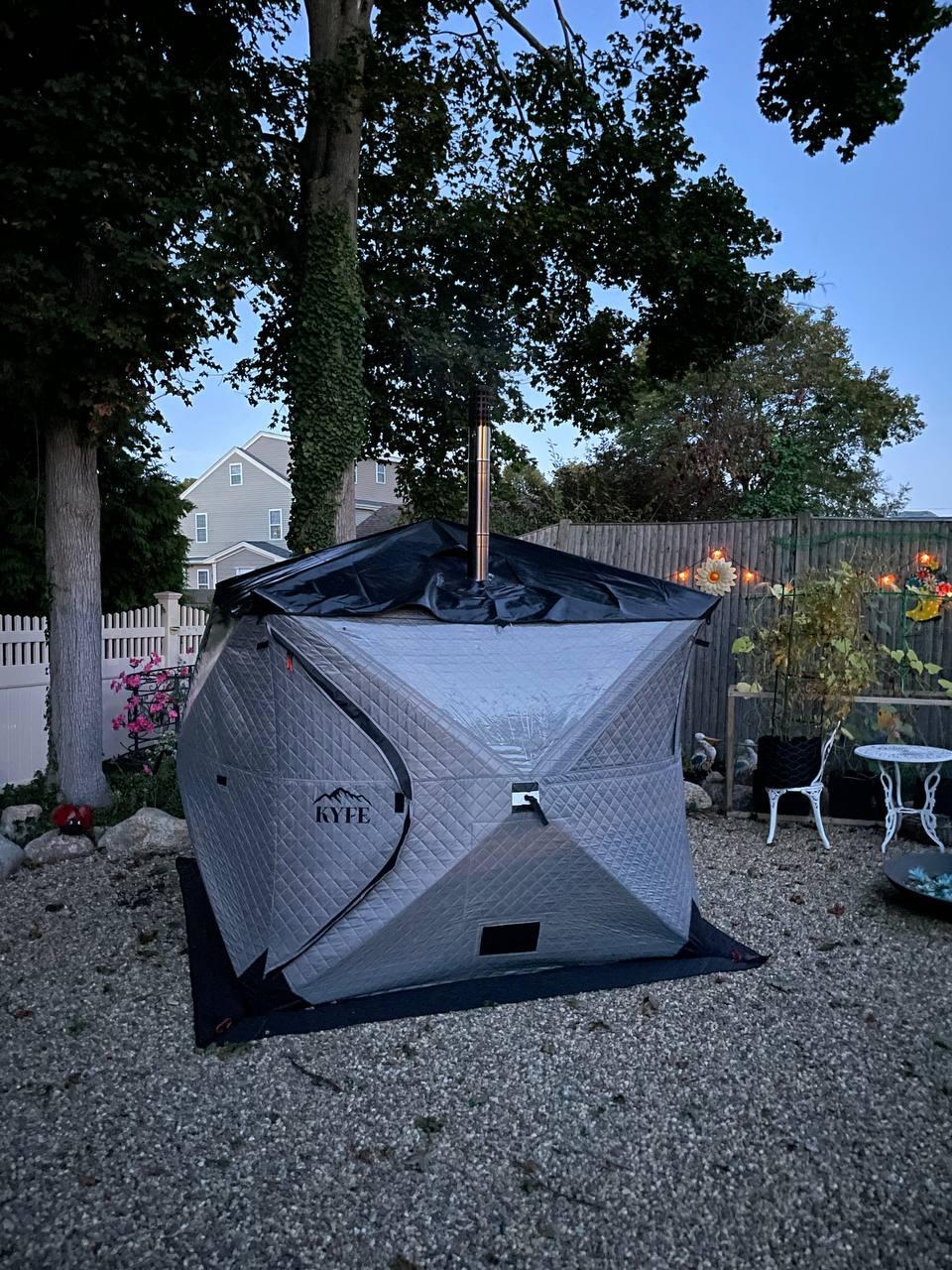
Layer count. Quality sauna tent fabric uses at least three layers: an outer shell, a middle insulation layer, and an inner lining. The KYFE uses 420D Oxford polyester on both inner and outer shells with a 120gsm cotton insulation layer between them. Single-layer or thin two-layer fabric consistently underperforms in outdoor conditions.
Flooring. The standard tent ships without insulated flooring — heat loss through the ground is one of the most common performance issues, especially in cold weather. KYFE sells insulated flooring separately ($50 Mini / $75 Standard) made from the same materials as the tent walls, with velcro corner snaps and a fireproof panel under the stove. It's a recommended addition, particularly for winter use or cold ground surfaces.
Windows. High-temperature TPU windows allow visibility out of the tent without compromising heat retention. Low-quality window material warps, yellows, or degrades under repeated heat exposure. Check that window seams are reinforced and sealed.
Water resistance. The outer shell should be water-resistant. A sauna tent used outdoors will encounter rain, dew, and condensation. Note: fully waterproofing the exterior isn't possible — waterproofing chemicals are hazardous at high temperatures — but a quality outer shell handles normal outdoor exposure well.
4. Rock Mass
The sauna rocks are the thermal engine of a wood-fired session. More rock mass means more heat stored, more steam per pour, and a more consistent experience from the first ladle to the last.
Minimum viable rock mass. A rock cage holding 30–35 lbs of volcanic stone is enough for a full session with multiple users and repeated steam pours without the rocks cooling below effective steam temperature. Less than that and rocks cool quickly — the experience degrades after the first few pours.
Stone type. Volcanic basalt and olivine diabase are the standard for sauna use. They absorb heat efficiently, hold it well, and survive repeated thermal cycling without cracking. River rocks, decorative stones, or any stone that has been submerged in water should never be used — trapped moisture expands rapidly under heat and can cause the stone to fracture.
Rock cage design. The cage should hold stones securely above the firebox with enough clearance for heat to circulate through the rock pile. Side-loading cages that expand rock surface area — like the KYFE Foldable Side Rock Baskets — increase steam output per session.
5. Capacity
Sauna tents range from compact solo or two-person configurations to tents that seat six to eight people comfortably. Choosing the wrong size is one of the most common mistakes first-time buyers make.
Mini (2–3 person). Right for solo users or couples who want compact storage and faster heat-up time. The smaller enclosed volume reaches temperature faster and uses less wood per session. Trade-off is limited space — standing, stretching, or having a third person is crowded.
Large (6–8 person). Right for families, groups, or anyone who wants room to move freely inside. Supports the social dimension of sauna — one of the most important aspects of Finnish sauna culture — without crowding the stove. Takes slightly longer to heat and uses more wood per session, but the experience is qualitatively different.
The common mistake: Buying a smaller tent to save money and regretting it when you want to use it with a partner, kids, or friends. If there's any chance you'll want more than two people in the sauna, go Large.
6. Kit Completeness
What ships with the tent determines what your real all-in cost is and whether you can run a session on day one.
A complete kit should include at minimum:
- Tent structure
- Wood-burning stove with chimney system
- Rock cage and volcanic sauna stones (35 lbs)
- Heat-resistant gloves and fire poker
- Thermometer
- Travel bag
- Instruction manual
The KYFE ships with all of the above plus a free cold plunge. The one thing not included in the base kit is insulated flooring — sold separately and worth adding, particularly for cold weather use.
Brands that sell the stove separately from the tent, or exclude rocks, are reducing the sticker price at the expense of your actual ownership experience. The real cost is what you spend before your first session.
7. Portability
If the tent is genuinely going to move — camping trips, lakeside setups, travel — packed size and total weight matter.
Packed dimensions. Everything should fit into one or two bags that fit in a truck bed or SUV cargo area. If the total packed configuration requires a trailer or multiple vehicle trips, it's not practical for most buyers who want to use it away from home.
Weight. The stove is typically the heaviest single component — a quality stainless steel stove with a full rock cage can weigh 50+ lbs. Factor this into how you'll manage transport and setup solo versus with help.
Travel bag quality. A reinforced, purpose-built travel bag protects the tent fabric and makes transport manageable. Generic bags that don't fit the tent well damage seams and zippers over time.
8. Trust Signals and After-Sale Support
A sauna tent is a considered purchase. The brand you buy from matters.
Return policy. A 60-day return window gives you enough time to set up, use the tent in real conditions, and decide if it's right for you. Shorter windows — 14 or 30 days — are inadequate for a product that takes time to learn and use well.
Warranty. Manufacturer's warranty on the stove and tent structure protects against defects. Read what's covered and for how long before purchasing.
Real customer support. A phone number that connects to a person — not an automated system — matters when you have a setup question or a component issue after delivery. KYFE's support line (+1 828-782-8600) connects directly.
HSA/FSA eligibility. If you have health savings account funds available, a sauna tent purchased through a Truemed-enabled retailer can be bought with pre-tax dollars — reducing the effective cost by 22–37% depending on your tax bracket. The KYFE is HSA/FSA eligible through Truemed. See our HSA/FSA sauna guide for details.
KYFE Mini vs. Large: Which One Is Right for You?
| KYFE Mini | KYFE Large | |
|---|---|---|
| Capacity | 2–3 person | 6–8 person |
| Heat | 200°F in 20 min | 200°F in under 30 min |
| Best for | Solo use, couples, compact storage | Families, groups, social sauna |
| Kit includes | Stove, rocks, cage, gloves, poker, thermometer, bag, cold plunge | Stove, rocks, cage, gloves, poker, thermometer, bag, cold plunge |
| Insulated Flooring | $50 add-on | $75 add-on |
| HSA/FSA | ✓ | ✓ |
| Returns | 60 days | 60 days |
The Short Version: What to Check Before You Buy
Heat source — wood-fired, electric, steam, or infrared? If you want traditional sauna heat, wood-fired only.
Stove steel grade — 430 stainless or better. Glass fire door. Stable legs.
Fabric layers — at least three. Water-resistant outer shell.
Rock mass — 35 lbs minimum of volcanic stone.
Kit completeness — does the price include everything needed for the first session?
Capacity — Mini for solo/couple use, Large for groups.
Flooring — not included in the base kit; worth adding for cold weather or year-round use.
Return policy — 60 days minimum.
Support — is there a real phone number?
Frequently Asked Questions
What's the most important thing to look for in a sauna tent?
Heat source. A wood-fired stove is the only portable format that reaches traditional sauna temperatures (180–200°F)
and produces authentic
löyly
steam. Everything else is secondary.
Is a bigger sauna tent always better?
Not always — it depends on how you'll use it. A Mini heats faster and uses less wood. A Large supports group use and
gives more room to move. Buy for how you'll actually use it, not the maximum scenario.
Do I need electricity for a sauna tent?
Only if you buy an electric or infrared format. A wood-fired sauna tent runs entirely on firewood — no electricity, no
hookup, fully off-grid.
What's the difference between a sauna tent and a sauna blanket?
A sauna blanket wraps around the body and operates at 120–140°F. A sauna tent encloses the whole body in a heated
space and — in the wood-fired format — reaches 180–200°F with real steam. Different products, different experiences,
different physiological outcomes. See our full
sauna blanket vs. sauna tent comparison
.
Do I need insulated flooring?
It's not required but it's recommended — especially for cold weather use or if your setup surface is concrete, snow,
or cold ground. The
KYFE Insulated Flooring
is made from the same materials as the tent walls and includes a fireproof panel under the stove. $50 for Mini, $75
for Standard.
Can I use a sauna tent indoors?
Wood-fired sauna tents require outdoor use — they produce smoke and need chimney ventilation to open air. Electric and
infrared formats can be used indoors with adequate ventilation.
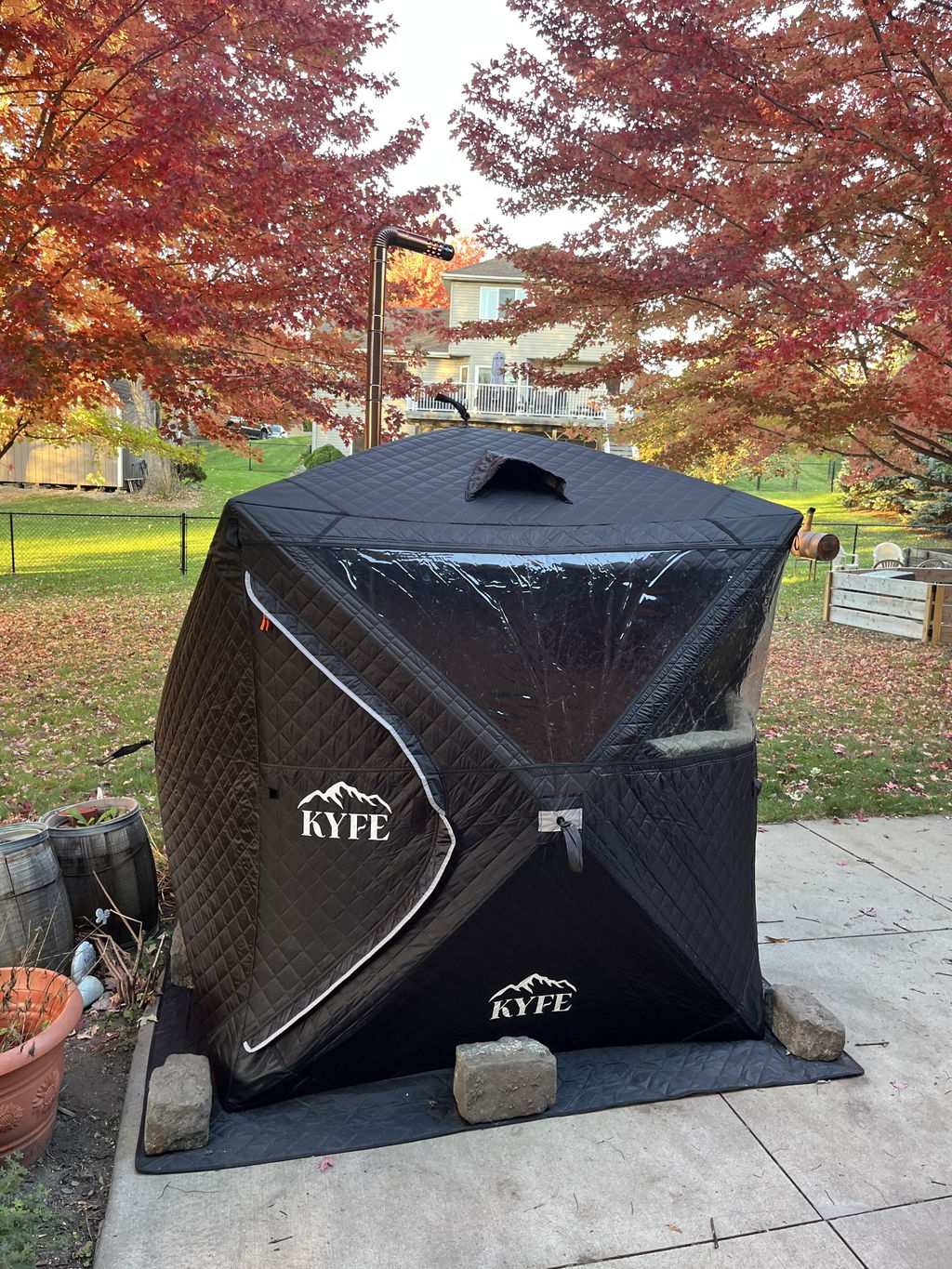
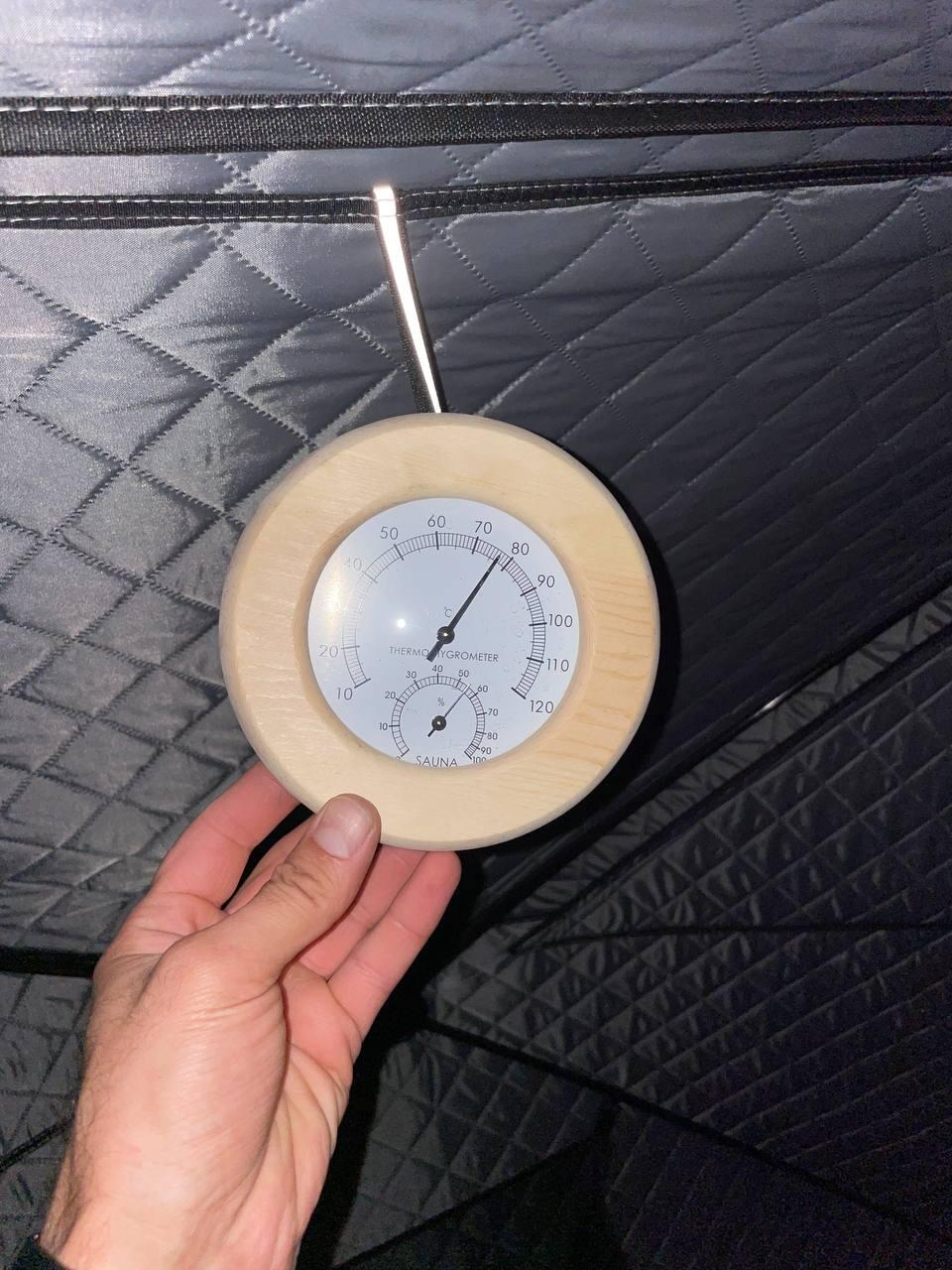
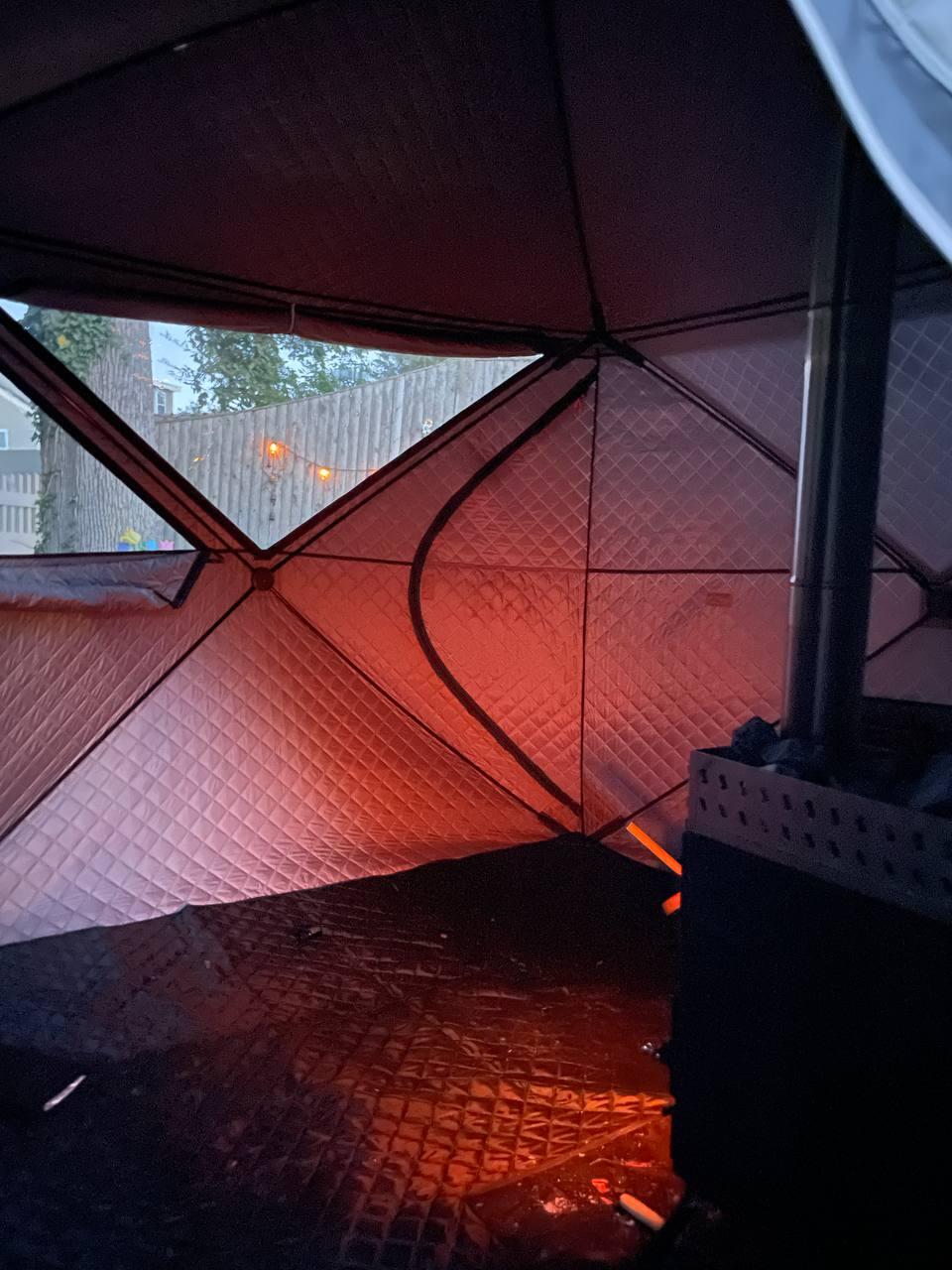
How to Set Up a Sauna Tent: Step-by-Step Guide
Outdoor Sauna Guide: Why Wood-Fired Saunas Belong in Your Backyard